

Questa pagina viene visualizzata nella sua lingua originale. La traduzione non è ancora disponibile.
La selezione Seedsun
Photinia integrifolia
SKU: PHOT-INTE-01G
Photinia integrifolia is a handsome broadleaf evergreen, a small tree or large shrub of the rose family, widespread through the hills of southern and southeastern Asia, from the Himalayas and the Western Ghats of India east into Southeast Asia, yet virtually unknown in American gardens. A relative.
Richiedi un preventivo personalizzato
Prezzi, formati e disponibilità saranno confermati nel preventivo personalizzato. L'invio di una richiesta non costituisce un ordine a pagamento.
Informatevi sull'idoneità, le modalità di semina e le esigenze di coltivazione.
Conferma le opzioni di consegna e i documenti necessari nel tuo preventivo.
Informazioni su questa varietà
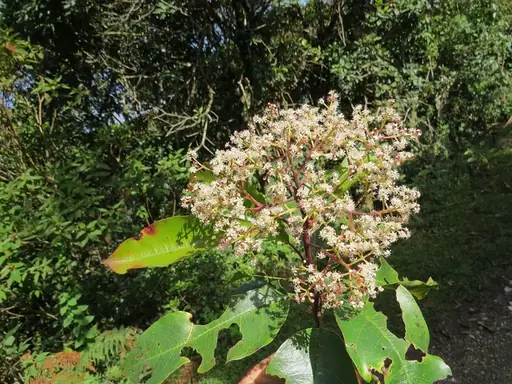
Photinia integrifolia is a handsome broadleaf evergreen, a small tree or large shrub of the rose family, widespread through the hills of southern and southeastern Asia, from the Himalayas and the Western Ghats of India east into Southeast Asia, yet virtually unknown in American gardens. A relative of the familiar Chinese photinia (Photinia serrulata), the species carries the same glossy, leathery foliage but with untoothed, entire-margined leaves, the trait behind the epithet integrifolia.
New growth emerges in warm reddish-bronze before deepening to lustrous dark green, and in late spring the branch tips carry flat clusters of small creamy-white flowers, lightly fragrant and worked by bees. Pink-to-purple fruits follow, ripening dark and drawing birds, so the tree offers a full season of quiet interest on a dense, upright frame.
offers this little-known photinia as something of an experiment. Likely less cold hardy than the Chinese photinia but possibly better suited to the heat of the warmer zones, the species has been grown here on a hunch, and we would welcome reports from customers who trial the plant in their own gardens.
Grow Photinia integrifolia as an evergreen specimen, an informal hedge, a screen, or a backdrop for showier plants in a warm-climate garden, in full sun to part shade and fertile, well-drained soil. Give afternoon shade where the sun is fierce, water through the first seasons to establish deep roots, and site where the bronze new growth and the flat white flower clusters can be enjoyed at close range.
C'è ancora molto da scoprire



Domande e discussione