

Questa pagina viene visualizzata nella sua lingua originale. La traduzione non è ancora disponibile.
La selezione Seedsun
Pistacia chinensis
SKU: PIST-CHIN-BARE
Pistacia chinensis, the Chinese pistache, is a medium-sized deciduous tree and a close relative of the pistachio nut, though this species carries no crop for the table. What the tree offers instead is one of the finest autumn shows in the warm South: lustrous, dark green compound leaves that.
Richiedi un preventivo personalizzato
Prezzi, formati e disponibilità saranno confermati nel preventivo personalizzato. L'invio di una richiesta non costituisce un ordine a pagamento.
Informatevi sull'idoneità, le modalità di semina e le esigenze di coltivazione.
Conferma le opzioni di consegna e i documenti necessari nel tuo preventivo.
Informazioni su questa varietà
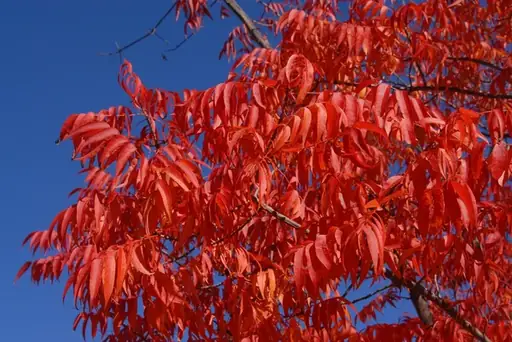
Pistacia chinensis, the Chinese pistache, is a medium-sized deciduous tree and a close relative of the pistachio nut, though this species carries no crop for the table. What the tree offers instead is one of the finest autumn shows in the warm South: lustrous, dark green compound leaves that ignite, nearly all at once, into a fire of scarlet, orange, and red before they fall.
Through the growing season the glossy, fern-like foliage stays clean and untroubled, and the tree shrugs off heat, drought, poor soil, insects, and city grime with equal ease. That toughness, paired with a tidy rounded crown, has made Chinese pistache a favorite shade and street tree across the warm South, including as a downtown street tree here in Aiken, South Carolina, and in many towns beyond.
The flowers are small and easily missed, greenish to reddish and carried in loose clusters before the leaves break, since the trees are wind-pollinated and dioecious, male and female on separate plants. Only the females bear fruit, and only with a male nearby: small round drupes that pass from green through red to deep blue-purple in fall, not for people but stripped quickly by birds.
Grow Chinese pistache as a lawn specimen, a patio shade tree, or a tough street tree for hot, paved, difficult sites, in full sun and well-drained soil of almost any texture. Give room for the rounded crown, train young trees to a strong single leader, and site where the autumn color can carry a whole view. Note that seedlings can self-sow in warm climates, so choose a spot where volunteers are easy to manage.
Photos courtesy of David Prasad and Jim Robbins.
C'è ancora molto da scoprire



Domande e discussione