

Questa pagina viene visualizzata nella sua lingua originale. La traduzione non è ancora disponibile.
La selezione Seedsun
Quercus coccinea
SKU: QUER-COCC-INEA-01G
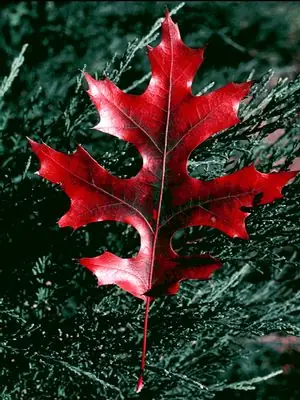
The name is a promise the tree keeps only at the very end of the year. Coccinea is Latin for scarlet, and scarlet oak earns it in late October, well after the other oaks have turned and dropped, when the whole crown ignites into a clean, carrying red that holds for weeks and can be seen across a.
Richiedi un preventivo personalizzato
Prezzi, formati e disponibilità saranno confermati nel preventivo personalizzato. L'invio di una richiesta non costituisce un ordine a pagamento.
Informatevi sull'idoneità, le modalità di semina e le esigenze di coltivazione.
Conferma le opzioni di consegna e i documenti necessari nel tuo preventivo.
Informazioni su questa varietà
The name is a promise the tree keeps only at the very end of the year. Coccinea is Latin for scarlet, and scarlet oak earns it in late October, well after the other oaks have turned and dropped, when the whole crown ignites into a clean, carrying red that holds for weeks and can be seen across a valley. On a good tree in the right soil, this is the best fall color the genus offers, which is saying something.
Scarlet oaks are trees of dry, sandy, acid uplands across the eastern states, the ridges and gravelly slopes where water runs off fast, and that upbringing makes them at home in a difficult yard: drought is no trouble, and unlike the pin oak they so often get mistaken for, they do not yellow and sulk. The way to tell the two apart is in the leaf, since scarlet's sinuses are cut in clean C-curves and pin's in tighter U's, and the scarlet acorn sits deeper in a turbaned cup.
The crown opens with age into something broad and airy, casting a broken, dappled shade rather than a heavy one, and Washington, D.C. thought enough of the species to make scarlet oak the official tree of the capital. Slower to find in the trade than the easy red and pin oaks, scarlet oak is the connoisseur's choice among the fast red oaks, which is the whole argument for planting one.
Give scarlet oak full sun and a soil on the dry, acid side, and wait for October to make your case. Site the tree where the late fire can be seen from a distance, in a large lawn, a park, a campus, or a naturalistic planting, and keep the roots out of compacted, poorly drained clay. Like all the oaks, scarlet oak quietly anchors an ecosystem, feeding squirrels, jays, deer, and turkeys with the acorns and hosting a long roll of native insects and the birds that follow them. Pair with native grasses, amsonia, and woodland asters at the foot.
C'è ancora molto da scoprire



Domande e discussione