

Questa pagina viene visualizzata nella sua lingua originale. La traduzione non è ancora disponibile.
La selezione Seedsun
Rhododendron atlanticum
SKU: RHOD-ATLA-01G
Rhododendron atlanticum, the coastal or dwarf azalea, is a low, colony-forming native of the open pine woods and sandy flatwoods of the mid-Atlantic and Carolina coastal plain. Unlike the tall wild azaleas of the mountains, this species stays close to the ground, often no higher than the knee, and.
Richiedi un preventivo personalizzato
Prezzi, formati e disponibilità saranno confermati nel preventivo personalizzato. L'invio di una richiesta non costituisce un ordine a pagamento.
Informatevi sull'idoneità, le modalità di semina e le esigenze di coltivazione.
Conferma le opzioni di consegna e i documenti necessari nel tuo preventivo.
Informazioni su questa varietà
Rhododendron atlanticum, the coastal or dwarf azalea, is a low, colony-forming native of the open pine woods and sandy flatwoods of the mid-Atlantic and Carolina coastal plain. Unlike the tall wild azaleas of the mountains, this species stays close to the ground, often no higher than the knee, and spreads by underground runners, or stolons, into broad, drifting colonies. The bluish, glaucous foliage is a hallmark, cool and sea-gray, and the species name atlanticum simply marks the plant's home along the Atlantic seaboard. The genus name Rhododendron means rose tree in Greek; azalea comes from azaleos, meaning dry, a fitting root for a shrub of sandy, well-drained ground.
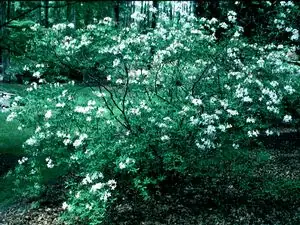
In April, before or just as the new leaves unfold, the shrub covers itself in rounded clusters of white flowers, often flushed pink in the bud and along the tube, each blossom coated in sticky glands and breathing a strong, spicy, clove-like fragrance. For a plant so modest in stature, the perfume is remarkable, and a colony in full bloom can scent an entire corner of the garden. The tubular, long-stamened flowers hold a lightly waxy sheen from the glandular hairs that cover them.
The coast azalea belongs to the same beloved tribe of Southern bush honeysuckles grown for fragrance rather than food, and the usual caution applies: like all Rhododendron, the leaves and nectar hold grayanotoxins and are not edible for people or pets. Deer, unfortunately, do not read the warning and will browse the plant, so a colony may need protection where deer pressure runs high. The flowers, meanwhile, feed early butterflies, native bees, and the first hummingbirds of spring.
The low, suckering habit makes the coast azalea a natural for the front of a woodland border, a sandy bank, or a naturalistic groundcover-scale drift beneath high pines, where the glaucous blue-gray foliage reads beautifully against darker greens. Give partial shade or morning sun, sharp drainage, and an acidic, sandy or organic soil that stays evenly moist without staying wet. Shelter the plant from harsh winter wind and late frost, mulch the shallow roots, and let the colony knit together over time among ferns, wiregrass, and other native azaleas for a fragrant, low tapestry in spring.
C'è ancora molto da scoprire



Domande e discussione