

Questa pagina viene visualizzata nella sua lingua originale. La traduzione non è ancora disponibile.
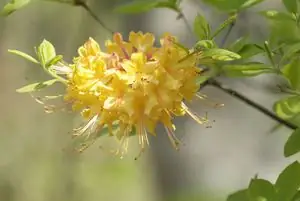
La selezione Seedsun
Rhododendron austrinum
SKU: RHOD-AUST-01G
Rhododendron austrinum, the Florida azalea, is among the earliest and most powerfully fragrant of all the wild deciduous azaleas of the Deep South. Native to the Florida Panhandle, southern Georgia, southern Alabama, and into Mississippi, the species haunts open pine woods, ravine slopes, and river.
Richiedi un preventivo personalizzato
Prezzi, formati e disponibilità saranno confermati nel preventivo personalizzato. L'invio di una richiesta non costituisce un ordine a pagamento.
Informatevi sull'idoneità, le modalità di semina e le esigenze di coltivazione.
Conferma le opzioni di consegna e i documenti necessari nel tuo preventivo.
Informazioni su questa varietà
Rhododendron austrinum, the Florida azalea, is among the earliest and most powerfully fragrant of all the wild deciduous azaleas of the Deep South. Native to the Florida Panhandle, southern Georgia, southern Alabama, and into Mississippi, the species haunts open pine woods, ravine slopes, and river bluffs, often growing in sandy, acidic ground beneath tall longleaf pines. The species name austrinum simply means southern, a fitting label for an azalea so at home in the Gulf Coast heat, and the genus name Rhododendron means rose tree in Greek.
In late March and April, well ahead of most garden azaleas and often before the new leaves unfold, the shrub bursts into rounded trusses of tubular, long-stamened flowers in a warm range from clear gold through honey-yellow to orange and apricot. The fragrance is remarkable, a sweet, spicy perfume that carries far on a still spring morning, and the flowers arrive so early that they feed the first returning hummingbirds and the season's earliest butterflies and native bees. Tall and open in habit, reaching twelve to fifteen feet with age, the Florida azalea becomes a small flowering tree in an old planting.
The Florida azalea has done more than perfume Southern woods; the species stands behind a great many of the region's finest garden azaleas. Breeders from Dr. Eugene Aromi to the Dodd nurseries reached again and again for austrinum to lend heat tolerance, early bloom, and fragrance to their hybrids, so this wild shrub is in many ways the taproot of Deep South azalea horticulture. Like all of the wild azaleas, though, the plant is grown for beauty rather than the table: every Rhododendron carries grayanotoxins in leaf and nectar and should not be eaten by people or animals.
In the garden the Florida azalea wants the conditions of the native pinewoods: dappled light or morning sun with afternoon shade, and a moist but sharply drained, acidic soil enriched with pine bark or leaf mold. Give the shrub room to rise and arch, at the back of a woodland border, along a shaded drive, or among high pines where the early gold can glow against bare branches. The fragrance rewards a spot near a path, porch, or window, and the plant combines beautifully with later native azaleas, ferns, and evergreen backdrops of Illicium or holly that set off the spring color.
C'è ancora molto da scoprire



Domande e discussione