

Questa pagina viene visualizzata nella sua lingua originale. La traduzione non è ancora disponibile.
La selezione Seedsun
Styrax obassia
SKU: STYR-OBAS-01G
Styrax obassia, the fragrant snowbell, is the bold-leaved cousin of the more familiar Japanese snowbell, a small deciduous tree from the mountain woodlands of Japan, Korea, and China. Where Styrax japonicus hides small bells beneath fine, layered branches, the fragrant snowbell wears large,.
Richiedi un preventivo personalizzato
Prezzi, formati e disponibilità saranno confermati nel preventivo personalizzato. L'invio di una richiesta non costituisce un ordine a pagamento.
Informatevi sull'idoneità, le modalità di semina e le esigenze di coltivazione.
Conferma le opzioni di consegna e i documenti necessari nel tuo preventivo.
Informazioni su questa varietà
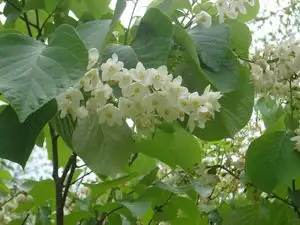
Styrax obassia, the fragrant snowbell, is the bold-leaved cousin of the more familiar Japanese snowbell, a small deciduous tree from the mountain woodlands of Japan, Korea, and China. Where Styrax japonicus hides small bells beneath fine, layered branches, the fragrant snowbell wears large, rounded, almost tropical leaves up to eight inches across, and hangs long, drooping chains of white, bell-shaped flowers that carry a sweet perfume through the late-spring garden.
A member of the storax family, Styracaceae, the fragrant snowbell keeps company with the silverbells, the American snowbell, and the rare jacktree. The genus name Styrax is the classical word for the trees that once yielded storax and benzoin, the fragrant resins burned as incense since antiquity, though the perfume of this hardy tree comes from the flowers rather than from any resin. In spring the racemes hang below the broad foliage, so the fragrance is met before the flowers are seen.
The bold, rounded leaves give the fragrant snowbell a presence unusual among small flowering trees, casting a moderate, dappled shade and lending a lush, almost subtropical texture to a cool woodland setting. In autumn the leaves pass through soft yellow, and the smooth gray-brown bark, furrowing with age, holds quiet interest once the canopy is bare. Bees work the fragrant flowers freely through the bloom.
Give the fragrant snowbell a moist, well-drained, acid soil and a sheltered spot in sun to part shade, with a little afternoon shade where summers are fierce. Site the tree at a woodland edge, in a courtyard, or beside a path or patio where the drooping flowers can be met at nose height, and underplant with ferns, hellebores, and other that share the cool, even moisture. A dependable, fragrant small tree for a wide range across the eastern United States.
C'è ancora molto da scoprire



Domande e discussione