

Questa pagina viene visualizzata nella sua lingua originale. La traduzione non è ancora disponibile.
La selezione Seedsun
Viburnum odoratissimum
SKU: VIBU-ODOR-01G
Few shrubs wear a name as plainly as this one. Odoratissimum is Latin for the most fragrant, the sweetest-scented, and sweet viburnum earns the superlative in late spring, when conical panicles of tiny white flowers open across the canopy and carry a soft, honeyed perfume on warm air. A member of.
Richiedi un preventivo personalizzato
Prezzi, formati e disponibilità saranno confermati nel preventivo personalizzato. L'invio di una richiesta non costituisce un ordine a pagamento.
Informatevi sull'idoneità, le modalità di semina e le esigenze di coltivazione.
Conferma le opzioni di consegna e i documenti necessari nel tuo preventivo.
Informazioni su questa varietà
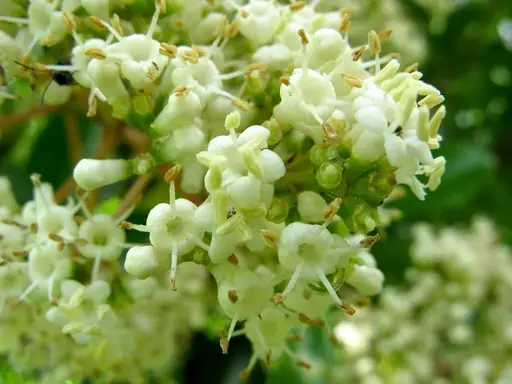
Few shrubs wear a name as plainly as this one. Odoratissimum is Latin for the most fragrant, the sweetest-scented, and sweet viburnum earns the superlative in late spring, when conical panicles of tiny white flowers open across the canopy and carry a soft, honeyed perfume on warm air. A member of the moschatel family, Adoxaceae, and a cousin of the elders and the arrowwoods, Viburnum odoratissimum ranges as a wild plant from the Himalayan foothills of India through Myanmar, Thailand, and Vietnam to China, Taiwan, Korea, and Japan, a broad Asian sweep that hints at the plant's easy adaptability in the warm garden.
The foliage is the year-round argument. Broad, leathery, and glossy, the deep green leaves are shorter and wider than those of the closely allied Viburnum awabuki, and they clothe a dense, upright, spreading frame from top to bottom without the bare ankles that spoil so many large evergreens. Crush a leaf and a distinct, resinous scent rises, an old family trait of the viburnums. Left to grow, sweet viburnum builds into a substantial shrub or small tree of ten to fifteen feet, taking full sun or the dappled edge of shade with equal grace.
After the flowers fade, the shrub sets small oval drupes that ripen from bright red to glossy black, a slow color shift that hangs both shades in the same cluster for weeks and draws mockingbirds, cardinals, and other fruit-eating birds into the garden. In parts of the plant's native range the leaves and bark carry a folk history in traditional preparations, though sweet viburnum is grown in Western gardens strictly for beauty and screening rather than for any medicinal use. The dense evergreen habit has long made the species a workhorse hedge across the Gulf South and the milder Pacific coast.
Set sweet viburnum where a tall, fast, fragrant evergreen is wanted: a privacy screen along a boundary, the green backbone of a mixed border, or a clipped or informal hedge that flowers. The plant asks only for moisture-retentive soil that still drains freely and a position out of hard freezes, since the leaves scorch below the low twenties. Give the shrub room to reach full size, or shear after bloom to hold a chosen height, and enjoy one of the most useful broadleaf evergreens for zones eight through ten.
Photo courtesy of Kenpei.
C'è ancora molto da scoprire



Domande e discussione