
How to Grow and Care for Flowering Cherry Trees
Prunus spp. Ornamental cherries are celebrated with festivals and parades, gifted from one country to another, and cherished in gardens. They’re arguably the queens of the spring flowering trees. Once you plant one in your garden, there will be no question as to why ornamental cherries are so.
Prunus spp.
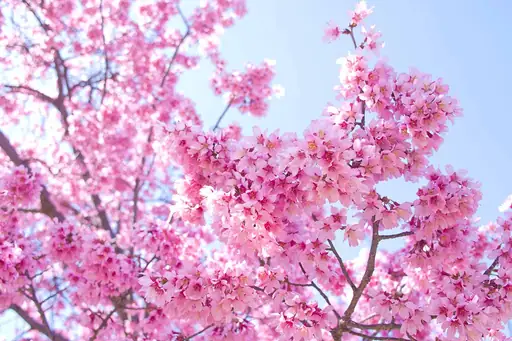
Ornamental cherries are celebrated with festivals and parades, gifted from one country to another, and cherished in gardens. They’re arguably the queens of the spring flowering trees.
Once you plant one in your garden, there will be no question as to why ornamental cherries are so valued.
They’re absolutely stunning. In the spring when they’re blanketed in blossoms, it’s hard to look at anything else.
It’s true that these elegant trees have a reputation for being a little bit difficult and some of them deserve that reputation.
But newer hybrids and cultivars are hardy and healthy, and once you know how to set yourself up for success, you can lessen the chances of having a problem.
We’ll help you to become a flowering cherry master. Here’s everything we’ll talk about to get you there:
What You’ll Learn
- Cultivation and History
- Propagation
- How to Grow
- Growing Tips
- Pruning and Maintenance
- Cultivars to Select
- Managing Pests and Disease
- Best Uses
- Quick Reference Growing Guide
I don’t know who first looked at a cherry tree and thought to themselves that they could make those blossoms bigger and more colorful, but they were a genius.
Take out your shovels and let’s dig in.
Cultivation and History
Flowering cherries are several species from the Prunus genus, the same genus that includes edible cherries, almonds, apricots, peaches, and plums.
These species, including P. jamasakura, itosakura, nipponica, sargentii, serrulata, subirtella, and many hybrids, are mostly native to China, Korea, and Japan, or have been grown and cultivated there.
Some famous hybrids include Higans (P. x subhirtella) and Yoshito (P. x yedoensis).
The blossoms are known as sakura in Japan, and they’re the national flower of the country.
In Japan, flowering cherries have been cultivated for at least 1,200 years, since the Heian period, which ended in 1185.
Today, there are dozens and dozens of cultivars and hybrids out there famously showing off their blossoms in places like Washington, DC, Tokyo, Kyoto, Amsterdam, New York, and Vancouver.
These trees are closely related to the ones that produce fruit (P. avium and P. cerasus), and some of these even produce tiny, inedible fruits.
But instead of the fruit being the focus, it’s the showy flowers we bred these plants for. And boy, do they perform.
Flowering Cherry Tree Propagation
The easiest way for the home grower to propagate ornamental cherries is from cuttings or by buying saplings.
It’s technically possible to germinate seeds, but it’s extremely difficult and hybrids won’t grow true.
I wouldn’t recommend it, especially when rooting cuttings is so much easier, and what you see is what you get with clones!
From Cuttings
During the winter when your cherry is dormant, head out and take a few cuttings. Don’t do this when it’s below freezing – wait for the day to warm up so the branches will be pliable.
You’ll need a sharp, clean pair of clippers. Look for healthy branches about as thick a pencil and take cuttings at least six inches in length with at least three nodes.
The nodes are the little lumps where the leaves emerge.
When you take each cutting, make the bottom cut at a 45-degree angle and cut the top straight.
This is an old propagating trick that helps you remember which side is up. Make the bottom cut (known as the basal cut) just underneath a node.
Put the cut ends in water or wrap them in a moist cloth until you’re ready to plant.
To get ready, fill six-inch containers with potting mix, with one container for each cutting. Poke a little hole in the center and dip the basal end of each cutting in rooting hormone.
Place a cutting into the hole you made so it sits about three inches deep in the soil.
Water the soil and keep it moist as the cuttings take root. It also helps to place tented plastic or a cloche over the cuttings to help retain heat and moisture. Place the containers in bright, indirect light.
Leave the cuttings in place until new growth starts to develop. At that point, transplant them into larger containers and harden them off for a week, so you can put them outside.
Hardening off begins by placing a plant that has been growing indoors in a protected spot outside for an hour and then bringing it back in.
On the second day, leave it outside for two hours. Keep adding an hour each day until a week has gone by, and it can withstand outdoor conditions throughout the day.
Once you’ve hardened them off, place the plants in full sun and keep the soil moist while it grows.
You can leave the plants in their containers all summer. This increases the chances that they will survive. In the fall, transplant as described below.
Transplanting Saplings
Head to any nursery in the spring, and you’re likely to find an ornamental cherry or two. You can bring one home for planting in the spring or fall.
To prepare the area, dig a hole twice as deep and wide as the container that the plant is growing in. Unless your soil has a pH outside the range of 6.0 to 7.5, there’s no need to adjust the pH.
Take all that soil you dug out and mix it with equal parts well-rotted compost. Now, fill the hole in about halfway and remove the sapling from its container.
Loosen up the roots, brush away some of the old soil, and place the sapling in the hole.
Make sure it’s sitting at the same height as it was in the growing container. You don’t want the trunk to be any deeper or more shallow than it was originally.
Fill in around the roots with some of that soil and compost mixture, and water the soil well. Fill in with a bit more soil mixture if it settles a little.
How to Grow
Flowering cherries do best if you give them at least six hours of sunlight per day. If they receive less light, they’ll survive, but the floral display will be less than stellar.
Wherever you plant yours, it must have well-draining soil. These trees won’t tolerate wet roots.
At the same time, they need consistently moist soil, and the earth needs to be water-retentive with a pH of 6.0 to 7.5. If you don’t have this type of soil naturally, you have some options.
The first is to dig three feet down and wide and remove all the soil. Mix it with equal parts well-rotted compost and put the mixed soil back in the hole. Now you can plant.
The alternative is to plant in a container filled with good potting soil. Trust me, these plants are better off growing in a container than in poor draining or sandy soil.
They actually do well in containers so long as you feed them regularly. They’re even popular as bonsai specimens.
If you do go the container route, you need something large like a 25-gallon container. It also needs to be heavy enough to not tip over in the wind.
As we mentioned, you need to keep the soil moist. Ornamental cherries won’t tolerate drought. Even infrequent drought will leave them open to disease.
If you can’t guarantee regular irrigation from the environment – and most of us can’t – make sure the tree is within reach of an irrigation source.
Better yet, run drip irrigation lines to your specimen. It’s always best to water at the soil level and not on the trunk or foliage.
Ideally, the soil will never dry out below the top inch. A good wood chip mulch can help the soil retain moisture with the added bonus of suppressing weeds.
A late frost and freezing winds can damage this type of tree.
For the first issue, you can toss some frost cloth over a small specimen, though there’s not much you can do to protect a large tree from late frost. That’s just how it goes in the world of gardening.
For the latter issue, plant your flowering cherry in a protected spot so those icy winds won’t wreak havoc on your plant. Avoid planting in low-lying areas, which are also known as frost pockets – for good reason!
Fertilizing
Feeding is an important part of caring for ornamental cherries. These plants are heavy feeders and they won’t bloom well if you don’t feed them regularly.
Do it once a year in the spring after flowering with a fertilizer formulated for trees.
Or better yet, use something like Down to Earth’s Tree & Shrub mixture, which contains beneficial endomycorrhizal fungi to support healthy roots.
Down to Earth Tree & Shrub
Feed container plants more often. You can use the same fertilizer, but apply it in the early fall, as well.
Growing Tips
- Plant in full sun in a spot protected from freezing winds.
- Keep the soil moist and avoid drought.
- Fertilize once in the spring after flowering.
Pruning and Maintenance
While you don’t have to do regular pruning as you would with a fruit tree, pruning can help prevent fungal issues, and anything we can do to avoid disease is a good thing.
Prune in the late winter and take off any diseased or broken branches at the base.
Crossing or crowded branches can be removed in spring after flowering. You want a canopy that is open enough to promote good air circulation.
When the tree is young, be sure to remove any double leaders (two competing main stems) so that you have just one main stem. And if I get wind that you topped your tree you’ll hear from me!
Topping is the practice of cutting the main leader off at the top to encourage the tree to have a more spreading, weeping form. It damages and weakens trees.
If you want a weeping type, buy one, don’t try to force it.
Cherry Tree Cultivars to Select
There are so many excellent options out there that it’s hard to narrow them down.
Look for one of the disease-resistant types if you want to avoid the heartbreak of potentially losing your flowering cherry. Fortunately, there are lots of these to choose from.
Akebono
‘Akebono’ is a large weeping cherry hybrid (P. x yedoensis) suitable for Zones 5 to 8.
Stretching up to 35 feet tall and wide with an upright growth habit and a round, symmetrical crown, it flowers in spring with white and pale pink blooms and features bright yellow foliage in the fall.
What makes it so striking is that the lightly fragranced flowers are some of the largest of any flowering cherry out there.
‘Akebono’
The good news is that this plant grows extremely fast, so you can have a full-sized specimen in no time.
The bad news is that fast growth comes at a cost. These tend only to live for about 20 years.
Do you agree that bigger is better?
Autumnalis
P. subhirtella ‘Autumnalis,’ aka autumn cherry, puts on one heck of a show.
It’s a large tree at about 30 feet tall and wide, which gives you a whole lot of opportunity for a big display.
The double flowers are large and medium pink, and while they put on the biggest display in the spring, they put on a second, smaller show in the fall.
They also produce small black fruits that attract birds and squirrels.
‘Autumnalis’
Gardening in Zones 4b to 8b?
Kwanzan
Hands down one of the showiest and most dramatic flowering cherries, P. serrulata ‘Kwanzan’ (sometimes labeled Kanzan) has large, bold pink double flowers that absolutely smother the branches in the spring.
It’s not just the flowers that stand out, though. The young foliage emerges in bronze before turning green and then orange-bronze in the fall, all on a compact 25-foot-tall, vase-shaped tree.
‘Kwanzan’
This tree is also extremely hardy compared to some other cultivars and thrives pretty much anywhere in Zones 4b to 9b. It’s a fast grower with a short lifespan of just 25 years.
Plena Rosea
Admittedly, this is one of those fussy, disease-prone options that we warned you about, but sometimes you just gotta go with the temperamental beauty. Here’s why:
A stunning 20-foot-tall and equally wide tree with arching branches, P. subhirtella ‘Plena Rosea,’ aka ‘Pendula Plena Rosea,’ blooms in spring with rose pink flowers.
‘Plena Rosea’
It looks like a beautiful fountain of double blossoms. It’s truly eye-catching and will undoubtedly be the focal point of your yard while it’s blooming.
You’ll likely only have a few decades with this fast grower, but they’ll be worth it.
Okame
One of the cultivars in Washington, DC’s famous yearly display, this hybrid of P. campanulata and P. incisais is much tougher than many of its siblings.
It can handle some clay, resists pests and diseases, and reliably produces large, vibrant blossoms, even in partial shade.
The downside is that it doesn’t do well in the cold. It can only be grown in Zones 6b to 9a. It’s also long-lived and has a beautiful upright vase-like growth habit.
‘Okame’
Managing Pests and Disease
Technically, flowering cherries can be impacted by anything that attacks edible cherries, which is why you should familiarize yourself with growing these plants by checking out our guide.
In reality, some of these hybrids and cultivars are resistant to problems, but they’re generally temperamental.
Herbivore feeding, fungal issues, and gummosis are the biggest challenges, but the healthier you keep them the more likely they are to resist problems.
These trees are naturally short-lived, and it’s common for them to succumb to disease after a few decades.
Herbivores
While young trees are susceptible to feeding by deer and voles, even older trees can be damaged.
Deer
Deer will browse on the saplings, and they can even consume enough of the plant that they kill it.
If you know you have deer in your area, put a fence around your tree. Or read our guide for more tips on dealing with deer.
Voles
Voles aren’t just a threat to young trees. They’ll chew on the lower trunks of mature trees, causing girdling. This is more common in the winter.
Insects
Insects will rarely cause lasting damage to a tree unless you have a really serious infestation, and that typically occurs only if your tree is already weak and unwell.
Keep your tree happy and it’s unlikely that you’ll face these pests:
Japanese Beetles
Japanese beetles (Popillia japonica) are small, metallic brown and green insects that devour all kinds of flora. They prefer plants in the rose family (Rosaceae), of which Prunus is a part.
When they find their way to your garden, they start eating. And as they do, they release pheromones, which attracts more beetles. Pretty soon, you’ll have a much bigger problem on your hands.
Look for the beetles themselves or skeletonized leaves.
They can be challenging to deal with, but our guide to managing a Japanese beetle infestation can help.
Tent Caterpillars
Tent caterpillars and webworms tend to come in waves. One year you’ll have a ton, and the next, there will be hardly any.
At any rate, they aren’t a big deal even though they look kind of gross, covering your tree in worm-filled webs. Our guide explains how to deal with these pests.
Disease
Cue the theme from Jaws – it’s time to talk disease. If you have a particularly cool, wet, humid summer, you might want to proactively treat for fungal issues.
Armillaria
A common fruit tree issue caused by Armillaria mellea, armillaria is a fungal rot that looks like white, fan-shaped patches that sit between the bark and the inner wood.
Unless you’re actively lifting up the bark to look for it, the first thing you’ll notice is your perfectly healthy tree suddenly collapsing in the summer.
You can’t cure it, so do your best to prevent armillaria by planting in a well-draining area, fertilizing appropriately, and making sure to irrigate sufficiently during periods of drought.
Cherry Leaf Spot
Cherry leaf spot is caused by the fungus Blumeriella jaapii, evidenced by purple spots all over the leaves that later turn brown.
Infected leaves eventually turn yellow, then brown, and fall off the tree.
This weakens the tree and leaves it more susceptible to drought or winter damage, as well as secondary infection. It’s a vicious cycle.
To start with, always clean up fallen leaves around your tree. This is where the fungus overwinters.
You should also spray a broad-spectrum fungicide like ZeroTol HC in the early fall.
ZeroTol HC
Gummosis
Despite the fact that they aren’t technically fruiting trees, flowering cherries are susceptible to a common fruit tree condition known as gummosis.
If you see oozing sap on your tree, read our guide to learn about this problem and how to fix it.
Root Rot
You don’t want root rot. It’s bad news and it’s one of the more preventable problems, since it thrives in overly wet soil. It’s caused by oomycetes in the Phytophthora genus.
Above ground, it will look like your tree isn’t getting enough nutrients, and that’s because it isn’t.
This disease kills off the feeder roots, which makes it hard for the plant to take up nutrients. You’ll see weak growth, yellowing leaves, and drooping.
Dig down just a bit and you’ll see black or brown, soft roots.
A broad-spectrum fungicide like ZeroTol HC, described above, is an effective treatment, but it will only work if you catch the disease early on and remedy the waterlogged conditions that led to its onset.
Verticillium Wilt
Verticillium dahliae is a common fungus that can attack hundreds of different species, including plants in the Prunus genus.
The fungus prevents water from moving through the plant, resulting in wilting leaves, even when the soil is perfectly moist. The leaves will also turn yellow and young twigs might die off.
You can test trees for this disease through your local ag extension office, and avoid it by taking care not to over-fertilize, don’t plant with other susceptible species, and control weeds.
Sadly, there is no effective treatment.
You can prune off the most symptomatic branches, but eventually, you’ll have to remove the tree or you risk spreading the disease to other plants in your and your neighbors’ gardens.
Best Uses for Ornamental Cherry Trees
If you’re looking to play around with bonsai, these trees make some of the prettiest, if somewhat fussiest, specimens.
Or you can always keep them in a larger container as a dramatic focal point in the garden or on a patio.
The larger trees, of course, need no accompaniment, but smaller trees can work as a background for plants that will pick up the color duty after the blossoms on the trees have fallen.
Think of plants like roses, crape myrtle, spirea, or butterfly bush, so long as they aren’t considered invasive in your neck of the woods.
Quick Reference Growing Guide
| Plant Type: | Deciduous flowering tree | Flower/Foliage Color: | Pink, red, white/green |
| Native to: | China, Japan, Korea | Maintenance: | Moderate |
| Hardiness (USDA Zones): | 4b-9b | Water Needs: | Moderate to high |
| Bloom Time: | Early spring, some varieties again in fall | Soil Type: | Loose, rich loam |
| Exposure: | Full sun to partial shade | Soil pH: | 6.0-7.5 |
| Time to Maturity: | 5 years | Soil Drainage: | Well-draining |
| Spacing: | 10-20 feet | Attracts: | Bees, butterflies, hummingbirds |
| Planting Depth: | Same depth as nursery container | Uses: | Bonsai, specimen, container |
| Height: | Up to 35 feet | Family: | Rosaceae |
| Spread: | Up to 30 feet | Subfamily: | Amygdaloideae |
| Growth Rate: | Fast | Genus: | Prunus |
| Common Pests and Diseases: | Deer, Japanese beetles, tent caterpillars, voles; Armillaria, cherry leaf spot, gummosis, root rot, verticillium wilt | Species: | Jamasakura, itosakura, nipponica, sargentii, serrulata, subirtella |
Long Live the Queen of Flowering Trees
I’m going to level with you. Even if there weren’t any disease-resistant options available and every tree was guaranteed to falter after a few decades, I’d grow them anyway.
Flowering cherries are just so incredibly stunning, they’re worth it.
Lucky for us, there are healthier options to choose from and we know how to prevent most issues with proper care.
I can’t remember the last time I had to deal with diseases on my trees. I promise, it’s possible.
So, which flowering cherry are you growing? What do you love about it? Share in the comments.
That’s all there is to it. Now go forth and enjoy the show!
If you’re not ready to hang up your shovel and you’re looking for more gardening projects, you might be interested in some of our other guides to ornamental trees, including:
- How to Grow and Care for Coral Bark Japanese Maples
- How to Grow and Care for Flowering Dogwood Trees
- How to Grow and Care for Redbud Trees
- Facebook22
- X




質問とディスカッション