
How to grow beets
Seed to Harvest Growing Guide How to grow beets A practical guide to direct sowing beet seed clusters, thinning for round roots, maintaining even growth, harvesting edible greens, and lifting tender roots at peak quality. Loosen soil deeply for smooth rootsThin every cluster to one plantWater.
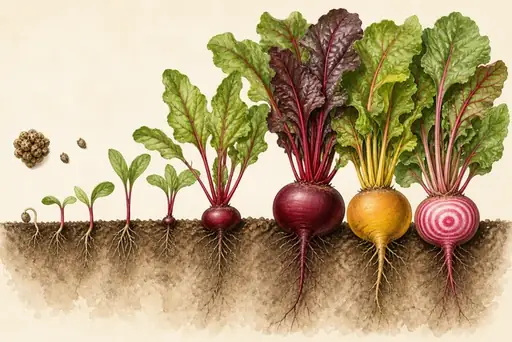
Seed to Harvest Growing Guide
How to grow beets
A practical guide to direct sowing beet seed clusters, thinning for round roots, maintaining even growth, harvesting edible greens, and lifting tender roots at peak quality.
Loosen soil deeply for smooth rootsThin every cluster to one plantWater evenly to prevent cracks Shop beet seed →Start the guide ↓ Crop family: Amaranthaceae Plant2–3 weeks earlyBefore the last spring frost Depth1/2 inchKeep the seedbed moist LightFull sunAt least 6 hours Spacing3–4 inchesThin each seed cluster HarvestAbout 50–80 daysVariety and root size dependentBefore you begin
Give every root loose soil and its own space.
What looks like one beet seed is usually a corky cluster that can sprout several seedlings. Direct sow into deep, stone-free soil, keep the surface moist through emergence, then thin decisively so each remaining plant can form one smooth, rounded root.
Best first decisionChoose the harvest goal—tender baby roots, full-size roots, edible tops, or storage beets—because it determines variety, spacing, sowing rhythm, and harvest timing.Build your beet-growing plan
Plan the planting window, root spacing, seed quantity, and succession rhythm.
Reserve a loose bed and repeat short rows so tender roots and greens are available before hot weather reduces quality.
When to sow beetsFind your local planting windowEnter your ZIP code to connect workable soil, frost dates, and the cool spring or fall weather beets prefer.Check beet timing → Lay out the beet bedReserve loose root spacePlace rows in full sun with deep prepared soil and enough room to thin plants 3–4 inches apart.Plan the beet bed → How much beet seedCalculate the seed you needEstimate seed from row length and spacing, remembering that clustered seed produces more than oling.Calculate beet seed → Keep roots comingSchedule the next sowingPlan another small row every 2–3 weeks while temperatures remain favorable.Plan beet successions →Beet at a glance
The path from seed to harvest
Select any milestone to jump directly to its full instructions.
01Plan2–3 weeks before last frost02SowSoil at least 40°F03ThinFirst true leaves04GrowCool steady weather05ProtectScout weekly06HarvestAbout 50–80 daysStage 1–3
Sow into deep soil, then thin every cluster
Uniform emergence, decisive thinning, and undisturbed roots are the foundation of smooth, evenly sized beets.
01Prepare the root zone
Loosen fertile, well-drained soil deeply and remove stones and clods.
- Avoid fresh manure and excess nitrogen.
- Use a soil test to guide fertilizer and micronutrients.
- Keep the bed level so water distributes evenly.
Direct sow clusters
Sow about 1/2 inch deep 2–3 weeks before the last frost, or again in late summer. Firm gently and keep the seedbed moist.
Emergence targetExpect seedlings in roughly 7–14 days when soil is 55–75°F; crusting, dryness, and temperatures above 80°F reduce establishment. 03Thin without delay
Each seed cluster may produce several seedlings. Thin to one plant every 3–4 inches once true leaves appear.
- Snip extras at soil level where roots are intertwined.
- Keep rows roughly 12–18 inches apart.
- Water after thinning.
- Eat clean tender thinnings as greens.
Stage 4
Keep root growth steady from thinning to harvest
Beets need uniform moisture, early weed control, balanced fertility, and cool conditions for tender roots.
WWater evenly
Maintain consistent soil moisture. Alternating drought and heavy watering encourages cracking and coarse roots.
FFeed by test
Use compost and balanced fertilizer according to a soil test. Too much nitrogen favors tops over roots; boron must not be guessed or overapplied.
WWeed shallowly
Beets compete poorly when young. Hand weed or cultivate only the surface so expanding roots are not cut.
SSow again
Plant another short row every 2–3 weeks for a steady harvest, stopping before summer heat reduces germination and root quality.
Growth checkpoints
Know what to watch for.
Use plant development—not only the calendar—to time thinning, greens harvest, root checks, and lifting.
7–14 daysEmergence
Several seedlings may arise from each seed cluster; keep the bed moist and protect the fragile stand from crusting.
First true leavesFinal thinning
Leave one plant every 3–4 inches before roots begin crowding and distorting one another.
4–6 inch topsGreens harvest
Take only a few outer leaves from root crops, or harvest dedicated plants entirely for tender greens.
Shoulders visibleRoot sizing
Brush soil aside to check diameter and lift roots before they become oversized, fibrous, or cracked.
Stage 5
Diagnose beet problems early
Open a symptom to compare what you see, likely causes, and the next practical check.
PestBeet leafminersIrregular pale blotches with larvae feeding between leaf surfacesInspect leaf undersides for small white egg clusters and crush or remove them. Pick mined leaves while larvae are still enclosed, control lamb’s-quarters and related weeds, and use insect netting before adult flies arrive.
DiseaseCercospora leaf spotRound tan-gray spots with purple margins in warm humid weatherRemove infected foliage and crop debris, water at the base, improve airflow, and rotate away from beets and chard for at least three years. Confirm the disease before using any labeled treatment.
Nutrient disorderBlack heartBlack sunken or corky tissue inside the rootUse a soil test to check pH and boron status, keep moisture even, and avoid guessing at boron additions because excess boron is toxic. Damaged roots will not recover; correct the bed carefully for future crops.
Water stressRoot crackingDeep splits after drought followed by heavy moistureWater consistently, mulch after seedlings establish, improve heavy or compacted soil, and harvest promptly once roots reach the desired size. Cracked roots remain usable if sound, but store poorly.
Stage 6
Lift roots while they are smooth and tender
Beets can be harvested at nearly any size, but small to medium roots usually have the best texture. Check shoulders rather than waiting only for the listed maturity date.
- Check: Lift roots from golf-ball to tennis-ball size before heat, age, or crowding makes them fibrous.
- Lift: Loosen firm soil with a fork and pull gently by the tops without bruising the root.
- Store: Trim tops to about 1 inch, leave the taproot intact, cool promptly, and refrigerate roots separately from greens.
Choose with purpose
Find the right beet for your kitchen
Compare classic red, golden, and striped roots for color, flavor, days to maturity, greens quality, and storage use.
Classic deep redDetroit Dark RedA verified round red beet for dependable roots, rich color, and versatile kitchen use.Shop Detroit Dark Red → Golden rootGolden DetroitChoose a verified golden beet for bright color and less red staining during preparation.Shop Golden Detroit → Striped specialtyChioggiaGrow verified red-and-white ringed roots for striking slices and a tender specialty harvest.Shop Chioggia →Questions gardeners ask
Beet growing FAQ
Quick answers for seed clusters, thinning, root sizing, greens, bolting, harvest, containers, and storage.
When should beets be planted?Sow 2–3 weeks before the average last spring frost once soil is workable and at least about 40°F. Sow again in late summer for a cool fall crop.
Why does one beet seed produce several seedlings?Most beet “seeds” are corky fruits containing multiple seeds. Several seedlings can emerge from one cluster, so thinning is a normal and essential step.
How deep should beet seed be planted?Sow about 1/2 inch deep in loose soil. Firm gently and keep the upper layer evenly moist until seedlings emerge, usually in 7–14 days.
How far apart should beets be thinned?Leave one plant every 3–4 inches for medium roots, with rows roughly 12–18 inches apart. Closer spacing gives smaller roots; crowding too tightly prevents proper sizing.
Why are my beets all tops and no roots?Common causes include crowding, too much nitrogen, compacted or stony soil, heat, and harvesting before roots have had time to swell. Thin promptly and use balanced fertility.
Why did my beets bolt?Extended chilling after an overly early sowing can trigger flowering, while later heat speeds the process. Choose bolt-resistant varieties and match planting dates to local conditions.
Can beet greens be harvested?Yes. Harvest dedicated greens at 4–6 inches tall or take only a few outer leaves from root crops so enough foliage remains to feed the developing root.
How often should beets be succession sown?Sow a short row every 2–3 weeks while temperatures remain moderate. Stop before high heat reduces germination and makes roots coarse.
Can beets grow in containers?Yes. Use a container at least 10–12 inches deep with drainage, loose potting mix, and enough surface area to thin plants 3–4 inches apart.
When are beets ready to harvest?Check exposed shoulders and harvest at the size your variety and kitchen use call for. Roots from golf-ball to tennis-ball size are generally tender; oversized roots often become fibrous.
Why do beet roots crack?Uneven moisture is the usual cause, especially drought followed by heavy watering. Keep soil consistently moist, mulch after establishment, and harvest promptly.
How should harvested beets be stored?Trim tops to about 1 inch without cutting the root shoulder, leave the taproot intact, cool promptly, and refrigerate roots in a perforated bag. Store greens separately and use them soon.
Ready to plant?
Choose beets for your garden.
Compare root color, shape, days to maturity, greens quality, bolt resistance, storage use, and packet size.
Shop all beet seed →



質問とディスカッション