
When and How to Prune Elderberries
Elderberry (Sambucus spp.) should be pruned as part of your regular garden maintenance routine, just like other fruit-bearing trees and shrubs, to encourage abundant berry production while supporting overall health. When growing these plants for their berries, particularly if you hope to be.
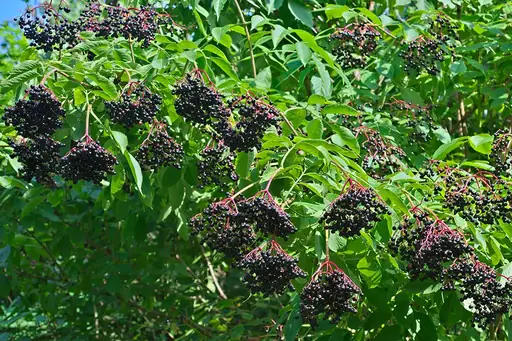
Elderberry (Sambucus spp.) should be pruned as part of your regular garden maintenance routine, just like other fruit-bearing trees and shrubs, to encourage abundant berry production while supporting overall health.
When growing these plants for their berries, particularly if you hope to be rewarded with a good harvest, you’ll need to know how to care for them properly to ensure plentiful fruit growth for you and for the local wildlife.
As the popularity of immune-supportive herbal remedies increases, so does the demand for healing plants like elderberries.
As a result, more farms are adopting the species as a profitable hedgerow, and gardeners include them frequently today in native plant and medicinal gardens.
Not much goes into pruning elder trees – the task is simple, particularly if ample space is available for the plants to spread and grow. Let’s take a look at what’s involved.
Here’s everything we’ll cover up ahead:
What You’ll Learn
- Why Should You Trim Elderberry Trees?
- When to Trim
- How to Prune
- A Pruning Precaution
Why Should You Trim Elderberry Trees?
But, because our garden receives a bit more irrigation than the trees on the trail do, mine grew larger and more quickly in cultivation than those growing in the wild nearby.
Photo by Kat Sanchez.To maintain a canopy size that did not overshade garden beds and to gather juicy berries throughout the summer, I quickly learned that pruning was an important aspect of this tree’s maintenance in our landscape.
You may notice dead branches now and then, broken in strong wind, or maybe an animal has split or broken a limb. Removing any dead plant matter will support the vitality of the tree.
This is a helpful tip in guiding our approach to pruning elder trees.
When to Trim
Elderberry shrubs are ready for their first trim two to three years after transplanting. This gives them time to mature while allowing you to observe their growth patterns, which can help guide your approach to pruning.
One of the notable attributes of these plants is that they are not sensitive to hard pruning, which should encourage gardeners to trim them as needed to suit the available space.
Established plants shouldn’t suffer if you need to trim them back significantly, encouraging more rounds of robust berries.
Photo by Kat Sanchez.A traditional approach to pruning for those who wish to pick the berries is to prune it back after the harvest, typically in summer.
I grow elderberries at home for the benefit of local wildlife too. Many gardeners will wait to prune them when they are dormant in the winter instead.
Whenever you decide to get out the clippers, you have until they start budding to trim them, which will typically begin in early spring.
How to Prune
As I mentioned, elderberries can be pruned back severely, all the way to the ground if needed – though many experts recommend refraining from cutting below where the main trunk branches out.
They will respond with new growth that produces fragrant flowers in early spring followed by beautiful tart berries in summer.
Depending on your intention you can prune the tree all the way back after harvest, in late winter, or in early spring before bud break.
This will encourage a lot of new, vigorous growth in healthy plants that will fill out a wider space in the following growing season, while keeping height in check if you’ve pruned them back hard.
Just be sure to avoid trimming in weather that dips below freezing.
But many growers support a pruning plan similar to what you might do with cane berries, trimming back any branches older than three years to make way for productive new growth. Older branches are thicker in diameter, with darker and often cracked bark.
You can train your young elderberry to take on a tree form with a single trunk. Or you can encourage a more natural shrublike form with multiple trunks by refraining from cutting the strongest stems down.
As these leaders mature and attain more height, they will branch and form new shoots to create a tall canopy, with plants taking up less width at the base.
Any branches that are crossing, rubbing together, or growing in a direction that isn’t aesthetically pleasing may also be trimmed, as you might do with other types of shrubs.
Always be sure to trim branches at least a few inches away from the trunk, to avoid injuring the branch collar.
Make sure your pruners or loppers are sanitized prior to trimming and snip stems on an angle.
Long-Handled Anvil Lopper
Using long-handled loppers makes trimming long limbs easier and safer for you, as well as for the health of your plant!
This ultra-lightweight design is perfect for intensive pruning work without the stress that normally comes along with it.
A Pruning Precaution
For those gardening in California, it’s helpful to be aware that pruning may be restricted within the native range of a certain beetle.
In California’s Central Valley floor from Shasta County south to Fresno County, the US Fish and Wildlife Service has placed restrictions on pruning elderberry trees and shrubs due to the possible presence of the Valley elderberry longhorn beetle (Desmocerus californicus dimorphus), which is listed as threatened under the federal Endangered Species Act.
Desmocerus californicus dimorphus. Photo via Alamy.The beetles rely on blue (S. nigra ssp. cerulea) and red elderberries (S. racemosa) for food and their presence may go undetected, as the larvae burrow into elderberry stems.
Stems more than one inch in diameter cannot be pruned in the native range of these insects, and any pruning of smaller stems must be done between November and February.
Prune for Plentiful Berries
Maintaining elderberry trees and shrubs in the landscape with thoughtful pruning does not take away from their wild character – it supports it!
Since this tree responds with vigorous growth and ample quantities of berries when pruned, it’s a beneficial approach to supporting the local ecosystem, since native and introduced Sambucus species are an essential forage source for birds and other types of wildlife in many areas of the US.
Questions? Comments? Share them below!
If you’re intrigued by elderberries then these guides will also be of interest to you:
- How and When to Take Elderberry Cuttings to Propagate New Plants
- Harvesting and Preserving Elderberry: A Fruit for Food and Medicine
- How and When to Fertilize Elderberry Shrubs
- Facebook102
- X




質問とディスカッション