
When and How to Prune Hellebores
Hellebores, Helleborus spp., are evergreen flowering perennials in the Ranunculaceae family native to China, Europe, and the Mediterranean and suited to cultivation in Zones 4 to 9. They grow in partial to full shade with moderate moisture and fertile, well-draining soil. In late winter to early.
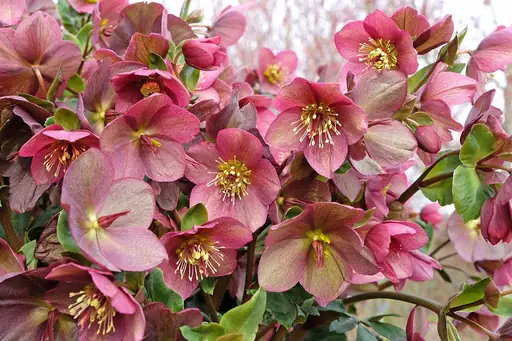
Hellebores, Helleborus spp., are evergreen flowering perennials in the Ranunculaceae family native to China, Europe, and the Mediterranean and suited to cultivation in Zones 4 to 9.
They grow in partial to full shade with moderate moisture and fertile, well-draining soil.
In late winter to early spring, they provide welcome color to the landscape, holding their nodding green, pink, purple, red, white, or yellow heads above the last of the snow.
Our guide to growing hellebores has all you need to know to plant and care for them in your early-season garden.
This article discusses how to prune plants to showcase the nodding blossoms, support foliar health, and tidy the garden.
What You’ll Learn
Growth Habits
Safe Handling
How to Prune
Let’s head out to the garden!
Growth Habits
There are two types of hellebores: stemmed, aka caulescent, and stemless or acaulescent.
Caulescent hellebore.Caulescent types have rhizomatous rootstock from which thick stalks rise.
Shoots branch from these stalks, bearing clusters of flowers that bloom high above basal mounds of evergreen foliage.
Acaulescent hellebores.Acaulescent varieties also have thick rhizomes, but instead of producing a main stalk from which budding stems branch, petite flower stems rise individually, side-by-side in a clump surrounded by last year’s foliage.
The leaves provide shelter for the emerging buds in the wintry landscape.
Let’s discuss how to trim both kinds.
Safe Handling
Whether planting, weeding around them, or pruning, it’s essential to wear protective gloves when working with hellebores.
All parts of the plant, including the sap, are toxic to people and pets, causing reactions ranging from contact dermatitis to poisoning from ingestion.
In addition, the serrated edges of large, older leaves may be sharp enough to penetrate fabric.
Consider a pair of washable gloves coated in nitrile, a synthetic rubber. It offers protection and is easy to clean.
These gloves from Wildflower Tools are breathable nylon with a rubbery nitrile coating on the palms and fingers for puncture resistance. They are machine washable.
Garden Gloves with Nitrile Coating
How to Prune
Hellebore foliage may be evergreen, but that doesn’t mean it comes through the winter in pristine condition.
By late winter, last year’s leaves are generally browned, flattened by snow, marred by leaf spot, and tattered.
Foliage in poor condition renders a plant vulnerable to pests and disease and detract from the beauty of the flowers.
Whether you grow caulescent, acaulescent, or both species, the appearance of buds and blooms in late spring to early winter signals the time to prune some or all of last year’s leaves.
Prepare for pruning by cleaning your gardening gloves per manufacturer recommendations.
Sanitize your pruning shears with nine parts water to one part bleach, rinse, and air dry them.
When the stalks of caulescent species are in bloom, you can remove up to a third of the leaves.
This not only restores aesthetics but it also improves airflow and renders plants less vulnerable to fungal disease.
If there are more unsightly leaves, wait until new foliage grows to remove the old ones, again, only a third at a time, to avoid stressing the plant.
Remove all of the large, dark green old leaves for acaulescent varieties so the fresh blooming stems stand alone.
Add about two inches of mulch around, but not touching, each clump of stems, to replace the insulation lost by removing the old foliage.
That’s all there is to early-season pruning.
Dispose of clippings in the trash to avoid inadvertently spreading leaf spot disease through the landscape.
In addition to annual early-season pruning, you may also want to deadhead spent flowers to prevent the spread of seeds and restore a tidy appearance for the remainder of the growing season.
Is seed dispersal detrimental?
Not necessarily, but home garden hellebores are generally hybrids that don’t reproduce “true.”
Their seeds may yield undesirable results, like different colored flowers and weed-like vigor, causing valued hybrids to be deprived of nutrients, space, and water.
To prevent seed dispersal, deadhead or cut spent blossoms when they fade, before seed pods form. An added benefit of removing spent flowers is that energy is redirected to foliar growth.
To deadhead:
- For caulescent types, cut off entire stalks of spent blooms as near their point of origin among the basal mound of foliage as possible.
- For acaulescent varieties, snip each flower stem individually near its base, leaving only fresh foliage to grace the post-bloom garden.
If you notice damaged, discolored, or disfigured leaves at any time during the growing season, snip them off at the base to inhibit pests and disease and maintain an attractive evergreen display.
It Couldn’t be Easier
Let’s summarize.
Prune last year’s battered leaves to tidy the garden, promote air circulation, make acaulescent blossoms more visible, inhibit pests and disease, and direct energy toward flower production.
Deadhead post-bloom to prevent self-sowing and direct energy toward a flush of fresh evergreen foliage.
And finally, snip the stems of leaves that are damaged, discolored, or disfigured at any time during the growing season.
Make notes in your garden planner about early-season pruning. It couldn’t be easier to get your shade-loving harbingers of spring off to a beautiful, healthy start.
Do you grow hellebores? Have you pruned them? Please share your experience in the comments section below.
If you found this guide informative and want to learn more about hellebore cultivation, we recommend the following guides next:
- How to Divide and Transplant Hellebores
- The Many Faces of Hellebores: 6 Unique Types to Love
- Why Hellebores May Fail to Bloom (And What to Do About It)
- Facebook78
- X




質問とディスカッション