
How and When to Water Calla Lilies
Whether you’re playing with a Slip ’N Slide, filling the ultimate water balloon, or growing a calla lily, the amount of water you use is pretty darn important. It can mean the difference between a smooth, lubricated slide or a painful belly flop on a plastic tarp. It can determine whether the.
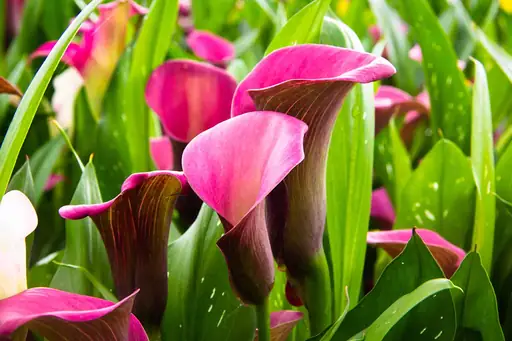
Whether you’re playing with a Slip ’N Slide, filling the ultimate water balloon, or growing a calla lily, the amount of water you use is pretty darn important.
It can mean the difference between a smooth, lubricated slide or a painful belly flop on a plastic tarp. It can determine whether the balloon pops on impact or bounces off your target.
And the dosage of agua applied can either keep a calla lily looking sharp, or leave it a bit dilapidated.
Believe me, it’s definitely worth the effort to keep calla lilies looking pretty.
With vibrantly colored and totally tubular flowers growing alongside lush, sword-like foliage, species of Zantedeschia are simply too gorgeous for suboptimal irrigation.
That’s why we’ve whipped up this little guide, to ensure that gardeners the world over can keep their calla lilies in peak form.
Here’s the gist of it:
Proper Calla Lily Watering
- A Calla Lily Primer
- When and How to Irrigate
- Factors to Keep in Mind
- Climate and Weather
- Containers Versus In-Ground Plantings
- Dormancy
- Growth Rate and Size
A Calla Lily Primer
With any plant we grow in the garden, it’s important to understand the conditions that would typically help it to thrive in its native environment.
That way, we can try our best to provide them in our own landscapes. Our guide to growing calla lilies can give you a refresher on how to cultivate these flowers in your garden.
Hailing from the swamps and marshes of southern Africa, wild Zantedeschia species can often be found growing next to bodies of water or in boggy areas – growing locations that usually exhibit some degree of moisture, whether merely damp or decently moist.
If you were able to ascertain based on this that these plants must love constant moisture, then you’d be absolutely right!
But don’t take this too far.
A calla lily that sits in oversaturated soil – whether from too much irrigation or not enough drainage – can become afflicted with root rot and other diseases, which may be fatal.
Too little water is just as problematic, but in a different way.
When a calla lily doesn’t receive the moisture that it needs, overall growth is compromised, the foliage can turn yellow or brown, and the entire specimen can take on a droopy wilt as its tissues lose turgor pressure.
In time, as symptoms worsen, plant death could easily occur.
When and How to Irrigate
Thankfully, proper irrigation timing and technique can help you avoid the above issues.
Let’s cut to the chase: for optimal health, Zantedeschia needs to sit in soil that’s kept constantly moist.
You’ll have to check the soil around your plantings regularly, especially in hot weather.
Ideally, the best time to check is in the morning so that, if the plant needs water, it can absorb the moisture before the day heats up.
Plus, this gives any splashed shoots time to dry before nightfall, which helps in preventing disease.
To check for moisture, simply stick a bare finger an inch deep into the soil.
Sense wetness? Then you should hold off on watering.
Feel nothing but dryness? Then it’s irrigation time!
With your trusty watering can or garden hose, directly water the root zone while doing your best to keep the foliage and flowers dry.
A few sprinkles here and there are often unavoidable, but if you’re giving your plants a full-on shower, then you’re doing it wrong.
For in-ground Zantedeschia, keep adding water until it ceases to percolate down into the soil profile as quickly, and definitely stop once H2O begins to collect at the soil’s surface.
If the soil drains well, this should be easy to discern. If not, then it’ll be harder to know whether the soil is actually saturated, or whether the water is just taking its sweet time to drain.
For container plantings, add water until it starts to trickle out the drainage holes at the bottom.
Factors to Keep in Mind
Of course, several different variables will affect how much and how often you irrigate.
Climate and Weather
A plant’s ambient environment definitely influences how much water it uses.
Hot, dry, windy, and sunny conditions will all increase a plant’s need, while cold, humid, windless, and shady conditions won’t strip away moisture as quickly.
Containers Versus In-Ground Plantings
As a general rule, plants grown in containers dry out faster, and will need more frequent irrigation than in-ground specimens.
Additionally, in-ground plantings often require more mobility to irrigate than container plantings do.
If you have a bad back, a tall pot could be just what the doctor ordered for reducing stress on your ailing lumbar spine.
Dormancy
Most species of Zantedeschia – save for the evergreen Z. aethiopica – will need to go through a wintertime dormancy period if they’re grown in-ground in USDA Hardiness Zones 8 to 11.
To induce winter dormancy in these plantings, you should cease irrigation in the fall once flowering stops. You can start to irrigate them again the following spring, after the last frost.
Growth Rate and Size
The more vigorously a plant grows and develops, the more transpiration occurs. And the more transpiration occurs, the more often water is needed.
Additionally, larger plants have larger tissues, which store, utilize, and subsequently lose larger amounts of water. They’ll need more than their smaller brethren.
Proper Irrigation: It’s Moist-Know Info
Watering well is an essential gardening skill, especially when calla lilies are involved.
Plus, the image of a gardener giving some calla lilies a hearty drink would make a great action shot for a scrapbook, lock screen, and/or dating profile – so get on that!
There may be some trial and error involved in the soil-checking process.
I personally tend to second-guess whether I’m feeling the coolness of moisture or a shadow has simply passed over the garden patch.
But don’t overthink it – if you need to, you can even pull out a soil moisture meter to back up your assessment.
Anything you feel like inquiring about or adding to the conversation can go in the comments section below!
Interested in more information about growing calla lilies in your landscape? Have a look-see at these here guides:
- 21 of the Best Calla Lilies for Sensational Summer Blooms
- Tips for Calla Lily Winter Care
- Should You Deadhead Calla Lilies?
- Facebook56
- X




質問とディスカッション