

このページは原文のまま表示されています。翻訳はまだご利用いただけません。
Seedsunセレクション
Hibiscus x sp. 'Peppermint Flare'
SKU: HIBI-X-PEPP-FLAI-01G
'Peppermint Flare' comes with a well-documented pedigree, which is rare for a hardy hibiscus. The plant arose as a sport, a spontaneous mutation, of the hibiscus 'Flare', a nearly sterile rose-mallow hybrid bred by Dr. Sam McFadden and released through the University of Florida. The Texas.
個別の見積もりをご依頼ください
価格、梱包サイズ、在庫状況は、お客様専用の見積書にてご確認いただけます。お問い合わせを送信しても、お支払い済みの注文は確定されません。
適性、播種方法、栽培条件について尋ねてください。
お見積書に記載されている配送オプションと必要書類をご確認ください。
この品種について
'Peppermint Flare' comes with a well-documented pedigree, which is rare for a hardy hibiscus. The plant arose as a sport, a spontaneous mutation, of the hibiscus 'Flare', a nearly sterile rose-mallow hybrid bred by Dr. Sam McFadden and released through the University of Florida. The Texas horticulturist Greg Grant spotted and selected the peppermint-striped form, and in 2010 the plant was named a Texas Superstar, the designation reserved for tough, proven performers in the Southern heat.
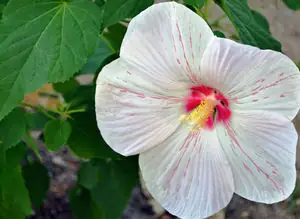
The name does the describing. Each flower opens enormous, eight to ten inches across, on petals of the palest pink to near white, finely streaked and flecked with scarlet and centered on a deep red eye, the whole effect like a swirl of peppermint candy. The blooms are among the largest of any hardy perennial, and though every one lasts just a day or two, the plants open in long succession from midsummer well into fall on a comparatively short frame of four to five feet.
Behind the show stands Hibiscus moscheutos, the native rose-mallow of American marshes and riverbanks, which lends the hybrid both hardiness and a fondness for moisture. That native parentage places 'Peppermint Flare' in the mallow family alongside cotton, okra, and the marshmallows, the soft, mucilaginous herbs of old kitchen gardens. Like the wild rose-mallows, the plant is happiest with steady water and will grow in genuinely wet ground that would rot most perennials.
In the garden, 'Peppermint Flare' wants to be seen. Set the plant at the back of a sunny border, beside a pond or in a rain garden, or anywhere a single bold perennial can anchor the late-summer scene, and pair the striped giants with simple green and blue-green companions that keep the peppermint flowers from having to compete. The stems die to the ground in winter and emerge late in spring, so tuck earlier perennials nearby to hold the space until the show returns.
さらに多くの発見があります



質問とディスカッション