

このページは原文のまま表示されています。翻訳はまだご利用いただけません。
Seedsunセレクション
Ilex ambigua
SKU: ILE-AMBI-01G
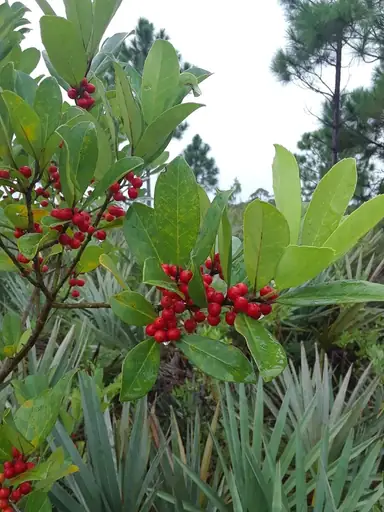
Ilex ambigua is the holly almost nobody offers, a medium to large deciduous shrub or small tree of ten to eighteen feet, running open and airy rather than dense. The leaves are small for a holly, thin, often glossy, and finely toothed, turning a soft yellow before falling. Female plants carry.
個別の見積もりをご依頼ください
価格、梱包サイズ、在庫状況は、お客様専用の見積書にてご確認いただけます。お問い合わせを送信しても、お支払い済みの注文は確定されません。
適性、播種方法、栽培条件について尋ねてください。
お見積書に記載されている配送オプションと必要書類をご確認ください。
この品種について
Ilex ambigua is the holly almost nobody offers, a medium to large deciduous shrub or small tree of ten to eighteen feet, running open and airy rather than dense. The leaves are small for a holly, thin, often glossy, and finely toothed, turning a soft yellow before falling. Female plants carry berries that are noticeably large for the size of the plant, bright red and handsome in early autumn, though in our experience here they drop rather sooner than the berries of most hollies, so this is a plant for early fall color rather than for a red Christmas. The habit is loose and the bark smooth gray, and the whole effect is closer to a small serviceberry than to the dense evergreen most people picture when they hear holly.
The name carries a small confession. André Michaux described the plant in 1803 as Prinos ambiguus, and Torrey moved the species into Ilex forty years later. Ambigua means doubtful or uncertain, applied here because the species so closely resembles several neighboring hollies that even careful botanists hesitate over herbarium sheets. Ilex itself is borrowed from the classical Latin name of the Mediterranean holm oak, whose leaves the European holly happens to imitate, a piece of botanical name-swapping that has confused people for two thousand years and shows no sign of stopping.
Carolina holly belongs to the sandhills and dry upland woods of the Coastal Plain, from North Carolina and Oklahoma south through Georgia, Alabama, the Gulf states, and into central Florida. This is a plant of poor sand and pine-oak scrub, of exactly the ground that defeats most nursery stock, and that tolerance is the strongest argument for growing it. Deciduous hollies as a group are notably valuable to wildlife: the flowers feed bees in spring and the fruit feeds birds and small mammals through autumn. Unlike the yaupon, Carolina holly carries no caffeine and no ceremonial tradition, which is probably why the species slipped out of the horticultural record almost entirely.
Hollies are dioecious, and this is the fact that matters most before you buy: berries appear only on female plants, and only when a male grows within pollinating distance. Plan for a group rather than a single specimen if fruit is the goal. Site in full sun to light shade on dry, sandy, sharply drained ground; heavy wet soil is the one thing Carolina holly genuinely dislikes. Once established the shrub is drought tolerant and largely self-sufficient. Use at a woodland edge, in a sandhill restoration, or in the transitional zone between garden and pine woods, alongside Vaccinium arboreum, Ilex vomitoria, and Quercus incana. This one is for collectors and native plant gardeners; nobody has ever bought a Carolina holly by accident.
さらに多くの発見があります



質問とディスカッション