

このページは原文のまま表示されています。翻訳はまだご利用いただけません。
Seedsunセレクション
Kalmia latifolia
SKU: KALM-LATI-01G
Mountain laurel is the aristocrat of the American heath family (Ericaceae), a broadleaf evergreen native from southern Maine to the Florida panhandle and west toward Indiana and Louisiana, most at home on the acid, rocky slopes of the Appalachians. Linnaeus named the genus Kalmia for his student.
個別の見積もりをご依頼ください
価格、梱包サイズ、在庫状況は、お客様専用の見積書にてご確認いただけます。お問い合わせを送信しても、お支払い済みの注文は確定されません。
適性、播種方法、栽培条件について尋ねてください。
お見積書に記載されている配送オプションと必要書類をご確認ください。
この品種について
Mountain laurel is the aristocrat of the American heath family (Ericaceae), a broadleaf evergreen native from southern Maine to the Florida panhandle and west toward Indiana and Louisiana, most at home on the acid, rocky slopes of the Appalachians. Linnaeus named the genus Kalmia for his student Pehr Kalm, the Finnish-Swedish naturalist who botanized the eastern colonies in the 1740s, and the species epithet latifolia means broad-leaved. To gardeners the shrub answers to a whole drawer of common names: calico bush for the patterned flowers, spoonwood for the wood, and simply mountain laurel across most of the range.
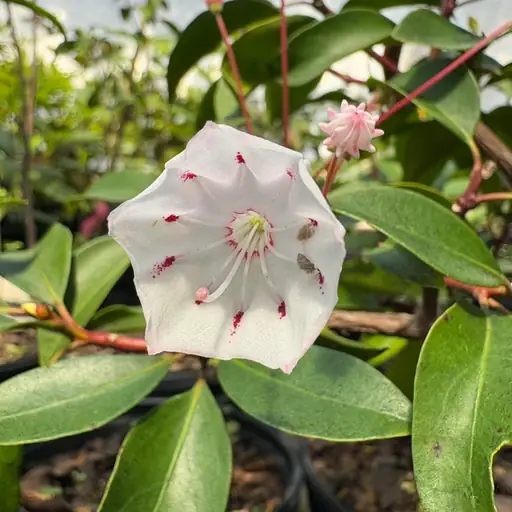
In late spring and early summer, mountain laurel covers a dense, rounded, glossy-leaved frame with rounded clusters of cup-shaped flowers, white to soft pink and freckled with deeper rose inside. The buds are the real showpiece, crimped and fluted like tiny cake decorations before they open. Each flower carries the family's signature mechanism: ten stamens bent back into small pockets in the corolla and held under spring tension, ready to snap forward and dust a visiting bee the instant the bloom is jostled. A mature plant, with reddish, sinuous bark and leathery leaves, holds structure through all four seasons.
The common name spoonwood records how deeply people once relied on this shrub. The hard, close-grained wood was carved into spoons and small utensils by Indigenous peoples of the East and later turned for tool handles, bowls, wreaths, and even the gearing of early wooden clocks. That usefulness came with a sharp warning, though. Every green part of mountain laurel, along with the pollen and any honey made from the flowers, contains grayanotoxins, and the foliage has poisoned livestock, wildlife, and people alike. For that reason the shrub is grown strictly as an ornamental and wildlife plant, never a medicinal or edible one, and the leaves are best kept well away from grazing animals and curious mouths.
In the garden, mountain laurel is the backbone broadleaf evergreen for acid, woodland soil. Give the shrub the dappled light of a high pine or oak canopy, plant high rather than deep so the shallow roots never drown, and mulch with pine straw to keep the root run cool and sour. Mountain laurel settles beautifully among rhododendrons, blueberries, inkberry, and native ferns, and the toxic foliage doubles as reliable deer resistance where browsing pressure runs high. Slow to build but long-lived and quietly magnificent once established, this is a shrub to plant for decades rather than seasons.
さらに多くの発見があります



質問とディスカッション