

このページは原文のまま表示されています。翻訳はまだご利用いただけません。
Seedsunセレクション
Lonicera x purpusii
SKU: LONI-X-PURP-01G
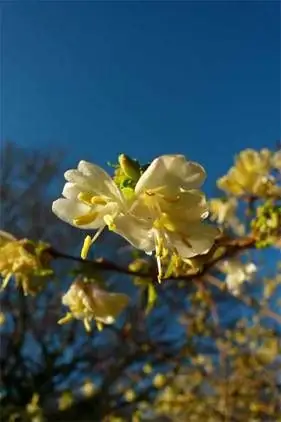
In the dead of winter, when the garden asks for little and gives less, Lonicera × purpusii answers with perfume. This winter honeysuckle is a hybrid of two Chinese species, Lonicera fragrantissima and Lonicera standishii, and carries the best of both: small, creamy-white, tubular flowers that open.
個別の見積もりをご依頼ください
価格、梱包サイズ、在庫状況は、お客様専用の見積書にてご確認いただけます。お問い合わせを送信しても、お支払い済みの注文は確定されません。
適性、播種方法、栽培条件について尋ねてください。
お見積書に記載されている配送オプションと必要書類をご確認ください。
この品種について
In the dead of winter, when the garden asks for little and gives less, Lonicera × purpusii answers with perfume. This winter honeysuckle is a hybrid of two Chinese species, Lonicera fragrantissima and Lonicera standishii, and carries the best of both: small, creamy-white, tubular flowers that open along the bare stems from late winter into early spring, throwing a clean, lemon-sweet fragrance that carries yards on a mild day.
The cross arose before 1920 at the Darmstadt Botanic Garden in Germany and has been quietly cherished ever since. Many gardeners find the hybrid a neater, better-furnished plant than the familiar winter honeysuckle, Lonicera fragrantissima, though the two share that same remarkable gift of scent in the cold months. The genus Lonicera honors Adam Lonitzer, a sixteenth-century German herbalist, and the honeysuckles belong to the family Caprifoliaceae.
This is a shrub rather than a vine, a large, arching, semi-evergreen mound of six to eight feet, dense enough in leaf to serve as an informal screen once the flowers have passed. The winter blooms are loaded with nectar and worked by whatever bees venture out on warm days, a real gift at a hungry season, and a scattering of translucent red berries may follow where the winter stayed mild. Unlike the weedy bush honeysuckles, the hybrid sets little fruit and seldom wanders, though a watchful eye never hurts in the mildest climates.
Site the winter honeysuckle where the fragrance will be used: beside a path, a gate, a driveway, or a door that sees winter traffic, since the flowers are modest to the eye and the scent is the real event. Full sun to part shade and ordinary, well-drained soil are all the plant asks. Because bloom comes on the previous season's wood, prune right after flowering to shape and to keep the shrub open, and enjoy the cut stems indoors, where a single sprig can scent a room.
さらに多くの発見があります



質問とディスカッション