

このページは原文のまま表示されています。翻訳はまだご利用いただけません。
Seedsunセレクション
Magnolia ashei x macrophylla
SKU: MAGN-ASHE-MACR-01G
Magnolia ashei × macrophylla is a rare hybrid of colossal foliage and dinner-plate blooms, a deliberate cross between two of North America's most dramatic native magnolias: the endangered Ashe magnolia, Magnolia ashei, and the bigleaf magnolia, Magnolia macrophylla. The cross brings together the.
個別の見積もりをご依頼ください
価格、梱包サイズ、在庫状況は、お客様専用の見積書にてご確認いただけます。お問い合わせを送信しても、お支払い済みの注文は確定されません。
適性、播種方法、栽培条件について尋ねてください。
お見積書に記載されている配送オプションと必要書類をご確認ください。
この品種について
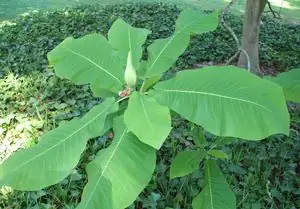
Magnolia ashei × macrophylla is a rare hybrid of colossal foliage and dinner-plate blooms, a deliberate cross between two of North America's most dramatic native magnolias: the endangered Ashe magnolia, Magnolia ashei, and the bigleaf magnolia, Magnolia macrophylla. The cross brings together the best of both parents, the immense tropical-looking leaves, the enormous fragrant flowers, and a habit that settles into a handsome middle ground between shrub and small tree.
The hybrid was first raised by Dr. Fred Meyer at the United States National Arboretum, and remains uncommon in gardens. The genus name honors Pierre Magnol, the seventeenth-century botanist of Montpellier; macrophylla is simply Greek for large-leaved, and ashei remembers William Willard Ashe, the pioneering United States Forest Service forester who botanized the Southeast. Both parents belong to the small group of American bigleaf magnolias famous for the largest simple leaves of any tree on the continent, and this cross inherits the trait in full: single leaves that can pass two feet in length, pale and almost silvered beneath, building a bold, primeval silhouette in a shaded corner.
Magnolias are among the most ancient of flowering plants, in bloom long before bees existed, and to this day the heavy, fruit-scented flowers are worked chiefly by beetles rather than bees. In late spring and early summer the branches of this hybrid carry huge, creamy-white goblets, richly fragrant and marked with purple at the base of the inner petals, blooms that rival any exotic for sheer scale. From the shrubby Ashe parent the cross often takes an obliging habit of flowering while still young, a rare gift among the big magnolias. By late summer the spent flowers give way to rosy, cone-like fruit clusters that split to dangle scarlet seeds on slender threads for birds.
In stature this hybrid grows between the parents, more upright and tree-like than the low, spreading Ashe magnolia, yet nowhere near as lofty as the towering bigleaf, settling in around twenty-five to thirty-five feet over many years. The intermediate frame, along with the precocious flowering, makes the plant far easier to place in an ordinary garden than either parent alone.
This is a magnolia of presence and poise, at best as a specimen or a focal point in a sheltered, richly planted shade garden. Give rich, moist, well-drained soil and shelter from wind, since the great leaves tear in a gale, and site the plant where the vast foliage and flowers can be met at close range. A mature specimen at Hopelands Gardens in Aiken, South Carolina, stands as a living measure of what this uncommon cross can become in a Southern garden.
さらに多くの発見があります



質問とディスカッション