
9 of the Best Artichoke Cultivars to Grow at Home
So you’ve made the brilliant decision to grow your own artichokes, a unique and rewarding type of backyard vegetable. But long before you pick your homegrown crop, you’ll want to pick the right artichoke cultivar. And you have many options when it comes to choosing a variety. You will want to.
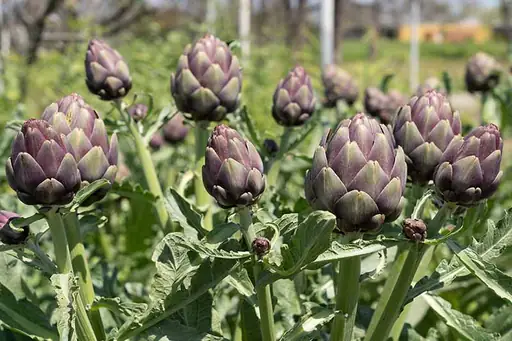
So you’ve made the brilliant decision to grow your own artichokes, a unique and rewarding type of backyard vegetable.
But long before you pick your homegrown crop, you’ll want to pick the right artichoke cultivar.
And you have many options when it comes to choosing a variety.
You will want to choose one that has a low chill requirement if you have mild winters. But on the other hand, if your summers are short, you may need an early maturing variety.
Some gardeners are tight on space, and may want to select a cultivar known for its smaller stature.
Or perhaps it’s all about saving your skin with a crop of spineless plants?
And of course, if your preferences are purely aesthetic, you might prefer to choose a lovely purple variety for its ornamental value.
The following selections will provide you with a range of options, so you can make the most of this potentially perennial garden plant. Ready for a sneak peek? Here’s what’s ahead:
9 of the Best Artichoke Cultivars to Grow at Home
- Colorado Star
- Emerald
- Green Globe Improved
- Imperial Star
- Purple Italian Globe
- Purple Romagna
- Tavor
- Violet de Provence
- Violetta di Chioggia
1. Colorado Star
As its name suggests, ‘Colorado Star’ was bred to come to maturity in regions with shorter growing seasons, such as those experienced in the Rocky Mountain State.
Unlike the standard slow-growing artichokes, this very early cultivar reaches maturity in just 75 days.
To meet this tight summer deadline, this open-pollinated variety produces shorter specimens, ranging from one to three feet in height, making it well-suited for more compact gardens.
Plants can be upright or prostrate and are spiny, with buds varying in color from purplish green to deep purple. Prostrate specimens may benefit from staking.
This variety, also called ‘Colorado Red Star,’ only needs ten days of cool weather for vernalization.
‘Colorado Star’ is perennial in USDA Hardiness Zones 7-10, and will provide a crop of six to ten heads per plant.
2. Emerald
‘Emerald’ is a productive hybrid variety that boasts excellent resistance to both cold and heat.
These thornless artichoke plants reach five feet tall, with bright green buds that are five inches in diameter at maturity.
According to Joseph Masabni at the Texas A&M Extension, this variety requires little to no vernalization, so it’s well-suited to warmer growing zones.
‘Emerald’ Seeds
‘Emerald’ needs 180 days to produce a harvest and is very productive – you can expect up to twelve buds per plant.
3. Green Globe Improved
‘Green Globe Improved’ is a more refined variety of the old heirloom ‘Green Globe’ artichoke.
Compared to ‘Green Globe,’ this improved variety has fewer spines, is more productive, and plants are more uniform in size. However, it is a bit slower to reach maturity than ‘Green Globe.’
‘Green Globe Improved’ grows to be five feet tall, and four to eight feet wide.
Expect three to five buds per plant in the first year, and more in subsequent years for perennials.
‘Green Globe Improved’ Seeds
‘Green Globe Improved’ will reach maturity in 150 to 180 days, and will be most productive with approximately 1,300 chill hours per season.
You’ll find ‘Green Globe Improved’ for purchase in packets of 18 seeds from .
4. Imperial Star
‘Imperial Star’ is an artichoke cultivar that provides an early harvest of sweet, mild buds in the first year of growth.
This shorter season, open-pollinated variety produces nearly spineless, green-colored buds that are ready to harvest 85 to 90 days after transplanting.
‘Imperial Star’ plants are on the smaller side, growing to be one and a half to four feet tall, a more manageable size for container gardening.
This cultivar has good disease resistance and tolerates light frosts, but unless you’re in USDA Hardiness Zone 7 or someplace warmer, it should be grown as an annual.
If you’re not sure what the difference is between annuals and perennials, you can learn more in our article.
‘Imperial Star’ Seeds
‘Imperial Star’ only needs 200 to 250 chill hours, producing one or two primary buds, and between five and seven secondary buds per plant.
‘Imperial Star’ Live Plants
If you prefer to get a jumpstart on the growing season, you can also purchase live ‘Imperial Star’ plants at that are ready for transplanting.
5. Purple Italian Globe
If you’d like an artichoke with some history, ‘Purple Italian Globe’ is a beautiful purple heirloom variety from Italy.
This open-pollinated cultivar shows good tolerance to both heat and cold.
‘Purple Italian Globe’ produces a harvest of six to eight tender and delicious buds, measuring three to six inches in diameter at harvest time.
‘Purple Italian Globe’ Seeds
‘Purple Italian Globe’ requires 120 days of growth before a crop is ready to harvest.
You can purchase ‘Purple Italian Globe’ in an array of packet sizes at .
6. Purple Romagna
Also known as ‘Purple of Romagna’ or ‘Violetto di Romagna,’ this open-pollinated heirloom comes from the Emilia-Romagna region of Italy.
Buds are three inches wide at maturity and deep purple to green colored on spineless, five-foot-tall plants. These artichokes are prized for their large, tender hearts.
‘Purple Romagna’ Seeds
‘Purple Romagna’ can perennialize in USDA Hardiness Zones 7-10, and will produce a prolific harvest in 85 to 100 days.
7. Tavor
‘Tavor’ is an early-maturing variety with a low chill requirement, permitting many gardeners to enjoy a harvest in a single growing season.
Heads are green with purple tips, and measure four and a half inches across when they’re ready to pick.
Also called ‘Tavor Imperial Star,’ these open-pollinated plants are two to four feet tall, have an open growth habit, and are nearly spineless.
This cultivar is a perennial in USDA Hardiness Zones 7 and up, with improved cold tolerance.
‘Tavor’ Seeds
‘Tavor’ requires 90 days to reach maturity, producing seven or eight buds per plant – one or two primary buds, and five to seven secondary buds.
You can purchase ‘Tavor’ seeds from High Mowing Organic Seeds.
8. Violet de Provence
‘Violet de Provence’ is an early, productive heirloom from the South of France that is well-adapted to warm climates.
This open-pollinated artichoke, whose name means “purple from Provence,” is a rare find outside of Europe.
‘Violet de Provence’ has purple, elongated buds, and tightly closed bracts.
The buds of this cultivar are best picked when they are very small – when they’re just one to two inches wide – and enjoyed as baby artichokes. At this size they are extremely tender, and can be eaten raw.
‘Violet de Provence’ plants grow to be 30 to 40 inches tall. Perennialized, they will produce for several years.
‘Violet de Provence’ Seeds
Allow 120 days before harvesting your ‘Violet de Provence’ crop.
You’ll find ‘Violet de Provence’ seeds in a selection of package sizes at .
9. Violetta di Chioggia
‘Violetta di Chioggia’ is an heirloom variety that comes from the Veneto region of Northern Italy.
Does Chioggia sound familiar?
In addition to ‘Violetta di Chioggia,’ the town of Chioggia is known for a few other heirloom vegetable varieties as well, including a beautiful beet variety that reveals concentric pink and white rings when sliced horizontally.
Also known as ‘Violetto di Chioggia,’ this shorter season artichoke is loved for its purple, slightly elongated buds.
More cold tolerant than the most common cultivar ‘Green Globe,’ ‘Violetta di Chioggia’ is hardy to Zone 6, and requires 120 days to reach maturity.
These heirloom plants produce six to eight buds each.
Choose Your ‘Chokes
With these choices, you should be all set for a successful season of artichoke growing – and a satisfying harvest.
Choose a cultivar that is well-adapted to your climate, consider the size of the mature plant, and of course, let your sense of whimsy guide you to that lovely heirloom or purple variety!
Which cultivar will you grow? Do you have any other favorites you’d like to share with our readers? Let us know in the comments section below.
You can learn more about growing these veggies in our complete guide to growing artichokes.
And if you’re interested in other perennial vegetables, here are some additional articles which are sure to be helpful:
- How to Overwinter Artichoke Plants
- How to Plant and Grow Ramps
- Great Tips: A Grower’s Guide to Asparagus
- Add Some Spice to Your Life: Grow Your Own Horseradish
- Facebook46
- X
질문 및 토론