
How to Overwinter Bird of Paradise Plants
When I first moved to southern California from Montana to attend university, I was amazed by the diverse array of stunning plants: the pink sprays of bougainvillea, the purple flush of jacaranda trees, the orange-tufted, sharp-beaked birds of paradise. It’s uncanny how much this flower resembles a.
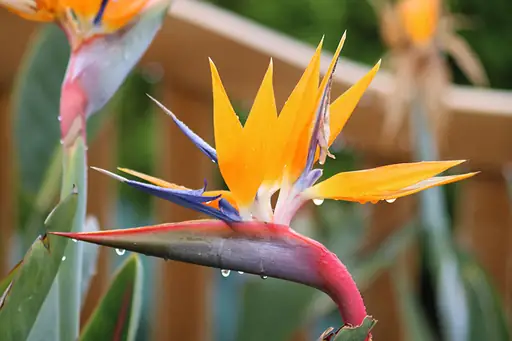
When I first moved to southern California from Montana to attend university, I was amazed by the diverse array of stunning plants: the pink sprays of bougainvillea, the purple flush of jacaranda trees, the orange-tufted, sharp-beaked birds of paradise.
It’s uncanny how much this flower resembles a tropical bird, isn’t it? Also known as crane flower, bird of paradise (Strelitzia spp.) belongs to the Strelitziaceae family, of which Madagascar’s theatrical traveler’s palm (Ravenala madagascariensis) is also a part.
This family loves drama, and it’s fantastic if you’re looking for stunning ornamentals to add to the garden.
Bird of paradise is an evergreen tropical plant native to South Africa, but it’s grown in warm locales around the world. There are five species in this genus, and all may be referred to by the same common name.
All members thrive in USDA Hardiness Zones 10-12, and sometimes Zone 9 – with ample protection.
If you’re lucky enough to be growing one of these beauties in your yard or garden, you might be wondering how to best care for it during the winter.
We’ve got you covered. Here’s what I will cover in this guide:
What You’ll Learn
- What Happens to Bird of Paradise Plants in the Winter?
- Plant It in a Container
- Transplanting to Another Container
- What If I Want My Plant to Stay in the Ground?
- An Important Note About Water
These plants can suffer if temperatures dip below freezing in the winter. Read on to find out how to overwinter your bird of paradise if you live in Zone 9, or are daring to grow the gorgeous birdlike blooms in Zone 8.
And if you’re looking for basic tips to get started, you can begin with our growing guide.
What Happens to Bird of Paradise Plants in Cold Weather?
The very lowest temperature that Strelitzia plants can handle is 24°F for just a short amount of time, according to Sydney Park Brown and Robert J. Black of the University of Florida Institute of Food and Agricultural Sciences (IFAS) Extension.
But that doesn’t mean they won’t pay a price for withstanding such a chilly dip in temperature. Any temperature below 32°F can injure flowers and developing buds.
Here’s what you can do to help keep your plant warm in the winter.
Plant It in a Container
If you live in Zones 8 or 9, consider planting your bird of paradise in a container the moment you bring it home from the nursery. If your plant is growing in a pot, it’s easy to move it indoors when you see a freeze warning in the forecast for your area.
This generally works only for the smaller S. reginae. You’d have to have a mighty big container to house the treelike S. alba or S. nicolai.
S. reginae can grow up to six feet tall and three feet wide, so keep this in mind when you purchase a container. If your plant is still young and relatively small, you can repot it each spring as it grows.
Aim for a pot that’s at least 12 inches wide and deep for a smaller plant, and one that’s at least 34 inches deep and wide for a larger one. Ensure that it has good drainage, with a hole or several in the bottom of the pot.
Fill the container with two parts potting soil and one part perlite. Gently compress the nursery pot to loosen the edges of the plant. Grasp the stalk and carefully remove the plant, and place it directly into the waiting pot.
Brush some of the soil away from the root ball to loosen the roots. Tease apart the tuber-like roots so they fan out over the soil. Then, cover everything up and give it a deep watering that drains out the bottom of the pot.
Keep it next to your sunniest windowsill, and move it outside again as soon as the temperatures allow – the plant is more likely to produce an attractive profusion of flowers if it is grown outdoors.
Read more about growing birds of paradise as houseplants here.
Transplanting to a Container
Did you already put your bird of paradise in the ground, only to realize that it’s likely to suffer during the winter?
You can still transplant it to a container. Just fill a large pot – one that’s at least 12 inches wide and deep, or larger, depending on the size of the plant – with two parts potting soil and one part perlite.
First, soak the root system with a running hose for about 10-15 minutes. Wait about 20 minutes after you finish watering it for the water to soften the roots. Then, mark a 10-inch radius around the plant.
Using a trenching shovel, dig down about 18 inches, following that radial line. You’ll probably need a friend to help you lift the heavy plant (and its root ball!).
Don’t worry too much about breaking pieces of root here and there – these plants are tough. A little too tough, perhaps…
Place the plant in the pot and fan out the roots. Backfill with soil and water thoroughly, until liquid drains out the bottom.
Now, you can bring your plant inside to shelter it during cold spells!
Find more tips on transplanting birds of paradise plants here.
What If I Want My Plant to Stay in the Ground?
Maybe you live in Zone 10 or 11 and you’re not that worried about the winter. But you do want to know how you can keep your bird of paradise warm if, say, there’s a cold snap that’s too close to 32°F for comfort.
Or maybe you live in Zone 8 or 9 and have planted a giant S. nicolai or S. alba that you can’t just pot up and bring inside.
How can you keep it warm?
You cut it down.
But not like that. As you would if you were overwintering the closely related banana plant, you need to cut the stem and leaves down to just 12 inches above the ground.
Next, cover the entire stem and rhizome area with mulch. Start with nice, chunky bark mulch spread over the rhizome area, and then add leaves and straw to finish off the thick layer of warmth your precious Strelitzia will need in order to survive the winter.
Cover the heap of mulch with breathable row cover material and stake it down. Voila! Your plant will stay warm through the winter, and as soon as warmer temperatures arrive, you can free it of its little nest and let it regrow those lovely stems and leaves.
An Important Note About Water
Make sure you continue watering your plant through the winter, unless you experience an actual freeze.
You don’t need to keep the soil moist like you do in the spring and summer. Instead, allow the soil to dry out in between watering sessions during the winter.
When you see that the surface soil is dry, wait a day or two, and then water again.
A Fountain of Youth
With proper wintertime care, your bird of paradise beauties will thrive for years.
I bet the blooms that graced the sidewalk borders at my alma mater when they first wowed me ten years ago are still thriving to this day, because the gardeners there are absolutely excellent.
And so are you! If you have any stories, tips, or questions about overwintering Strelitzia plants, drop me a line in the comments below.
In the meantime, check out these guides on growing and caring for birds of paradise plants next:
- What Are the Different Types of Bird of Paradise Plants?
- How to Prevent and Treat Common Bird of Paradise Diseases
- How and When to Prune Bird of Paradise Plants
- Facebook30
- X




질문 및 토론