
Should You Deadhead Daylilies?
Daylilies, Hemerocallis spp. are perennials for Zones 3 to 9 that bloom with star-like flowers in a variety of colors, including yellow, purple, pink, and orange. Bloom time varies by type, with many opening in early to midsummer and some continuing until frost. The plants have a fountain-like.
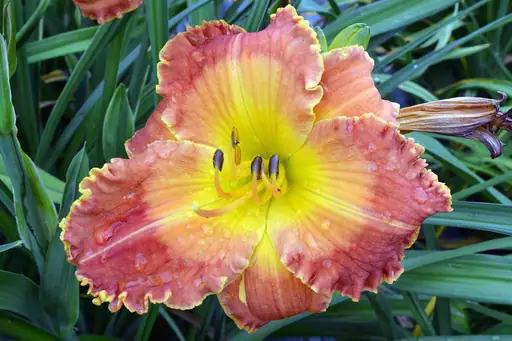
Daylilies, Hemerocallis spp. are perennials for Zones 3 to 9 that bloom with star-like flowers in a variety of colors, including yellow, purple, pink, and orange.
Bloom time varies by type, with many opening in early to midsummer and some continuing until frost.
The plants have a fountain-like growth habit, with slender, arching foliage and leafless scapes bearing multiple buds that bloom in succession, each for just one day. They prefer full sun placements and tolerate a variety of well-draining soils.
Our guide to growing daylilies has all you need to know to grow them in your outdoor living space.
This article discusses the practice of deadheading and whether or not it is beneficial for daylilies.
Here’s what we’ll cover:
What You’ll Learn
What Is Deadheading?
How to Deadhead Daylilies
Removing Scapes and Seed Pods
Let’s head out to the garden!
What Is Deadheading?
Deadheading refers to the removal of spent or faded flowers before they have a chance to set seed.
Removing spent blooms causes the plant to redirect energy from seed production back to foliar growth and, hopefully, more buds and blooms.
The practice can be tedious with plants that produce copious quantities of blossoms, but even occasionally removing the spent ones can help extend blooming.
It also tidies up appearances, giving plants a youthful, early-season freshness.
How to Deadhead Daylilies
When a flowering species has one blossom per stem, such as bee balm, we remove the entire stem when the petals fade.
For those that produce multiple flowers per scape, you need to pinch off each wilted bloom at its base taking care not to disturb the fresh ones.
Deadheading multiflowered scapes like those produced by daylilies can be a bit of a challenge because as they close and wither, the petals become limp and sticky, often adhering to other parts of the plant or adjacent flora. Keeping on top of deadheading can help prevent this.
In addition, you’ll need a steady hand to avoid knocking off unopened buds while removing faded blooms. Hold the scape with one hand, grasp the spent blossom at its base, bend it downward, and snap it off. It’s okay if the short stem, or petiole, remains.
It’s best to wear gloves when handling your daylilies as they contain sap that can irritate sensitive skin.
Removing Scapes and Seed Pods
When an entire flower scape finishes blooming, it’s important to remove it so the plant redirects energy to new growth.
To do this, clean your pruners with a solution of nine parts water to one part bleach, rinse, and dry them. Snip off the scape as close to the base as possible without damaging nearby foliage.
Without deadheading, late-season scapes produce green seed pods. Snip these off before they turn brown to redirect energy to the roots to support next year’s floral display.
If the pods are allowed to dry and disperse seeds, the plant will still produce flowers the following season, but blooming may not be quite as vigorous.
And because today’s garden varieties are almost all cultivated hybrids rather than species plants, the seeds are virtually useless, as they will not produce replicas of parent plants and may not even be viable.
Fountains of Youth
As we’ve seen, deadheading daylilies, including removing spent scapes and green seed pods, is a worthy endeavor that enhances a garden display by promoting more flower production, tidying up the garden, and feeding the roots for next year’s floral display.
An additional benefit is that once you make the practice part of your gardening routine, you’ll find you are more attentive to your plants, viewing them up close regularly, monitoring for moisture stress, and promptly addressing any pests and pathogens.
Add deadheading to your garden planner and prepare to enjoy beds and borders overflowing with gracefully arching foliage adorned by fresh-faced daylilies.
Do you deadhead your plants? Let us know in the comments section below!
And for more information about growing daylilies, check out these guides next:
- Understanding, Treating, and Avoiding Rust on Daylilies
- When and How to Divide Daylilies
- When and How to Transplant Daylilies
- Facebook40
- X




질문 및 토론