
Full Sun Doesn’t Always Mean Full Sun
In the plant world, when does “full sun” not really mean full sun? When you live in a place that gets really, really hot for a really long time. When we go to the garden store, and our attention is captured by an interesting-looking species that’s new to us, we’ll often look for that little plastic.
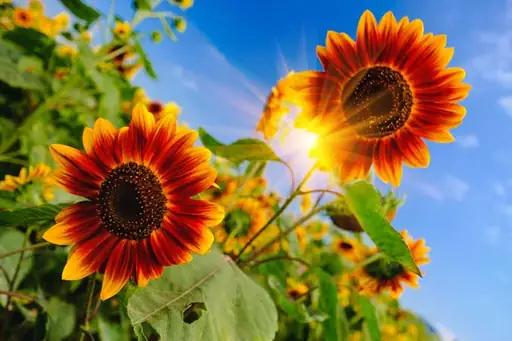
In the plant world, when does “full sun” not really mean full sun?
When you live in a place that gets really, really hot for a really long time.
When we go to the garden store, and our attention is captured by an interesting-looking species that’s new to us, we’ll often look for that little plastic pick that’s inserted into the pot, or if it’s a seed packet we’re intrigued by, we’ll flip it over to learn more.
We’re looking for the variety’s biography to tell us how tall and wide the plant grows, how much water it needs, and how much sun it should have.
And therein lies the kicker for those of us in the southern parts of the country.
Many species whose labels claim the plant can take a lot of sun would just burn up in, say, most of Texas, or the desert Southwest, or other hot and sunny parts of the United States.
In summer, these areas are treated to more than 12 hours of punishing sun — and high temperatures — per day.
It’s a hardy plant indeed that can take that kind of exposure and still look fabulous.
So what does “full sun” actually mean for us in the South and Southwest? How do we enjoy a beautiful garden without the risk of losing everything in the grueling heat of July and August?
Those of us in zones 8a and higher have to be careful with how much sun we give our plants — although some areas with a lot of humidity might have better luck.
We consulted experts in several states. Across the board, their advice fell into two main categories. Let’s look at what they had to say.
Location, Location, Location
Every one of our experts said that choosing the site for your plants is of critical importance.
“‘Full sun’ means 6-8 hours of sun,” says Ron Bowen, Coordinator of the Master Gardeners at the University of Arizona Cooperative Extension. “And plants generally prefer morning sun.”
For species that might not be able to handle hours and hours of brutal sun exposure, Bowen recommends that you situate them in such a way that they receive morning sun and afternoon shade.
University of Nevada Cooperative Extension agent Angela O’Callaghan, who holds a doctorate in horticulture, agrees with Bowen.
Her advice to gardeners in Clark County (home of Las Vegas) is to pay attention to directional sun exposure. “If you are growing something for flowers or, by extension, for fruit, these plants will need eight hours of sun, but put them somewhere where’ll they’ll get bright light from 6 a.m. to 2 p.m.,” she says. “West-facing might not be the best idea for these types.”
Bowen adds that some commercial growers have started to add heat tolerance information on their labels. “These labels have only been out for a couple years, mostly in the south,” he says, adding that it’s smart to check these guides for additional information as to what kind of climatic conditions a particular plant can tolerate.
“Hopefully more growers will adopt the heat tolerance labeling soon,” Bowen adds.
Go Native
Another common theme we heard from our experts was the importance of being smart about which species and varieties you choose for your garden.
“You can grow almost anything if you’re willing to spend inordinate amounts of time and resources,” says O’Callaghan “But does that really make sense?”
If It’s Not Meant to Be, It’s Not Meant to Be
Infatuated by azaleas’ legendary beauty and perhaps remembering the captivating fragrance of a childhood visit to Grandma’s house, my neighbors across the street insisted on planting azaleas.
In Austin’s notoriously alkaline dirt.
They trucked in acidic soil, added thick layers of mulch, watered obsessively, and even misted. They took loving care of the nearby trees that they hoped would provide the required shade and coolness for the dazzling shrubs.
In short, they did everything they knew how to to give the azaleas a fine and loving home.
And yet, before summer was a memory, the once-lovely azalea bushes were in the compost heap, replaced by considerably more boring but highly Austin-tolerant sage bushes.
The moral? Mother Nature worked it all out so that Plant A grows where it makes sense for Plant A to grow, and so on. It probably just doesn’t make sense for humans to try to interfere with her carefully laid out plans.
Trying to force Plant B to grow in Plant A’s territory will just waste resources and likely lead to endless frustration!
Check out the thought-provoking book “The Humane Gardener” to understand another reason to follow Mother Nature’s blueprint.
You’ve heard of Laredo, Texas? It’s hot there. This town near the Mexican border can hit triple digits by late April.
Martha Ramirez, an extension agent for Webb County, of which Laredo is the county seat, emphasizes the importance of selecting local varieties. “We encourage our residents to consult our lists of native and adapted plants,” she says. “We’ve worked hard to identify plants that are either from here or are proven to do well in our growing conditions.”
Both O’Callaghan and Bowen agree. “Check your local university extension office. They usually have good publications for your area,” says Bowen. He says to study up and become an informed plant shopper.
O’Callaghan also cautions against trusting information you get at garden centers, especially at chain outfits or big box stores. “You can’t believe everything you hear,” she says. The employees at these places work hard but are often learning on the job and don’t have as much information as you can find if you check good online sources, she adds.
O’Callaghan also agrees that plant seekers should do their research before walking into a nursery. “You need to know your garden,” she says. “Know how your bare spots are situated and know ahead of time what type of plants can tolerate the conditions your garden offers.”
Source additions to your garden from locally owned and operated garden stores, or if you go to big box or chain stores, have a list of native and adapted plants in hand so you’ll know what will and won’t work in your environment.
When shopping, you might also take into consideration where particular in-stock specimens were grown before making their way to your local shop. Plants propagated in upstate New York or Minnesota might not do so well in Phoenix, for example.
When in Rome…
Now that you’re perhaps a bit more informed about choosing and placing sun-loving plants for your southern garden, maybe it’s time to do some more research for specific species and varieties that will take the heat.
Make a list, check it twice. Head to the garden store with your newfound knowledge and maybe, just maybe, come July, you’ll have attractive, flourishing greenery rather than brown sticks.
It’s just a matter of picking the right plant and putting it in the right place. And knowing your climate, of course.
As Las Vegas’s O’Callaghan says, “Our full sun… it ain’t the same as Maine’s!”
Southern gardeners, we’d love to hear your experience with “full sun.” How many plants have you inadvertently fried? Do you trust plant labels’ sun-exposure recommendations?
And if you’ve enjoyed this article, then you might enjoy more of our guides such as:
- The Best Sun-Protective Gear for Gardeners
- Made in the Shade: The 7 Best Patio Umbrellas You Can Buy
- Made in the Shade: 12 Fast-Growing Shade Trees for Your Yard
- Facebook94
- X




질문 및 토론