
Why Are the Stems on My Dracaena Turning Black?
Although you may fuss over and carefully tend your Dracaena plant, it could still come down with a disease. This can happen precisely because of the care you have given it, in fact. Unlike many other types of lush houseplants, these plants prefer allowing the soil they’re planted in to dry out.
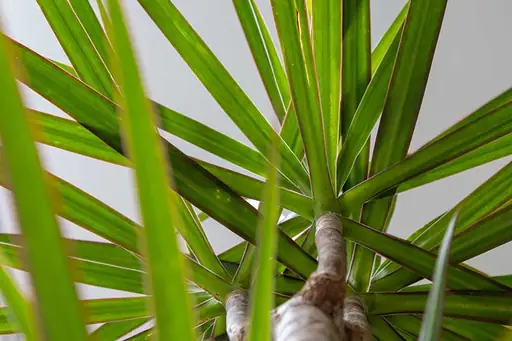
Although you may fuss over and carefully tend your Dracaena plant, it could still come down with a disease.
This can happen precisely because of the care you have given it, in fact. Unlike many other types of lush houseplants, these plants prefer allowing the soil they’re planted in to dry out between waterings.
Watering that is too frequent can cause the roots to become vulnerable to diseases and rot, leading to symptoms including black stems.
Read on to learn how to prevent these diseases, and what to look for if your plant becomes infected.
Here’s everything we’ll cover:
What Is Causing My Dracaena’s Stems to Turn Black?
- Fungal Root Rot
- Types of Fungi that Cause Black Stems
- What to Do with an Infected Plant
- Tomato Spotted Wilt Virus
- TSWV Spread
- Symptoms
- Infected Plants Should be Purged
- Black Stems on Dracaena are a Harbinger of Bad News
Several types of infections can cause black stems in Dracaena.
Fungal Root Rot
Your plant may first let you know that it is infected by wilting severely. While your inclination to solve this problem may be to give it a lot of water, this could make the situation even worse.
Paradoxically, wilting in Dracaena can be a sign of disease that’s actually due in part to an excessive amount of water.
At this point, rotted, black areas may become visible on the middle of the stems.
While you are not likely to want to cut open your poor plant, if you do, you will find that the tissues inside have a brown discoloration if fungal infection is the culprit.
Types of Fungi that Cause Black Stems
A number of species of fungi have been found around the world to cause stem rot on Dracaena. These include:
- Fusarium solani (Iran, Korea)
- F. oxysporum (Korea)
- F. moniliforme (Korea)
- Colletotrichum dracaenophilum (Bulgaria)
- Corynespora cassiicola (Egypt)
- Thielaviopsis paradoxa (Brazil)
Don’t worry about this long list. Just because a pathogen is active in Egypt does not necessarily mean that it will be a problem for you.
My intention here is to illustrate the prevalence of these types of symptoms in these plants when caused by fungal pathogens.
At home in the US, Fusarium solani is a common fungus, and it is the species that’s most likely to be a problem locally.
What to Do with an Infected Plant
In theory, you could remove the plant from its pot and trim back the rotted roots.
However, if your plant has already reached that point, and it’s already seriously infected, you will probably not be able to cure it.
As painful as it may be, your best bet is to dispose of the plant and sterilize the pot with a 10 percent bleach solution if you want to reuse it.
Tomato Spotted Wilt Virus
There is another dreaded pathogen that can afflict Dracaena plants, and it’s known as tomato spotted wilt virus (TSWV).
Don’t let the word “tomato” in its name fool you. This pathogen can attack over 1,000 species of plants.
It is ever-present in some areas, because it can infect many native species, weeds, and landscape plants.
TSWV has been known to cause hundreds of thousands of losses in a single greenhouse flower crop. And it can affect your houseplants too.
TSWV Spread
Without the little insects known as thrips, tomato spotted wilt virus would not be a problem.
Young thrips acquire the virus as they feed on diseased plants. When they become adults, the insects can transmit the infection.
The virus requires living plants to survive, and there is no shortage of potential hosts given the enormous host range of this virus.
Symptoms
Although symptoms start appearing seven to 20 days after the thrips acquire the virus, it is difficult to diagnose.
This is because so many other kinds of organisms and stresses to plants can mimic or closely resemble the symptoms of a tomato spotted virus wilt infection.
Black or purple streaks on the stems can be diagnostic for TSWV infections on Dracaena. The plants may be stunted, and leaves may drop prematurely.
Flowering plants may exhibit rings or stripes, lines, or colored spots on their petals.
Infected Plants Should be Purged
Regrettably, since this disease is so contagious and it may affect such a huge array of plants, you should dispose of your Dracaena if you think it is infected with this virus.
Black Stems on Dracaena are a Harbinger of Bad News
Several different kinds of pathogens can cause your plant to develop black stems, ranging from a who’s who of fungi to a widespread and pernicious virus.
Unfortunately, by the time your plant develops black stems, the condition is probably incurable.
You can prevent fungal infections by watering carefully, and waiting for the soil to dry out before you water.
Has your Dracaena developed a black stem? If so, let us know how it fared in the comments section below.
And for more information on growing Dracaena plants at home, have a look at these articles next:
- When and How to Prune Dracaena
- Is Dracaena Toxic to Cats or Dogs?
- How to Grow and Train Dracaena Plants as Bonsai
- X810




질문 및 토론