
When and How to Fertilize Astilbe
A mainstay in many shade gardens, astilbe will be at its best when given the right food at the right time. But fertilizing is not a one-size-fits-all solution if you want to see these flowers reach their full potential. We’ve got all you need to know right here, so without further ado, here’s our.
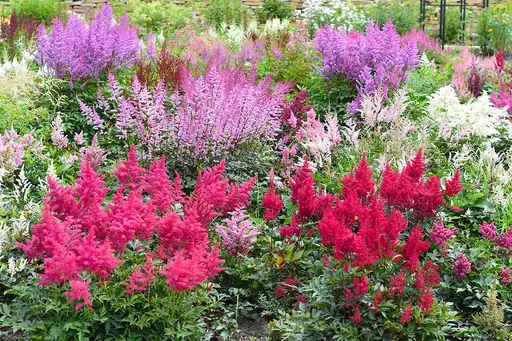
A mainstay in many shade gardens, astilbe will be at its best when given the right food at the right time.
But fertilizing is not a one-size-fits-all solution if you want to see these flowers reach their full potential.
We’ve got all you need to know right here, so without further ado, here’s our guide to fertilizing astilbe.
What You’ll Learn
- What Does Astilbe Need to Feed?
- Types of Fertilizer
- When to Apply Fertilizer to Astilbe
- How to Apply Fertilizers
You’ll be able to give your plants everything they need, all without anything extraneous, while providing maximum impact on their growth.
What Does Astilbe Need to Feed?
This shade-loving perennial prefers a setting with consistent moisture and slightly acidic to neutral soil. You can learn more about the basics of growing astilbe in our guide.
Because these plants spread via rhizomes and flower profusely in season, they can use up a lot of nutrients annually.
At the very least, a slow release fertilizer should be applied in the springtime for the happiest and healthiest plants, but a secondary fall application is beneficial as well.
That fall fertilization is important for astilbe that blooms early in the spring. Let’s look at the specific types of fertilizer I recommend, and then we can look at when to apply each.
Types of Fertilizer
While I’ve picked out a few specific types of fertilizers for you to use, you can get away with using either of the first two options and calling it a day.
Compost
A tried and true favorite, using compost offers the lightest touch we can have when fertilizing anything in the garden.
Compost is a well-rounded option that provides a slow and steady boost to garden soils.
When applying compost as a fertilizer, aim to add a layer of about one to two inches around your plants.
That’s more compost than I’d normally recommend, but astilbe will eat it all up.
If you aren’t making your own compost you can buy some from local garden centers or big box stores with a yard and garden department. Many local townships offer free compost as well.
Osmocote
I’ve been using Osmocote Smart-Release Flower and Vegetable Plant Food for as long as I’ve been gardening.
It’s an excellent general purpose, slow-release fertilizer, and you can use it on pretty much anything in your garden.
This specific style has a 14-14-14 NPK composition and it is what I prefer to use on outdoor flowering plants.
You could also use Osmocote Plus Indoor and Outdoor. It’s another granular, slow release product with a 15-9-12 NPK plus additional micronutrients.
Osmocote Plus Indoor and Outdoor
If this is the only fertilizer you use in your garden, your plants will do alright.
Blood Meal
While it sounds ghoulish, blood meal is a common fertilizer in the garden, and there’s nothing nasty about it. It’s dried blood sourced from slaughterhouses that is then ground up into “meal.”
Okay, that is pretty ghoulish, but it’s very good stuff for the garden.
It’s very high in nitrogen and is best used as a fertilizer later in the year. Every time I get the chance I’ll suggest an Espoma version of a fertilizer, and this is no exception.
Their blood meal is the only one I’ve used for awhile, and I’ve never had a reason to change to something else.
Espoma Organic Blood Meal
Plant-Tone
What do you know, another plug for Espoma. If you’re trying to get one product with a little bit of everything from this list of fertilizers, you’d be wise to use their all-purpose, standard mixture.
With a 5-3-3 NPK, it’s made from naturally derived organic ingredients. As an added bonus, it also includes various strains of healthy bacteria to improve soil health.
Unlike Brawndo, it’s actually got what plants crave. (Any “Idiocracy” fans out there?)
Espoma Plant-Tone
I use this for everything and go through a few bags a year.
When to Apply Fertilizer to Astilbe
Apply your fertilizers early in the spring to encourage strong and healthy growth for the season. If you can only feed your astilbe once a season, spring is the time to do it!
A secondary application in the fall can be beneficial as well to give your plants a head start leading into the next year.
If you have a type that blooms early in the season, this second feeding is more important to provide.
How to Apply Fertilizers
While you should always follow the directions on the label when applying fertilizers, plants like astilbe benefit from a larger portion.
For that reason I suggest following the directions on each package and then adding an extra application at one-half the recommended rate.
The exception is when using blood meal. Already extremely high in nitrogen, adding anything beyond the recommended rate is unnecessary and can actually inhibit flower growth.
Kitchen’s Closed!
Fertilizing astilbe is a very straightforward process, and I think you’ll have no problem producing strong and healthy plants in your garden.
I’d love to hear all about your plants, and also what suggestions or questions you have about the process, in the comments below.
If you’re curious about other aspects of growing astilbe and want to learn more, check out these guides next:
- Add Color to Your Shade Garden with 15 of the Best Astilbe Varieties
- How to Winterize Astilbe Plants: 5 Easy Steps
- How to Grow Astilbe in Containers
- X
질문 및 토론