
How and When to Fertilize Basil
Basil is a delightful herb grown for its aromatic and delicious foliage. Knowing how and when to fertilize your basil can be the difference between harvesting luscious leaves with sublime flavor or small ones with a bland, mediocre taste! These easy-care annuals grow happily when provided with warm.
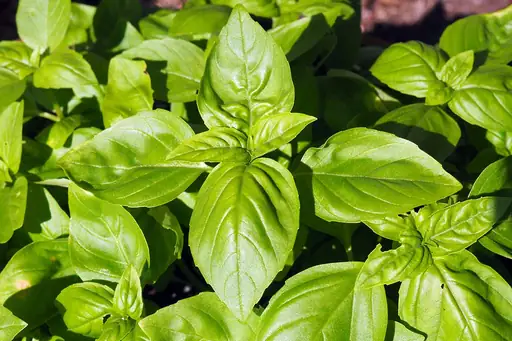
Basil is a delightful herb grown for its aromatic and delicious foliage.
Knowing how and when to fertilize your basil can be the difference between harvesting luscious leaves with sublime flavor or small ones with a bland, mediocre taste!
These easy-care annuals grow happily when provided with warm temperatures, full sun, and a good drink of water. And they develop many new sets of leaves when pinched and harvested regularly.
Photo by Lorna Kring.If you need a refresher on how to cultivate these tasty herbs, check out our basil growing guide.
Basil will do fine with just a sprinkle of slow release fertilizer granules in spring.
But slow release granules are, as the name suggests, slow and they don’t always release nutrients at the times when they’re most needed – such as when a herb like basil has had its growing tips pinched to promote branching.
What’s needed to encourage speedy new growth for a steady crop of lush, large leaves are frequent feeds with a liquid or water soluble fertilizer, which releases nutrients immediately.
However, it’s important not to feed them too often or with full-strength fertilizer.
Too much fertilizer can dilute and weaken the essential oils that give these herbs their glorious taste and scent.
On the other hand, a lack of nutrients can result in small, stingy leaves and slower, impatience-provoking growth.
The key to premium flavor, fast growth, and large leaves is to apply the right dosage at the right time.
So if your flavor buds are tingling for that sweet, spicy flavor, let’s jump into how and when to fertilize basil for tasty, luscious leaves!
Here’s a quick look at what’s covered ahead:
What You’ll Learn
Organic Materials
Slow Release vs. Water Soluble
Dosage and Timing
Container Plants
Feeding for Flowers
Organic Materials
To give your basil the best possible start, direct sow seed or transplant seedlings into soil that’s been enriched with generous amounts of organic materials.
Photo by Lorna Kring.Before planting, work one or two inches of finished compost, worm castings, or well-rotted manure into the top six to 12 inches of soil.
For strong, healthy roots, you can also work in a tablespoon of bone meal for each plant.
And for prolific leaf production, a high-nitrogen fertilizer such as blood meal or cottonseed meal can be added at planting time as well.
Into the top three inches of soil, work in one teaspoon of blood meal (12-0-0 NPK) or cottonseed meal (6-2-2 NPK) per plant.
If you start your basil off in nutrient-rich soil and harvest leaves only occasionally, they’ll do fine without the addition of any extra fertilizer.
But if you’re more hardcore in your harvesting habits and diligent about pinching out stem tips, you’ll want to encourage rapid growth with the judicious application of extra feed.
Slow Release vs. Water Soluble
Applying slow release granules to your basil once or twice during the growing season is fine if you’re not inclined to feed your plants more often.
If you harvest aggressively by pinching back stems or collecting a lot of leaves, faster growth is appreciated – which is achieved easily from the quick release of nourishing minerals in liquid or water soluble feeds.
Liquid feeds such as compost tea, drainage leachate from vermiculture bins, fish or seaweed emulsion, or water soluble commercial fertilizers are all suitable.
But they need to be applied lightly to avoid diluting the flavor of the foliage and frequently enough to encourage rapid leaf growth.
Let’s look at the specifics.
Dosage and Timing
To produce ample oils for optimal flavor and fragrance, herbs like basil thrive in a hot, dry climate in nutrient rich, moist, and well-draining soil.
For a continuous supply of fresh foliage, these herbs require regular applications of liquid fertilizer – this is the best way to encourage fast growth.
Photo by Lorna Kring.But feeding basil requires a light touch. Overfeeding produces big, lush plants but the quality of the essential oils such as linalool, estragole, and eugenol that give the leaves their flavor can be compromised and weakened.
To avoid sapping the distinctive taste and aroma, a restrained hand is needed when dishing out the quantity of the frequent feedings.
For the best of both worlds – oil production and fast growth – feed basil grown in outdoor beds with a half-strength dose of liquid or water soluble fertilizer every two to three weeks.
The feeding frequency of two or three weeks is what promotes fast growth for new foliage – which is what’s needed after pinching out the growing tips or snipping leaves.
And the half-strength dosage is equally important so that oil production isn’t compromised and flavors and fragrance remain full and intense.
An all-purpose fertilizer with a higher ratio of nitrogen, such as an NPK of 12-4-8 is ideal for producing healthy plants with big leaves. Or a balanced feed with an equal NPK ratio like 5-5-5 is fine as well.
For optimal nutrient absorption, water plants gently before feeding. Liquid nutrients are taken up faster and distributed more evenly when the roots and soil are already moist.
Remember to mix liquid feeds to half-strength before applying.
Leafy Green and Herb Plant Food
offers an organic, Leafy Green and Herb Food with an NPK of 5-3-3 that’s ideal for promoting ample foliage.
Container Plants
During the growing season, container-grown basil can receive the same half-strength dosage, but the frequency changes a bit.
Photo by Lorna Kring.Container herbs grown in hot, direct sunshine quickly use up nutrients and should be fed every two weeks, using the same liquid or water soluble selections as above.
However, the soil in pots and planters dries out quickly in full sun, and dry soil inhibits the uptake of nutrients.
For your frequent feedings to be the most effective, in hot weather ensure the soil is kept lightly moist, allowing only the top one inch to dry out between waterings.
Potted herbs grown indoors typically don’t grow as fast or with the same vigor as outdoor ones. Reduce the feeding schedule to every four to six weeks, using an all-purpose liquid feed.
As with in-ground basil, indoor and outdoor container crops should be served liquid nutrients at half strength.
Feeding for Flowers
Basil plants are grown primarily for their flavorful leaves, but they also offer beautiful spires of small, fragrant flowers in lovely shades of mauve, pink, purple, and white.
Allowing a few of your plants to flower is an excellent way to attract pollinators into the garden because bees and other friendly fliers adore the nectar- and pollen-rich blooms.
Also, if you like to collect seeds for your personal stock, flowers are needed!
To grow this herb for flowers and seed collection, select a few plants for the task and don’t pinch out the growing tips.
This is contrary to the common wisdom of pinching the tips to force branching and new leaves, but if you do, you’re pinching out nascent flowers. You can still pluck leaves but leave the stem tips intact.
And be sure to use plants from an early crop for seed gathering – late season sowings may not have time to produce flowers and set seed before they are killed off by cold temperatures.
For optimal flower production apply a liquid or water soluble fertilizer every three or four weeks to garden plants and every two weeks for containers, using a formula with slightly higher phosphorus levels.
Flower-Tone Organic Plant Food
This Flower-Tone Organic Food from Epsoma has an NPK of 3-4-5 for ample leaves and flowers as well.
Fast Growth, Delicious Taste
For fast growing herbs with a delicious taste and fabulous fragrance, use a liquid fertilizer for the quick uptake of nutrients.
Photo by Lorna Kring.Apply your feed at frequent intervals of two to three weeks for garden plants and every two weeks for outdoor container herbs.
But be sure to feed them with a half-strength dosage to keep the essential oils in the leaves strong and flavorful.
And remember to water your plants before feeding so they can quickly utilize the nutrients for large, lush leaves.
Now that you know how and when to fertilize your basil, will you be increasing or reducing your feeding schedule? Let us know in the comments section below.
And for more basil cultivation tips, be sure to add these guides to your reading list next:
- How to Propagate Basil from Seed
- Tips for Growing Citrus Basil
- How to Prune Basil Plants
- Facebook58
- X
질문 및 토론