
How to Deadhead Fuchsia Flowers
Fuchsias are undeniably fabulous, with their prolific and dramatic blossoms that seem to last all growing season long. But you can’t always just pop them in some soil and then sit back and enjoy the show. These plants take a little bit of work to maintain if you want to keep those flowers flowing.
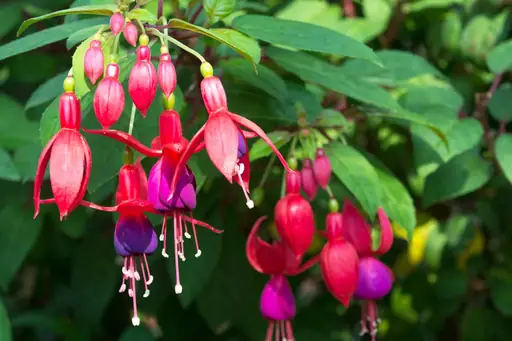
Fuchsias are undeniably fabulous, with their prolific and dramatic blossoms that seem to last all growing season long. But you can’t always just pop them in some soil and then sit back and enjoy the show.
These plants take a little bit of work to maintain if you want to keep those flowers flowing as long as possible.
In our guide to growing fuchsia flowers, we cover how to cultivate these showy plants in your landscape.
In this article, we’ll help you figure out why and when to deadhead, and how to do it the right way so you can encourage more blooms that will continue long into the growing season.
Here’s what we’ll discuss:
What You’ll Learn
Is Deadheading Necessary?
When to Deadhead Fuchsia
How to Deadhead
Let’s get to it!
Is Deadheading Necessary?
Technically, you don’t need to deadhead your fuchsia plants. They’ll drop their flowers all on their own.
The reason you should deadhead is if you want to encourage your plant to send out more blossoms for a longer period of time than they might otherwise.
Photo by Kristine Lofgren.When a fuchsia plant drops its flowers, it starts to focus its energy on ripening the ovary, which is the pod-like fruit that is left behind at the point where the flower was attached to the plant.
Once those ovaries ripen, the plant doesn’t need to keep making flowers in order to reproduce, so it will often stop putting on its floral show.
One or two pods left behind won’t cause a plant to halt flowering entirely, but if there are a lot, it can cause the plant to stop or slow down. That’s why you want to remove not only the flower, but the seed pod as well.
It’s worth noting that there are some fuchsias that will continue to flower even if you leave the pods in place.
Some won’t reduce blossoming at all, while others may simply slow their pace, and some may have continued blooming longer if you had deadheaded. It all depends on the species and hybrid that you’re growing.
When to Deadhead Fuchsia
Do you see flowers on your plants? Then it’s the right time of year to deadhead!
Most fuchsias start blooming in the spring and many continue on throughout the summer. Depending on the species, some only bloom for a few days before each blossom drops, while others stick around longer.
Photo by Kristine Lofgren.Your goal is to snip the flowers before they drop.
When my plants are covered in blossoms, I need to check daily for spent flowers. You might find that taking a peek weekly is enough, but if too many flowers are falling to the ground, you should probably check a bit more often.
You’ll know it’s time if a given flower starts to look wilted, and it may also have browning edges or spots. Many times, you’ll go to grab the flower and it will fall off into your hand.
How to Deadhead
To deadhead, snip the flower off with a pair of scissors or clippers. Be sure to clean your tools in a 1:10 bleach to water solution in between plants.
One year, I got lazy and didn’t clean my tools. I ended up spreading a fungus to all of my fuchsias. I won’t make that mistake again!
Photo by Kristine Lofgren.Cut all the way back to the end of the pedicel, which is the stem-like growth between the pod and the stem of the plant.
Photo by Kristine Lofgren.Don’t cut beyond the end of the pedicel or you’ll snip off the joint where new growth will emerge.
Don’t worry too much if you do go beyond that point, though. The plant will branch and develop new growth wherever you snip it. It will just take longer to bloom again.
Photo by Kristine Lofgren.After a week or so, you should see new growth coming out from that joint where the pedicel meets the stem.
Photo by Kristine Lofgren.You can also pinch off the flowers between your fingers. Just remember to wash your hands between plants to avoid spreading disease.
After you remove a blossom, so long as it isn’t too far gone, you can eat it.
If you hate the idea of wasting food, try to deadhead while the inner petals are still full and colorful. Fuchsia petals are tastiest when they are mature. If you wait until they’re totally spent, toss them in the compost instead.
We have an entire guide to help you enjoy your fuchsia in the kitchen as much as you do in the garden, if that sounds like something you’re interested in.
Deadheading Is the Key to Prolific Blossoms
Don’t you love a plant that gives you options? Deadhead if you want to encourage more blooms and a longer period of blooming throughout the season.
Or, leave the flowers as they are and you can enjoy the sweet berries once they ripen.
Either way, you have a lovely plant that will continue to provide.
If you do decide to deadhead, the process is as easy as it gets. The hardest part sometimes is keeping up with all that nonstop floral goodness!
Having any trouble keeping your fuchsia flowering? Come back here, let us know in the comments section below, and we’d be happy to help.
And for more information about growing fabulous fuchsias, check out these guides next:
- Tips for Growing Fuchsia as Houseplants
- How to Prepare Your Fuchsia Plants for Winter
- Why Is My Fuchsia Wilting? 5 Common Issues
- How to Grow Hardy Fuchsia Shrubs in the Home Garden
- Facebook60
- X




질문 및 토론