
How to Grow Butternut (White Walnut) Trees
Juglans cinerea Butternut trees, aka white walnuts, are among the hardiest of all nut trees and prized for their sweetly flavored, oily kernels. Native to North America, the delicious and nutritious nuts are harvested in fall and a favorite of birds, squirrels, and other animals… including humans!.
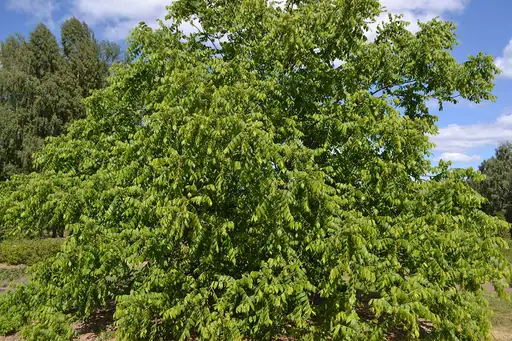
Juglans cinerea
Butternut trees, aka white walnuts, are among the hardiest of all nut trees and prized for their sweetly flavored, oily kernels.
Native to North America, the delicious and nutritious nuts are harvested in fall and a favorite of birds, squirrels, and other animals… including humans!
Aptly named, the nuts have a rich, buttery flavor that’s popular for baking, use in confections, and fresh eating.
The soft, easily worked hardwood is a favorite material for carvers and woodworkers, and mature trees can even be tapped for their sap which can be reduced to a sweet liquid, a la maple syrup.
These mid-sized trees feature short trunks with broad, open crowns and pretty, bright green leaves that provide soothing, dappled shade.
They’re also self-pollinating, but like other fruit-bearing trees such as pears, they produce a more abundant crop when planted in multiples.
Unfortunately, this valuable tree is under serious attack from butternut canker – a fungal disease that’s wreaking havoc on species plants in cultivated and wild populations.
But the canker and its devastating impact can be avoided by planting hybrids developed with canker resistance.
Are you ready for a nut-bearing shade tree that can handle frigid winters? Then let’s get cracking on how to grow butternut trees!
Here’s what you’ll find up ahead:
What You’ll Learn
- What Is a Butternut Tree?
- Cultivation and History
- Propagation
- How to Grow
- Growing Tips
- Pruning and Maintenance
- Where to Buy
- Managing Pests and Disease
- Harvesting
- Storage
- Quick Reference Growing Guide
What Is a Butternut Tree?
The butternut tree (Juglans cinerea) is a species of walnut native to eastern Canada and the United States.
It grows with other hardwood species in mixed forests and is typically found in loamy, well-draining soil on riparian banks, rocky benches, and hillsides growing in full sun.
Also commonly known as the white walnut due to its light-colored bark, these deciduous trees are nut producers, developing fruits with a protective, sticky husk, and a hard inner shell that contains an edible seed known as a kernel.
The lemon-shaped fruit grow up to two inches long and one and a half inches in breadth.
They develop in clusters of up to six, and provide an important food source for birds, deer, and squirrels.
The kernel flavor is creamier and sweeter than black or English walnuts, J. nigra and J. regia.
And they contain significant amounts of fiber and protein, plus healthy omega-3 fatty acids, B-complex vitamins, and minerals such as calcium, iron, and manganese.
Deciduous trees, slow-growing white walnuts have a mature height of 40 to 60 feet and spread of 35 to 50 feet. They can live for up to 75 years.
Flowering takes place from April to June, and buds develop on the current year’s growth, with small magenta female flowers on short spikes and male yellow-green, hanging catkins.
Trees begin producing fruit seven to 10 years after planting and are alternate bearers.
This means they switch between boom and bust years, producing an abundance in one year, less in the second, then back to a season of plenty.
Flowers are wind pollinated but produce more abundant harvests when planted in multiples.
White walnuts are also susceptible to fungal infections and populations are in severe decline due to butternut canker. In the wild, they are classified as endangered in Canada and critically imperiled to vulnerable in some US states.
Although breeding is limited, the development of hybrids such as the buartnut (J. x bixbii), a cross of butternut and heartnut trees (J. cinerea x J. ailantifolia), have shown good results, producing cold-hardy, strong trees with some canker resistance.
And like their close cousin the black walnut, the root system of white walnuts releases a chemical known as juglone, which is toxic to many plants.
Avoid planting fruit and veggies such as blueberries and nightshade family members, and ornamentals like azalea, lilac, peony, and rhododendron, near white walnuts.
Juglone impacts plants in a zone of up to 80 feet from the base of the trunk.
White walnut trees are hardy in USDA Zones 3 to 8.
Cultivation and History
Along with the delicious kernels, butternut trees have a variety of uses.
Traditional uses by Native peoples include foraging the nuts as a valued food source and extracting the oil for use as a flavoring, hair conditioner, and mosquito repellent.
Trees were also tapped for syrup, and bark and oil concoctions were used as a cathartic for various ailments and to dress wounds.
The bark was also used to produce a warm ochre dye, popular with Native Americans and European settlers alike.
The wood of J. cinerea is also prized by furniture makers and woodcarvers who appreciate the lightweight, strong wood for its attractive, straight grain and polishing quality.
Butternut Tree Propagation
Because of the severity of butternut canker, propagation of species trees is not recommended.
However, hybrids like the buartnut can be propagated by seed and planted in spring or fall. The seeds need a cold, moist stratification period of at least 90 days at temperatures of 32 to 40°F.
If your climate doesn’t provide the needed cold temperatures, they can be chilled in a refrigerator and planted in spring. Otherwise, plant in fall and allow Mother Nature to stratify the seeds.
To stratify indoors, mix the seeds in their shells in a 50:50 ratio with a moist medium like peat moss, landscape sand, or sawdust placed in a plastic bag. Hulling the shells first isn’t necessary for stratification or propagation.
Seal the bag and place it in the refrigerator for two to three months, then plant out in early spring.
If you find sprouted seeds at planting time, take care not to break the white root and carefully orient it to the bottom of the planting hole.
To sow stratified seeds, prepare a planting hole by loosening the soil to a depth and width of 18 inches.
Add in one or two shovelfuls of compost or well-rotted manure to enrich the soil.
Mix in a shovelful of landscape sand, pea gravel, or stone chips to improve drainage if needed.
Plant seeds at a depth of two inches.
Backfill with soil and firm gently.
If you have a problem with wildlife digging up planted seeds, cover the planting site with chicken wire to deter digging.
Add a two- to four-inch layer of mulch such as untreated sawdust or straw.
Keep the seeds moist and provide regular water if rainfall isn’t adequate.
In early spring, the seeds typically germinate 14 to 21 days after the period of cold stratification.
How to Grow Butternut Trees
White walnut trees require a full sun location and prefer deep and moist, well-draining soil with a fine or medium texture and pH of 6.8 to 7.2.
Plant in an open area and away from other plants or structures.
To transplant nursery stock, use a garden fork to loosen the soil to a depth and width of 24 inches.
Enrich the soil with two or three shovelfuls of compost or well rotted manure.
Mix in one or two shovelfuls of grit to improve drainage if needed – landscape sand, pea gravel, or stone chips are good choices.
Mix in four tablespoons of bone meal for strong root growth.
Move the loose, amended soil aside and carefully spread the roots in the planting hole, setting the tree with the graft point (if there is one) about four inches above the soil line.
For ungrafted trees, plant to the same depth they’re at in their nursery pot.
Backfill with soil and tamp firmly over the rootball to ensure the tree is secure and doesn’t move.
Water deeply to settle in place.
Butternuts are moderately drought tolerant once established, but saplings should be watered regularly for the first few years. Allow the top one to two inches of soil to dry out between water applications.
Young trees also benefit from a thick, two- to four-inch layer of mulch to protect from heat and cold.
Growing Tips
Keep the following tips in mind for healthy, productive trees:
- Choose a full sun location with fertile, well-draining soil.
- Water when the top one to two inches of soil dries out.
- Keep the base of trees free of weeds, which compete for important nutrients and water.
Now let’s look at their maintenance needs.
Pruning and Maintenance
Pruning helps to open the crown to light and air, which is important in humid conditions to prevent the spread of canker and other diseases.
Wait until the trees are at least two years old and prune in late winter to train your tree to have one main trunk with four to six lateral branches.
Use a clean, sharp saw or loppers to remove crossed, damaged, low hanging, or weak branches, removing them cleanly at the trunk.
As your tree matures, prune every three to five years, removing new, thin, or weak branches.
Keep the crown raised by cutting away any downward-facing secondary branches from the lower limbs.
If your trees were planted in rich, fertile soil, fertilizing isn’t required.
After the leaves drop in autumn, clean up all plant matter and debris from within the drip line. Decaying plant matter is a favorite overwintering site for pests like the butternut curculio.
Where to Buy Butternut Trees
There are no named cultivars of J. cinerea, with breeding limited to crosses with English or Japanese varieties of walnut.
For prolific fruit production and beautiful shade, select a hardy strain of the native butternut tree – at this time, a hardy stain is simply stock raised from canker-free trees.
The white bark and pinnate leaves add an attractive, tropical look to the landscape and the strong branches make an appealing roosting site for many birds.
Butternut Tree
These plants are productive in six to eight years and the nuts have easy to peel husks.
If you’d like to raise your own trees from seed, use large, fresh seeds from canker-free stock.
Managing Pests and Disease
To prevent deer from munching on young saplings, a deer fence might be in order.
According to the USDA, some common insects that visit J. cinerea include bark beetles, husk flies, lace bugs, defoliators, nut weevils, and wood borers.
Captain Jack’s Orchard Spray
Spray trees early in the season before pests become problematic and repeat every seven to 10 days or after rain as needed.
The most problematic pest is the butternut curculio, Conotrachelus juglandis, for which there’s no known treatment.
The curculio is a quarter-inch brown weevil and both the juvenile and adult forms may cause damage.
The larvae burrow into stems where the leaf attaches to the stem, causing green leaves to drop.
Adults feed on leaf stems, new shoots, and terminal tips, causing damage to foliage, fruit, and young stems.
While the curculio is resistant to pesticides, attacks can be curtailed with good orchard hygiene. Remove leaves, dropped nuts, and plant debris from inside the drip line before winter sets in.
The most serious disease threat comes in the form of butternut canker, a fungal disease caused by Sirococcus clavigignenti-juglandacearum that has decimated native populations, and for which there are no known treatments.
The disease is characterized by the appearance of elliptical branch and stem cankers with sunken centers that exude a dark brown or black stain on the light gray bark.
The cankers cut off nutrients and water, causing dieback above the cankers on branches and trunks.
If branch cankers appear, they need to be removed promptly. Prune out infected branches by cutting approximately six to eight inches below the canker.
Trunk cankers are eventually fatal, but trees can live for some years after becoming infected.
Dispose of infected materials in the trash or by burning, but not in a compost bin where the spores can live on to continue their destruction.
Be sure to disinfect your cutting tools afterwards by dipping them for 30 seconds in a bleach solution of one part bleach to nine parts water or rubbing alcohol.
There is some hope that disease-free trees that grow in areas where the canker is prevalent may have some inherent disease resistance that can be used for breeding and reforestation – resistance screening is ongoing with no conclusive results to date.
Harvesting Butternuts
Butternuts ripen in fall and are ready for harvesting from September to November, or when the outer husk is soft enough to dent with your thumbnail.
To harvest, watch for the outer hulls to split. When the majority of nuts look ripe, use a long pole or pole-hook to shake the branches and release them.
Collect the fallen fruit and remove the husks as soon as possible to prevent shells from absorbing moisture, which can lead to mold and rot.
Removing the stubborn husks can take a bit of work…
You can shuck them with a sharp knife, stomp and roll them with your feet (careful you don’t slip!), drive over them with a car, toss them in a cement mixer with some water, crack them between two boards, or blast them with a pressure washer (please use safety glasses for this one).
After the husk is removed, wash the shells in a bucket of water and discard any that float – floaters contain no meat or meat that has spoiled.
Be sure to use hand and skin protection – contact with juglone can cause a rash with painful blisters.
Once they’re husked, washed, and picked over, they need to cure for a few weeks for successful long term storage.
Spread them in a single layer on a sheet of cardboard, mesh trays, or newspaper in a warm, dry location out of direct sunlight and with good air circulation.
In two to four weeks, when the nuts are fully cured, you can hear the meat rattling in the shell when shaken.
To crack the nuts, use a gear or lever nutcracker – check out some of the attractive options in our guide to nutcrackers at our sister site, Foodal.
Storage of Butternuts
Cured nuts in the shell can be stored for up to two years in the right conditions.
But because of the high unsaturated fat content, they can quickly go rancid in warm temperatures of 70°F and above.
To store, pack in layers, alternating with cardboard or newspaper, in open bins or baskets. Or they can be packed into large mesh bags.
Store in a cool, dark, and dry location – ideal storage temperatures are in the range of 35 to 60°F.
Alternatively, shelled or whole butternuts can be stored in the refrigerator in airtight glass jars for up to six months or frozen in zip-top bags for up to two years.
Quick Reference Growing Guide
| Plant Type: | Nut tree | Water Needs: | Moderate |
| Native to: | Eastern Canada and United States | Maintenance: | Moderate |
| Hardiness (USDA Zones): | 3-8 | Tolerance: | Moderate drought, when established |
| Season: | Fall harvest | Soil Type: | Humus-rich |
| Exposure: | Full sun | Soil pH: | 6.8-7.2 |
| Time to Maturity: | 7-10 years | Soil Drainage: | Well-draining |
| Spacing: | 25 feet | Attracts: | Birds, deer, squirrels |
| Planting Depth: | 2 inches (seed), same depth as nursery pots (transplants) | Companion Planting: | Juglone tolerant plants such as barberry, daphne, forsythia, rose of Sharon, witch hazel |
| Height: | Up to 60 feet | Avoid Planting With: | Blueberries, eggplant, tomatoes, azaleas, lilac, peonies, rhododendrons |
| Spread: | Up to 50 feet | Family: | Juglandaceae |
| Growth Rate: | Slow | Genus: | Juglans |
| Common Pests and Disease: | Butternut curculio; butternut canker | Species: | Cinerea |
Nuts About Nuts!
Loaded with rich flavor and impressive nutrition, the prolific production of North American native butternut trees are a welcome addition to many orchards and landscapes.
Plant them in a full sun location and keep seedlings well-watered until they’re established – and remember to keep susceptible plants away from the juglone-containing drip zone.
And be sure to keep an eye open for the appearance of cankers and remove infected limbs as soon as you can to keep your trees as healthy as possible.
Are you folks nuts about nuts? Have you had success growing the white walnut? Tell us about it in the comments section below.
And for more nutty know-how, add these nut tree growing guides to your reading list next:
- How to Grow and Care for a Macadamia Nut Tree
- How to Grow and Care for Pecan Trees
- How to Plant, Grow, and Care for Almond Trees
- Facebook122
- X




질문 및 토론