
How to Grow and Care for Crossvine Flowers
Bignonia capreolata Years after the fact, I remain flummoxed as to why my neighbor Daniel – an otherwise normal, rational person – ripped down and pulled out a spectacular, 20-foot-tall labyrinth of colorful crossvine that was growing on a trellis he had built up against his house. Crossvine is a.
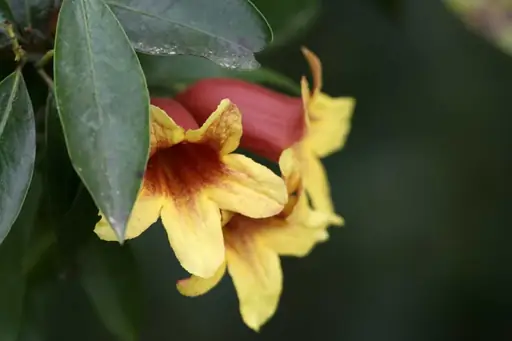
Bignonia capreolata
Years after the fact, I remain flummoxed as to why my neighbor Daniel – an otherwise normal, rational person – ripped down and pulled out a spectacular, 20-foot-tall labyrinth of colorful crossvine that was growing on a trellis he had built up against his house.
Crossvine is a fast-growing climbing vine that can reach 50 feet tall. In early spring, it produces clusters of showy orange-red, sometimes yellow, trumpet-shaped flowers against a background of four- to six-inch-long glossy leaves.
When new leaves appear, they’re a light green color. As they mature and summer progresses, they deepen to a dark green. And then in winter some, but not all, of the leaves turn reddish-purple.
Crossvine is native to forested areas of east Texas, as well as parts of the southeastern, eastern, and midwestern United States.
But back to my neighbor. I never did get a good answer out of him. I think he was just tired of it.
Tired of the low-maintenance, evergreen perennial that was a neighborhood conversation piece? Okay, Lieutenant Dan.
I think fighting so many fires throughout his career with the Austin Fire Department must have fried his brain… (Just kidding, Dan!)
Don’t be like Daniel. Plant a crossvine, watch it grow, and then let it be. This article will teach you how to do that. Here’s what’s ahead:
What You’ll Learn
- What Is Crossvine?
- Propagation
- How to Grow
- Growing Tips
- Pruning and Maintenance
- Cultivars to Select
- Managing Pests and Disease
- Best Uses
- Quick Reference Growing Guide
What Is Crossvine?
Bignonia capreolata is sometimes called trumpet vine or quarter vine.
Botanically, you may hear it referred to as Anisostichus capreolata, Doxantha capreolata, or Anisostichus crucigera, though these names are now considered taxonomically incorrect.
Photo by Gretchen HeberThe common name “crossvine” is thought to have come from the appearance of a cross-cut section of the plant’s stem. The genus name “Bignonia” honors the librarian of French King Louis XV.
The Creek, Koasati, and Seminole indigenous peoples of what is now Florida, as well as the Houma of Louisiana, used crossvine roots and bark as a remedy for numerous medical conditions, including headaches, edema, rheumatism, and diphtheria.
Propagation
B. capreolata can be propagated from seeds and softwood cuttings.
From Seed
Purchase seeds or collect them from existing plants when the four- to eight-inch-long seed pods are light brown, in late summer or early fall.
You can store the seeds in an airtight container in the refrigerator for about a year.
Photo by Gretchen HeberCrossvis don’t need any special preparation, and you can expect a 90 percent germination rate, more or less.
Plant seeds in a well-draining planter containing a mixture of peat, coarse sand, and perlite. Bury each seed one to two inches deep and water well.
Keep the soil moist but don’t overwater. Expect germination within three weeks.
Transplant seedlings into the garden when they are two to three inches tall and all risk of frost has passed.
You can direct sow outdoors in fall, or in spring after the last frost.
From Cuttings
To propagate crossvine from cuttings, use a sharp, clean cutting implement to cut off a healthy, six- to eight-inch stem in late spring or early summer.
Prepare a well-draining container with growing medium. Insert a pencil in the soil and remove it to create a hole for planting.
Remove leaves from the bottom two inches of the stem and treat the cut end with a powdered rooting hormone. Insert the cutting into the prepared container.
Create a terrarium effect by placing a plastic bag over the potted cutting, and securing it to create an enclosed environment.
The cutting will take about six to eight weeks to root and be ready to transplant into the garden.
From Seedlings or Transplanting
Plant into a hole the same depth as the container from which you are transplanting. Once the seedling is settled in its new home, add mulch to cover the planting area, and water well.
How to Grow
Though this plant is generally considered appropriate for USDA Hardiness Zones 6-9b, it may survive in Zone 5, albeit with possible leaf loss.
Crossvine grows best in full sun but will tolerate some shade, although there will be fewer flowers. It prefers soil with a pH of 6.8 to 7.2.
B. capreolata likes consistently moist but well-drained, organically rich soil, but it will tolerate standing water for short periods. It is also drought-tolerant once established.
‘Tangerine Beauty.’Deer will snack on this one, so keep that in mind when it comes to site selection.
This plant can spread somewhat aggressively via suckers, so you might want to keep an eye out for those.
Fertilize crossvine with organic NPK 8-5-5 fertilizer early in spring before it flowers and then again after the blooms fade.
Growing Tips
- Plant in full sun
- For best results, water regularly
- Fertilize before and after flowering
Pruning and Maintenance
Prune for size as desired. You can choose not to prune and it will do just fine. But if it’s crawling over the entrance to the shed, for example, prune away.
Just wait until after it blooms in the spring to do your cutting, as crossvine blooms on old wood.
Cultivars to Select
Here in Austin, the cultivar I see the most often is ‘Tangerine Beauty.’ It’s an older cultivar that displays red-orange flowers with yellow throats.
‘Tangerine Beauty’
Find live ‘Tangerine Beauty’ plants in one-gallon containers available from .
If you need a vine that won’t grow to reach aircraft cruising altitude, consider ‘Astrosanuinea,’ a cultivar with dark purplish-red flowers that only gets to be 15-30 feet tall.
Displaying bright orange flowers, ‘Jekyll’ was selected on Jekyll Island in Georgia. It is more cold hardy than other crossvine cultivars.
Another “shorter” variety to consider is ‘Dragon Lady,’ which displays red or orange flowers with a bit of yellow in the throat, and reaches 20-35 feet tall at maturity.
‘Helen Fredel’ is well-liked because of its large, two-inch orange flowers with yellow throats.
And finally, ‘Wabash Valley’ produces maroon flowers with yellow throats, and ‘Shalimar Red’ offers coral-red flowers. Check your local garden center for these and other colorful cultivars.
Managing Pests and Disease
Crossvine has no serious insect or disease problems. Rarely, it might be pestered by any of a few types of fungi.
You may see leaf spot – small speckles of brown, tan, or black – which are often caused by the fungus Cercospora capreolata.
You might also see blight caused by the fungus Botrytis. Blight presents on leaves or stems as dark areas with concentric rings.
Black mildew caused by the fungi Dimerosoporium tropicale or Meliola bidentata may also develop. Treat any of these fungal diseases with a fungicide.
As mentioned above, deer also enjoy browsing this vine in wintertime. Find tips for dealing with deer here.
Best Uses
This vine likes to scramble vertically, so place it next to a wall, fence, or arbor – some place where it can climb to its heart’s content and put on a stunning display of blooms in season.
Quick Reference Growing Guide
| Plant Type: | Perennial evergreen vine in native habitat | Flower / Foliage Color: | Orange, red, yellow; green |
| Native to: | Texas, Midwest, Southeastern United States | Maintenance: | Low |
| Hardiness (USDA Zone): | 6-9b | Tolerance: | Drought, brief boggy conditions with standing water |
| Season: | Early spring | Water Needs: | Moderate |
| Exposure: | Full sun, partial shade | Soil Type: | Organically rich |
| Spacing: | 6 feet | Soil pH: | 6.8-7.2 |
| Planting Depth: | Same as transplant container | Soil Drainage: | Well-draining |
| Height: | 50 feet | Companion Planting: | Swamp jessamine |
| Spread: | 6-9 feet | Uses: | Structure ornament |
| Growth Rate: | Fast | Family: | Bignoniaceae |
| Attracts: | Bees, butterflies, deer in winter, ruby-throated hummingbirds | Genus: | Bignonia |
| Pests & Diseases: | Deer; black mildew, blight, leaf spot | Species: | capreolata |
Don’t Be Like Daniel: Embrace This Low-Maintenance Flowering Vine
If you’re looking for a quick-growing, low-maintenance, evergreen vine that will withstand heat and drought, consider crossvine.
And once it becomes established, don’t be like my neighbor Dan and tear it all down for no discernable reason.
Let it grow and flourish. Trim it up a bit if it’s encroaching on the neighbors’ but otherwise just leave it be!
Have you ever grown crossvine? Share your tips in the comments section below, and tell us about your favorite cultivars.
Looking for more information about growing other types of vines? Check out these articles next:
- How to Grow Carolina Jessamine
- Grow Cardinal Climber for Spring to Frost Color
- Grow Colorful, Fragrant Honeysuckle
- Are Climbing Vines Harmful to Your Home?
- Facebook196
- X




질문 및 토론