
How to Plant and Grow Romanesco Broccoli
Brassica oleracea var. botrytis ‘Romanesco’ If there was ever a piece of art that accidentally manifested itself as a vegetable, it would be Romanesco broccoli. It’s always tucked next to the broccoli and cauliflower at the grocery store, and every time my young son and I walk by it, we can’t help.
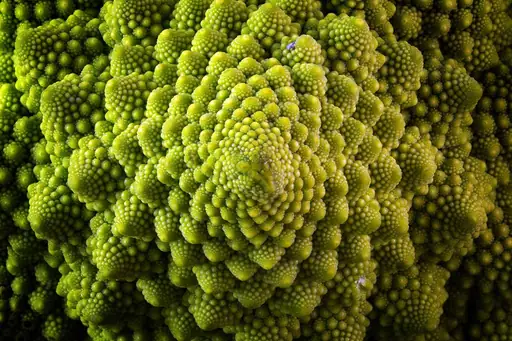
Brassica oleracea var. botrytis ‘Romanesco’
If there was ever a piece of art that accidentally manifested itself as a vegetable, it would be Romanesco broccoli.
It’s always tucked next to the broccoli and cauliflower at the grocery store, and every time my young son and I walk by it, we can’t help but stop and stare at its intricate swirls and whorls.
It’s almost too exquisite-looking to eat, but eat it we do. It makes a perfect substitute for broccoli or cauliflower in any dish, and its slightly sweet, nutty flavor makes it a favorite among kids.
But what is Romanesco broccoli exactly? Is it even broccoli? Does it grow in the wild? Is it difficult to grow at home?
You’re about to find out. Here’s what we’ll cover:
What You’ll Learn
Quick Look
How to Sow
How to Grow
Where to Buy
Pests and Disease
Harvesting
Preserving
Cooking Ideas
Let’s just get this out of the way first: Romanesco broccoli isn’t actually a variety of broccoli at all.
Some people call it “Roman cauliflower,” but it’s not cauliflower either, it’s not broccoli, and it’s not cabbage, and because of this, it is usually referred to as “Romanesco.”
This plant is a Brassica variety that was first cultivated via selective breeding sometime in or before the 15th century in Rome, Italy. Hence the name, Romanesco.
It’s most closely related to other members of the Botrytis Group: cauliflower, and a cross between cauliflower and broccoli called “broccoflower.”
Some gardeners in the United States also refer to Romanesco as “broccoflower,” so this common name is shared among two similar plants.
In Italy, it’s known as cavolo broccolo Romanesco. That’s got a certain rhythm to it that I can’t help but love, and in English translates to “Romanesco broccoli cabbage.” In Germany, it’s called “pyramiden blumenkohl,” or pyramid cauliflower.
Quick Look
Common name(s): Romanesco broccoli or cauliflower, broccoflower
Plant type: Annual vegetable
Hardiness (USDA Zone): 3-10
Native to: Italy
Bloom time / season: Summer
Exposure: Full sun
Soil type: Organically rich, loose, well-draining
Soil pH: 6.0-7.5, slightly acidic to neutral
Time to maturity: 75-100 days
Spacing: 16 to 18 inches
Planting depth: 1/4 inch (seeds)
Mature size: 16-18 inches wide by 24-36 inches high
Water Needs: Moderate
Taxonomy
Order: Brassicales
Family: Brassicaceae
Genus: Brassica
Species: Oleracea var. botrytis
Cultivar: Romanesco
Sometime in the 20th century, Romanesco made its way from Europe to the United States, and has been wowing farmers’ market shoppers and gardeners ever since.
Geometry lovers will appreciate that Romanesco grows and develops according to a logarithmic Fibonacci sequence, forming nearly perfect fractal spirals.
But why does this lime green brassica grow in such a wild yet precise shape?
In the weekly publication New Scientist, journalist Krista Charles reports on a study conducted by François Parcy at the French National Centre for Scientific Research, which concluded that “Cauliflowers, including Romanesco, gain their shape because they start off as flower buds that fail to become flowers. These buds become shoots that make new flowers which also fail – and the process is repeated again and again in a sort of chain reaction.”
In light of this information, Romanesco is closer to cauliflower than to broccoli botanically; which is why it’s placed in the Botrytis Group with cauliflower.
The main difference between cauliflower and Romanesco is that in the latter, each undeveloped flower is visible in the final head because its shoots form buds at an increasing pace, which pushes the growing tip outward and produces the distinctive spiral of conical points.
All parts of Romanesco are edible, from the leaves to the stem as well as its fractaled curd.
The plant grows 24 to 36 inches high with a spread of 16 to 18 inches. Mature heads can measure three to five inches in diameter and weigh up to five pounds!
Romanesco is a cool-season crop that matures in just 75 to 100 days from germination. It’s suited to Zones 3 through 10, but if you live in Zones 8 through 10, it’ll grow best as a fall crop with a winter harvest.
It’s also marvelously nutritious, offering plenty of dietary fiber, vitamins A, B, and C, calcium, iron, and zinc.
How to Sow
The best ways to propagate this funky plant are via seed or by transplanting starts purchased at a nursery. We’ll cover both methods below.
From Seed
Since Romanesco enjoys cool weather, it’s a good idea to start seeds indoors six to eight weeks before your area’s average last frost date.
This way, they’ll be young, robust plants by the time you transplant into the garden, and will do most of the growing in the cooler part of the spring and early summer.
If you live in a warmer growing zone, starting Romanesco broccoli indoors during late summer can protect seedlings from the heat, and prepare them for a late fall or early winter transplant to the garden.
Grab a seedling tray with drainage holes and fill it with seed-starting mix.
Jiffy Seed Starting Mix
In each cell, create an indentation that’s a quarter of an inch deep. Drop two seeds into each hole and cover lightly with seed-starting mix.
Spray with water from a spritz bottle to avoid moving the seeds out of place. Place a humidity dome over the seed trays.
This will help to hold the moisture in and encourage germination, which should occur within 10 to 21 days. Keep the soil moist but not soaking wet during this time.
You may also want to consider placing a heat mat beneath the seed tray, and setting it to 70°F. The seeds will germinate in temperatures as low as 45 to 50°F, but the optimal range is between 65 and 80°F.
As soon as those green cotyledons poke through the soil, remove the humidity dome.
Move the seed tray to a sunny windowsill that receives at least eight to 10 hours of sunlight a day. Or put them under a grow light for 12 to 14 hours a day.
Find a supplies list for starting seeds here.
Continue watering the seedlings a couple of times a week after they germinate. Check the mix by poking your finger about half an inch down. If it feels dry that far down, it’s time to water.
When the seedlings have two sets of true leaves and are between four and six inches tall, thin out the weaker, smaller seedling from each cell if both germinated.
Now you’re ready to harden the plants off by putting them outside for increasing amounts of time each day for a week, at which point they’ll be ready to stay outdoors full time.
Transplanting
Here’s how to transplant seedlings and nursery starts:
First, find a spot in your garden that receives at least six, but preferably eight hours of sun every day.
Romanesco thrives in soil with a pH between 6.0 and 7.5, so consider conducting a soil test in your chosen location before planting. This also helps you figure out if your soil has the appropriate nutrients.
Amend the soil with well-rotted compost or manure to add organic matter.
Dig a hole that’s as deep and wide as the containers the plants are currently growing in. Carefully remove the root ball from the container and set it in the hole. Backfill with soil and water thoroughly.
If you’re transplanting more than oling, leave at least 16 to 18 inches of space between each plant.
How to Grow
You’ll want to give the soil about one inch of water each week if the rain doesn’t do all the watering for you.
Setting a rain gauge in your garden can help you determine how much water Mother Earth provides.
Check for moisture every few days by poking your finger about an inch down into the soil. If it feels moist, hold off on watering for another day or two. If it feels dry, you know what to do!
When your plants are eight to 10 inches tall, add a balanced 5-5-5 (NPK) fertilizer, according to package instructions.
Or, you can use my favorite vegetable fertilizer of all time: Dr.
Dr. Earth Tomato, Vegetable, and Herb Fertilizer
Make sure you work it into the top two to three inches of soil without disturbing the shallow root system.
Head out into the garden every few days to check for weeds, especially when your Romanesco broccoli plants are young.
Fast-growing weeds can block sun and compete for nutrients, so pull them right away!
When they grow to a substantial size, you won’t have to worry quite as much. Hardly anything can grow under the shade of a massive brassica.
And trust me: you want to keep your Romanesco at as even of a temperature as you can. Any significant dip or rise can prevent the plants from forming heads.
These plants grow best in daytime temperatures around 70°F, and nighttime temperatures no lower than 40°F.
If the weather strays much from this ideal range, you may want to erect a shade cloth during warm, sunny days to help protect your crops from intense sunlight and heat.
Or if it’s cold outside, cover the plants and their delicate forming heads with a greenhouse cloche.
Where to Buy
You can sometimes find nursery starts available and most good nurseries will carry seeds.
Romanesco
If you prefer to shop online, you can find packets of seeds available from .
There are a few cultivars out there but they can be a bit more difficult to find. In general, you will find these plants simply labeled Romanesco.
Gitano
For a dark green head of curds, and a plant that’s resistant to mildew and tolerant of colder weather, try planting ‘Gitano.’ This cultivar grows 18 inches tall and spreads about 24 inches.
‘Gitano’ matures in 100 to 110 days, is hardy in Zones 3 through 10, and forms heads that weigh about two and a half to three pounds each.
Natalino
For a cultivar that produces three- to five-inch, pale green and yellow heads, try ‘Natalino.’
This variety matures in just 90 days, making it an excellent choice for those of us who live in areas with short growing seasons.
‘Natalino’
‘Natalino’ grows up to 18 inches tall with a spread of 24 inches.
Veronica
This popular cultivar can grow heads that range from five to seven inches in diameter. Best of all, it matures in just 75 to 80 days!
Hardy in Zones 3 through 10, ‘Veronica’ has that classic apple-green color and grows 24 to 30 inches tall, with a spread of 12 to 18 inches.
Pests and Disease
If you’re at all acquainted with the pests and diseases that may plague broccoli and cauliflower, then you’ve met the ones that can bother Romanesco already.
Take a close and careful look at your plants. Do you see any holes in the leaves? Any discoloration in the foliage or forming heads?
Check out this list of common brassica pests to determine which might be the culprit:
- Aphids
- Cabbage Loopers
- Cabbage Moths
- Cabbage Worms
- Diamondback Moths
- Flea Beetles
- Slugs and Snails
Aphids are easy enough to get rid of with a strong spray from the hose, and an application of neem oil spray.
If your lawn is full of dandelions, leave them there!
Plants in the aster family, Asteraceae – like dandelions, sunflowers, and yarrow – and in the carrot family, Umbelliferae, attract beneficial insects like green lacewings, ladybugs, and parasitic wasps.
Plant umbellifers like caraway, cilantro, dill, and Queen Anne’s lace among your Romanesco broccoli to help attract insects that eat pesky caterpillars.
Bonide Slug Magic
If you have deer or moose in your area, you may want to cover your plants with chicken wire, or spray them with a repellent that keeps cervids and rabbits away.
Our guide to cauliflower pests will give you more information.
Disease
For disease prevention, the most important step is to keep your brassicas in top condition.
Keep them appropriately watered and fed, as stressed plants are more susceptible to disease issues than healthy specimens.
Here are the top maladies to watch out for:
- Alternaria Leaf Spot
- Black Leg
- Black Rot
- Cauliflower Mosaic Virus
- Club Root
- Downy Mildew
- Fusarium Yellows
Our guide to identifying and preventing cauliflower diseases can help you to stay on top of any issues.
Harvesting
When your Romanesco broccoli has a tight head of about three to five inches in diameter, and around 75 to 100 days have passed since germination, it’s time to harvest.
If you wait too long to harvest, all those pretty, pointy curds will begin to separate.
The head won’t look as lovely, but it’s still tasty at this point. Just pick it quick, before the aphids crawl into the cracks between the curds.
To harvest, take a sharp kitchen knife out to the garden and carefully cut the stem about two inches down from the head.
Preserving
Avoid washing your Romanesco until you’re ready to eat it.
To store, place it in a zip-top bag and keep it in the crisper drawer of your fridge for up to four days. Rinse it clean just before eating or preparing.
To freeze, chop the curds into whatever size you like, then add to a large pot of boiling water for two minutes.
Remove from the water, plunge into a bowl of ice water to stop the cooking process. This helps to maintain nutrients, crunch, and flavor.
When all the pieces feel cold to the touch, lay them on a paper towel and pat dry. Remove as much of the water as you can, and then spread them in a single layer on a cookie sheet.
Place the cookie sheet in the freezer for an hour. Transfer the frozen Romanesco bits into zip-top bags, and stick them in the freezer. Use within 12 months.
Cooking Ideas
Aside from eating it raw, one of my favorite ways to enjoy Romanesco is as a tangy, delicious side dish by subbing it in for cauliflower in this lemon roasted version from our sister site, Foodal.
Sometimes I mix it with purple, orange, and white cauliflower florets as well, for a visually stunning dish.
I also love substituting Romanesco for broccolini in this recipe for grilled tomato and broccolini salad with balsamic vinaigrette, also from Foodal.
You can also combine Romanesco with broccoli in this recipe for an asparagus broccoli salad that’s a perfect side dish to serve alongside a winter soup or at a summer barbecue. You can find this one on Foodal as well.
Savor the Psychedelic
Now that you know how to cultivate this unique plant, you won’t have to search high and low to find it at the store. Just go out into your garden and harvest your own!
Have you ever grown Romanesco broccoli before? We’d love to hear your thoughts in the comments section below!
And for more information about growing cole crops in your garden check out these guides next:
- How to Grow Broccoli Rabe
- 13 of the Best Cauliflower Varieties for the Home Veggie Garden
- 11 Reasons Why Your Cauliflower May Not Form Heads
- Facebook12
- X810
질문 및 토론