
How to Grow Native Swamp Sunflowers
Helianthus angustifolius My husband Wade runs a lawn care business and his clients who are active in garden clubs and enthusiastic about perennial garden design often share starts with him. One of my absolute favorites is the swamp sunflower he obtained this way. This was, I don’t know, 15 years.
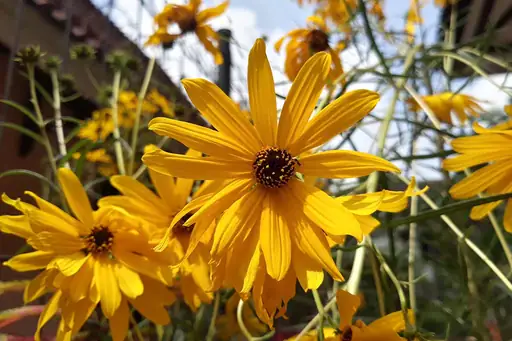
Helianthus angustifolius
My husband Wade runs a lawn care business and his clients who are active in garden clubs and enthusiastic about perennial garden design often share starts with him.
One of my absolute favorites is the swamp sunflower he obtained this way. This was, I don’t know, 15 years ago?
Since its arrival, the Helianthus angustifolius has been thriving in a tiny bed beneath a downspout that is always moist and sometimes a bit soggy.
It has reseeded along a nearby fence we share with a neighbor, where in early fall it’s eight or nine feet tall and creates a privacy fence.
Wade has also grown the divisions in a half-barrel-size container some years, and we always have seeds and divisions to share with our gardening friends.
It’s not the only sunflower I grow. I’m a big fan of the annual varieties, the H. annuum types that provide birds seed and may have extra-large blooms.
But for a low-maintenance perennial that will grow in moist conditions, blooms in the fall, and can withstand clay or sandy soil and occasional drought, I don’t think you can beat the swamp sunflower.
If this sounds like a plant you could enjoy in your own space, I’m here to share more about its growth habits and endearing qualities. Here’s what I’ll cover:
What You’ll Learn
- What Are Swamp Sunflowers?
- Propagation
- How to Grow
- Growing Tips
- Pruning and Maintenance
- Where to Buy
- Managing Pests and Disease
- Best Uses
- Quick Reference Growing Guide
What Are Swamp Sunflowers?
Swamp sunflowers are native to the eastern United States.
Part of the aster family, this is one of the perennial sunflowers that is not as widely grown as the larger-bloomed, seed-heavy, annual varieties, H. annuum.
You can find more about growing and caring for annual sunflowers in our guide.
Native sunflowers such as H. angustifolius were cultivated by indigenous tribes throughout North America starting about 3,000 BCE. The ancient tribes commonly used these crops for food, medicine, dye, and paint.
These plants may have been domesticated even before corn. These days, the flowers grow throughout the US, thriving in floodplains, bogs, ponds, and higher ground from New York to the coastal south and on over to Texas and Arizona.
Swamp sunflowers are also known as “narrow-leaf sunflowers” due to the unusual shape of their dark green, rough foliage.
The leaves are a pretty landscape element on their own, lush and green, and they provide visual interest starting in early spring and continuing until the plants die back in late autumn.
Photo by Rose Kennedy.The plant spreads via rhizomes, often covering up to four feet in a single season. In warmer areas, the plants will return each year, and they are also self-seeding.
To learn more about the difference between annual and perennial sunflowers, see our guide.
The stems usually reach five to eight feet tall, depending on the variety, but some may soar to 10 feet or more. The plants bloom in late summer and continue for 45 to 60 days, so they provide a source of color in the fall garden, too.
They’re pollinator magnets for various insects, and their foliage attracts the larvae of checkerspot butterflies (Chlosynes spp.).
Songbirds are also attracted to the meaty seeds – though they’re not large enough to be worthwhile for human consumption.
The swamp sunflower grows in conditions that thwart most other perennial flowers, including coastal salt air, sandy soil, and wet conditions. If you’re interested in gaining all those advantages, more growing info is coming.
Swamp Sunflower Propagation
The easiest way to propagate a swamp sunflower is from divisions. If you have a source, hurray!
Photo by Rose Kennedy.Learn how to divide perennials in our guide. Doing this in the fall after blooming is preferable, or in early spring once the parent plant is a few inches tall.
You may also be able to find divisions to purchase from a local native plant nursery.
Transplant into the garden immediately, setting each division into a hole the same size as the pot it came in or deep enough so that the rhizome is covered and the crown is at soil level.
Backfill with garden soil and water in well.
Photo by Rose Kennedy.You’ll want to keep the soil moist for the first two months. After they’re established, they’ll be okay if your area experiences occasional dry spells, though these plants grow best with consistent moisture.
You can also sow seeds either indoors or directly into the garden.
Plant them indoors about four weeks before your area’s last frost using a sterile potting mix and a shallow tray or individual cells.
Press the seeds into the surface without burying them, spacing them two per cell or about four inches apart.
Keep them moist and in a room temperature area, and they should sprout within seven to 12 days.
Place the sprouts on a sunny windowsill or about eight inches beneath a grow light, and keep the soil moist until the plants have at least two sets of true leaves.
Once the threat of frost has passed, spend a week or so hardening off the seedlings before transplanting them outdoors.
To sow the seeds directly outdoors, press them into the soil surface and cover them with only a fine dusting of soil. They need light to germinate.
Keep them moist until they sprout, and once the seedlings have two or three sets of true leaves, thin them to stand at least 12 inches apart.
I’ll admit that I don’t worry about the spacing when my plants self-seed, but I will pull a few of the plants if they start growing so close together that they don’t get enough water and start wilting.
Once you’ve got the plants in place, swamp sunflowers are relatively carefree. Keep reading for more tips on growing these native perennials.
How to Grow Swamp Sunflowers
The whole point of growing a plant with a name like “swamp sunflower” is to have pretty blooms in a normally inhospitable spot.
So please do plant these sunny flowers in a spot with poorly draining soil.
You can grow them in well-draining soil, and they’ll admittedly be happiest there, but they can also handle part clay with poor drainage. Ironically, they’ll also do fine in sandy soil.
As for the sun, they’ll do best in full sun, six to eight hours per day. But if that soggy spot you’re looking to fill only offers partial sun or part shade exposure, they’ll make do.
You can prepare the soil by adding composted manure or other aged organic material ahead of time, working a two-inch layer into the top four or five inches of soil. But if you’re not inclined to go to that much trouble, this plant will thrive anyhow.
Photo by Rose Kennedy.You will want to give the plants ample space. They can spread as much as four feet wide, so let them have room to avoid powdery mildew.
As for water, well, that’s a necessity. If rain doesn’t provide an inch or so per week during the growing season, you should supplement with water from a hose or watering can, being careful to water at the soil surface, not from above the leaves.
Once the plants are established and a couple of months old, they can even withstand a period of drought. As I said, they’re very easy to care for.
Growing Tips
- Plant in full sun if possible, or part shade.
- Allow at least 12 inches between plants so they can spread.
- Keep soil moist until plants are established and can handle drier conditions.
Pruning and Maintenance
These plants don’t need mulch or fertilizer, but I recommend one maintenance step: Pruning.
If you pinch the stems back to about half their height in midsummer, before they’ve started budding, they’ll be fuller, more bushy, and won’t look as scraggly when they bloom.
If you miss the opportunity though, don’t fret. They’ll still look appealing with gangly, 10-foot swathes of yellow blooms bending over the soggy patch in your native planting area or border.
Where to Buy Swamp Sunflowers
I fervently hope you have a friend with swamp sunflowers to obtain saved seeds or a division or two without hassle.
You may be able to find a division at a native plant nursery in your area too, or perhaps via a local gardener’s group.
Swamp Sunflowers
It’s also possible to find seeds online.
Managing Pests and Disease
Happily, this native perennial does not incur as many pests and diseases as its H. annuum relatives prized for their seeds.
The sunflower midges that plague the large seed heads won’t strike the more modest blooms, for example.
Deer and rabbits may munch on the leaves, but only if they don’t have more appealing options in the spring and summer garden. And since the seeds are smaller and less plentiful, squirrels won’t usually strike either.
Photo by Rose Kennedy.As for insect pests, some caterpillars and beetles might gnaw on the leaves, but they won’t keep the plants from blooming later.
If you like, you can take measures to spray the foliage, but I prefer to let the plants grow on since insect pests don’t do too much damage, and various insecticides can hurt the pollinators that depend on plants like swamp sunflowers.
There is a chance these moisture-loving plants will suffer diseases including powdery mildew, rust, or fungal leaf spots.
Here, too, the damage is ordinarily minor, and the plants can thrive without intervention. If the appearance bothers you though, you may want to try an organic fungicide such as copper.
For more tips on coping with darkling beetles, sunflower beetles, thistle caterpillars, and wireworms, see our guide to sunflower pests.
Best Uses for Swamp Sunflowers
While they don’t yield mass quantities of seed to roast or save for the birds like annual sunflowers, H. angustifolius is highly desirable in many garden situations.
First, they’re ideal for a swampy spot, like the dirt at the bottom of a downspout or an area near a pond.
They’re lovely in native plantings, where their appeal to pollinators will also help the entire ecosystem thrive.
They also look good at the back of borders, especially in a fall-blooming perennial garden, where they’ll provide color long after summer annuals have stopped flowering.
And don’t forget that they are a good option for coastal gardens since they can sustain some salt air.
Last but not least, they’re a great choice for the flower gardener who doesn’t want to fuss.
Not only are they easy to care for, they readily self-seed, and the rhizomes will typically resprout each year as well.
Quick Reference Growing Guide
| Plant Type: | Flowering herbaceous perennial | Flower/Foliage Color: | Yellow/emerald green |
| Native to: | Eastern United States | Maintenance: | Low |
| Hardiness (USDA Zones): | 4a-9a | Tolerance: | Clay, drought, part shade, salt air, sandy soil, wet soil |
| Bloom Time: | Late summer, fall | Soil Type: | Average |
| Exposure: | Full sun | Soil pH: | 5.0-7.5 |
| Time to Maturity: | 100-150 days | Soil Drainage: | Well-draining |
| Spacing: | 12-48 inches | Attracts: | Bees and other flying pollinators, birds |
| Planting Depth: | Pressed into soil surface (seeds); even with soil surface (divisions) | Companion Planting: | Other fall-blooming perennials like asters |
| Height: | 4-10 feet | Avoid Planting With: | Annuals, plants that compete for water |
| Spread: | 2-4 feet | Uses: | Back of borders, coastal gardens, native plantings, part shade areas, pollinator gardens |
| Growth Rate: | Moderate | Family: | Asteraceae |
| Water Needs: | Moderate | Genus: | Helianthus |
| Common Pests and Disease: | Aphids, darkling beetles, sunflower beetles, thistle caterpillars, wireworms; leaf spot, powdery mildew, rust | Species: | Angustifolius |
Swamped with Perennial Sunflowers
I’m fond of the cheerful appearance of sunflowers.
I’m glad this variety offers an option for gardeners who grow in sandy soil or coastal areas – or who want the ease of a plant that will return season after season.
Do you have experience with this easy-care native perennial? We’d love your input or to assist with your questions in the comments section below.
And for more helpful info on growing all types of sunflowers in your garden or landscape, read these guides next:
- 9 Popular Pollenless Sunflowers to Grow in Your Garden
- Tips for Growing Black Oil Sunflowers in the Home Garden
- A Pot of Gold: How to Grow Sunflowers In Containers
- Facebook30
- X




질문 및 토론