
How to grow carrots
Seed to Harvest Growing Guide How to grow carrots A practical guide to preparing straight root space, germinating tiny seed, thinning without damage, maintaining even moisture, and lifting colorful carrots at peak sweetness. Direct sow shallowly in fine soilThin to 2–3 inches for smooth rootsWater.
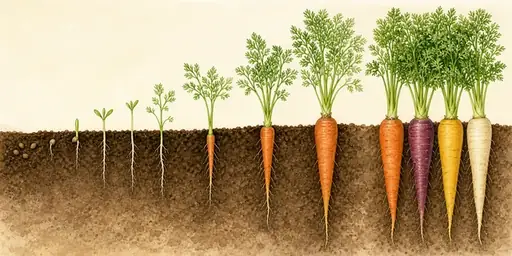
Seed to Harvest Growing Guide
How to grow carrots
A practical guide to preparing straight root space, germinating tiny seed, thinning without damage, maintaining even moisture, and lifting colorful carrots at peak sweetness.
Direct sow shallowly in fine soilThin to 2–3 inches for smooth rootsWater uniformly to prevent cracks Shop carrot seed →Start the guide ↓ Crop family: Apiaceae Plant2–3 weeks earlyBefore the last spring frost Depth1/4–1/2 inchKeep the surface moist LightFull sunAt least 6 hours Spacing2–3 inchesRows 12–18 inches apart HarvestAbout 70–100 daysVariety and root size dependentBefore you begin
Protect the taproot from the day seed is sown.
Carrots are always grown from seed because transplanting disturbs the primary root. Prepare deep, fine soil without stones or fresh manure, keep the shallow seedbed moist through slow emergence, then thin carefully so every plant can form one straight root.
Best first decisionMatch root shape to soil: long Imperator and Nantes types need deep loose beds, while shorter Chantenay or baby types tolerate shallower or heavier ground better.Build your carrot-growing plan
Plan the cool window, root depth, seed quantity, and succession rhythm.
Reserve loose, stone-free ground and repeat short sowings so tender roots mature before high heat reduces flavor and texture.
When to sow carrotFind your local planting windowEnter your ZIP code to connect workable soil, frost dates, and the cool spring or fall weather carrot prefer.Check carrot timing → Lay out the carrot bedReserve deep root spacePlace rows in full sun with loose soil, 2–3 inches between plants, and 12–18 inches between rows.Plan the carrot bed → How much carrot seedCalculate the seed you needEstimate seed from row length, final spacing, germination, and the number of succession sowings.Calculate carrot seed → Keep roots comingSchedule the next sowingPlan another small row every 3–4 weeks while temperatures remain favorable.Plan carrot successions →Carrot at a glance
The path from seed to harvest
Select any milestone to jump directly to its full instructions.
01Plan2–3 weeks before last frost02SowSoil at least 40°F03Thin3–4 true leaves04GrowCool steady weather05ProtectScout weekly06HarvestAbout 70–100 daysStage 1–3
Direct sow shallowly, then thin without root damage
Fine soil, uninterrupted surface moisture, and careful thinning determine whether carrots emerge evenly and grow straight.
01Prepare the root zone
Loosen fertile, well-drained soil deeply and remove stones, clods, and undecomposed material.
- Avoid fresh manure and concentrated fertilizer bands.
- Use a soil test to guide nutrients.
- Rake the seedbed fine and level.
Direct sow tiny seed
Sow 1/4–1/2 inch deep about 2–3 weeks before the last frost once soil reaches roughly 40°F.
Emergence targetKeep the surface continuously moist for 14–21 days. A thin cover of fine compost or sand helps prevent crusting over slow seedlings. 03Thin without delay
When plants have 3–4 true leaves, thin to one carrot every 2–3 inches.
- Snip extras where roots are intertwined.
- Keep rows about 12–18 inches apart.
- Water after thinning.
- Weed by hand while roots are small.
Stage 4
Keep taproot growth straight, cool, and steady
Carrots need uniform moisture, shallow weed control, moderate fertility, and protection from any injury to the primary root.
WWater uniformly
Keep soil consistently moist but not saturated. Alternating dry and wet periods encourages cracking and bitter, coarse roots.
FFeed by test
Side-dress lightly about six weeks after emergence if a soil test indicates need. Excess nitrogen promotes hairiness and branching.
WWeed shallowly
Young carrots compete poorly. Hand weed or cultivate only the surface so tools do not prune or fork developing roots.
SSow again
Plant another short row every 3–4 weeks through the favorable season for a steady supply of tender roots.
Growth checkpoints
Know what to watch for.
Use emergence, leaf development, shoulder diameter, and root quality—not only the calendar—to guide each decision.
14–21 daysEmergence
Filings appear slowly; keep the surface moist and free of crust until the row is established.
3–4 true leavesFinal thinning
Leave one plant every 2–3 inches before neighboring taproots begin competing or tangling.
Shoulders coloringRoot sizing
Brush soil aside gently to check diameter and hill exposed shoulders if greening is a concern.
70–100 daysHarvest window
Lift sample roots when shoulders reach the variety’s expected size and before older roots crack or turn woody.
Stage 5
Diagnose carrot problems early
Open a symptom to compare what you see, likely causes, and the next practical check.
PestCarrot rust flyRust-colored winding tunnels, scarring, or larvae in the lower rootUse insect netting before adult flies reach the bed, rotate away from carrots and related hosts, control wild carrot-family weeds, remove all roots after harvest, and harvest infested blocks promptly.
DiseaseAster yellowsYellow twisted bunchy tops with a short bitter root and many fine hairsRemove symptomatic plants because they will not recover. Control susceptible weeds, use insect netting where practical, and monitor leafhoppers that carry the phytoplasma into the crop.
Root disorderForking and branchingOne taproot divides into several misshapen rootsRemove stones and clods, loosen compact soil, avoid transplanting, fresh manure, excess nitrogen, and fertilizer bands, and cultivate shallowly so the primary root is never pruned.
Water stressRoot crackingDeep splits after dry soil is followed by heavy rain or irrigationMaintain uniform moisture, mulch after establishment, and harvest promptly once roots reach useful size. Older large roots crack more readily than younger roots.
Stage 6
Lift roots when shoulders reach useful size
Carrots can be harvested young or allowed to reach the variety’s mature diameter. Cool weather often improves sweetness, but oversized or unevenly watered roots are more likely to crack.
- Check: Brush soil from the shoulder and lift a sample root to judge diameter, length, color, and texture.
- Lift: Loosen firm soil with a fork before pulling by the tops so long roots do not snap.
- Store: Trim tops promptly, cool and wash roots, then refrigerate at high humidity away from apples and pears.
Choose with purpose
Find the right carrot for your soil and kitchen
Compare root shape, length, color, days to maturity, fresh eating, juicing, storage, and organic seed options.
Organic Nantes typeScarlet Nantes OrganicA verified cylindrical orange carrot with blunt tips for tender fresh roots and dependable garden performance.Shop Scarlet Nantes Organic → Strong tapered rootDanver 126A verified classic tapered carrot suited to dependable yields, processing, and somewhat heavier soils.Shop Danver 126 → Color specialtyCosmic PurpleA verified purple-skinned specialty carrot with an orange interior for striking fresh harvests.Shop Cosmic Purple →Questions gardeners ask
Carrot growing FAQ
Quick answers for sowing, slow germination, thinning, root shape, color, cracking, harvest, containers, and storage.
When should carrots be planted?Direct sow about 2–3 weeks before the average last spring frost once soil is workable and at least about 40°F. Sow again for fall harvest, allowing the variety’s full maturity time in cooling weather.
Can carrots be transplanted?Carrots should be direct sown. Transplanting disturbs the primary taproot and commonly produces forked or misshapen roots.
How deep should carrot seed be planted?Sow 1/4–1/2 inch deep and cover with fine soil, compost, or sand. Keep the surface continuously moist until seedlings emerge.
Why are carrot seeds so slow to germinate?Carrots commonly need 14–21 days to emerge, especially in cool soil. Crusting and surface drying cause uneven stands, so use a fine cover and frequent gentle watering.
How far apart should carrots be thinned?Thin to one plant every 2–3 inches when seedlings have 3–4 true leaves, with rows about 12–18 inches apart. Snip extras if pulling would disturb neighboring taproots.
Why are my carrots forked?Stones, compacted soil, transplanting, fresh manure, concentrated fertilizer, excess nitrogen, pests, disease, and cultivation damage can all injure or deflect the primary root.
Why are my carrots hairy?Excess water, excess nitrogen, and aster yellows can cause many fine side roots. Aster yellows also causes yellow twisted tops and a short, bitter root.
Why did my carrots crack?Older roots often split when dry soil is followed by heavy rain or irrigation. Keep moisture uniform, mulch after establishment, and harvest promptly at useful size.
Why are carrot shoulders green?Exposed shoulders make chlorophyll in sunlight. Hill a little soil around the tops as roots enlarge and choose varieties that keep their shoulders below the surface.
Can carrots grow in containers?Yes. Use loose mix in a container deeper than the expected root length. Short or round varieties suit shallow containers; long types require much deeper soil.
When are carrots ready to harvest?Brush soil from the shoulder and harvest when diameter, color, and length suit the variety and kitchen use. Most mature about 70–100 days from seeding.
How should harvested carrots be stored?Trim tops promptly, cool and wash roots, and refrigerate at high humidity. Keep carrots away from apples, pears, and other ethylene-producing fruit because ethylene can make them bitter.
Ready to plant?
Choose carrots for your garden.
Compare root shape, length, color, days to maturity, fresh eating, storage use, organic options, and packet size.
Shop all carrot seed →



질문 및 토론