
How to grow Swiss chard
Seed to Harvest Growing Guide How to grow Swiss chard A practical guide to sowing Swiss chard, thinning clustered seedlings, harvesting colorful outer leaves, and keeping plants productive from spring into fall. Sow in cool soilThin each seed clusterHarvest outer leaves Shop Swiss chard seed →Start.
Seed to Harvest Growing Guide
How to grow Swiss chard
A practical guide to sowing Swiss chard, thinning clustered seedlings, harvesting colorful outer leaves, and keeping plants productive from spring into fall.
Sow in cool soilThin each seed clusterHarvest outer leaves Shop Swiss chard seed →Start the guide ↓ Crop family: Amaranthaceae SeasonCool to warmHandles summer better than spinachSow depth1/2 inchEach seed is a clusterLightFull sunPart shade in heatSpacing6–12 inchesBaby leaf to full plantsHarvest30–60 daysThen cut-and-come-againBefore you begin
Grow leaves, not roots.
Swiss chard is the same species as beet, but selected for broad leaves and crisp edible stems. It tolerates both light frost and summer warmth, making one well-managed planting productive for months.
Best first decisionChoose close spacing for baby leaves or 8–12 inches for full plants with thick stems and repeated outer-leaf harvests.Build your Swiss-chard plan
Plan timing, bed space, seed quantity, and the first harvest.
One sowing can produce repeatedly when the central crown remains intact.
When to plant Swiss chardFind your local planting windowStart in cool spring soil or sow again in late summer for fall.Check chard timing →Lay out the chard bedPlan accessible rowsLeave room to reach outer leaves without damaging crowns.Plan the chard bed →How much chard seedCalculate the seed you needEstimate seed from row length and final spacing.Calculate chard seed →Plan the first harvestWork back from a target dateEstimate baby-leaf or full-size harvest timing from sowing.Plan a chard harvest →Swiss Chard at a glance
The path from seed to harvest
Select any milestone to jump directly to its full instructions.
01Plan2–3 weeks before last frost02SowSoil at least 40°F03ThinFirst true leaves04GrowCool steady weather05ProtectScout weekly06HarvestAbout 50–80 daysStage 1–3
Sow clusters, then thin decisively
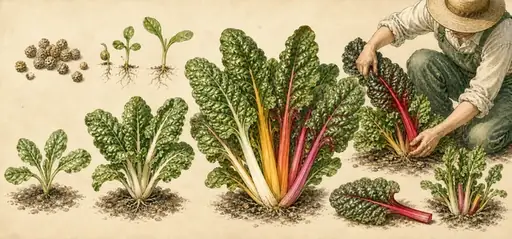
Each corky “seed” can contain several embryos, so multiple seedlings commonly emerge together.
01Prepare fertile soil
Choose well-drained soil with compost and full sun. Part shade can preserve tenderness during hot summers.
- Aim for soil pH near 6.0–7.0.
- Remove stones and perennial weeds.
- Keep the bed evenly moist.
Sow directly
Plant clusters about 1/2 inch deep, 1–2 inches apart. Keep moist; germination commonly takes 5–14 days.
Optional soakingSoaking seed clusters for a few hours can speed hydration, but is not required. 03Thin for harvest size
Thin to 3–6 inches for baby leaves or 8–12 inches for full plants after true leaves appear.
- Snip extras to protect nearby roots.
- Eat clean thinnings.
- Transplant young extras promptly if desired.
Stage 4
Keep leaves tender and crowns growing
Consistent water and frequent picking sustain clean, mild regrowth.
WWater evenly
Supply about 1–1½ inches weekly, adjusted for soil and heat; drought toughens leaves and stems.
MMulch lightly
Mulch after plants establish to cool roots and suppress weeds without burying the crown.
NFeed moderately
Top-dress with compost or follow a soil test; excessive nitrogen creates soft growth.
HHarvest routinely
Remove the largest outer leaves and leave the central growing point untouched.
Growth checkpoints
Know what to watch for.
Use plant development—not only the calendar—to time thinning, greens harvest, root checks, and lifting.
7–14 daysEmergence
Several seedlings may arise from each seed cluster; keep the bed moist and protect the fragile stand from crusting.
First true leavesFinal thinning
Leave one plant every 3–4 inches before roots begin crowding and distorting one another.
4–6 inch topsGreens harvest
Take only a few outer leaves from root crops, or harvest dedicated plants entirely for tender greens.
Shoulders visibleRoot sizing
Brush soil aside to check diameter and lift roots before they become oversized, fibrous, or cracked.
Stage 5
Diagnose Swiss-chard problems early
Open a symptom to compare what you see with the next practical check.
PestLeaf minersPale winding tunnels and translucent blotchesRemove mined leaves, crush eggs on undersides, exclude adult flies with insect netting, control host weeds, and rotate beds.
PestAphidsCurled growth, sticky residue, and insect clustersDislodge with water, conserve beneficial insects, control tending ants, and discard badly distorted leaves.
DiseaseCercospora leaf spotRound tan centers with purple-red marginsRemove affected leaves, water at soil level, improve airflow, rotate away from beet-family crops, and clean up residue.
Growing stressBoltingElongated central stalk and smaller coarse leavesYoung plants exposed to prolonged cold may bolt as days lengthen. Plant at the proper time, reduce stress, and replace flowering plants.
Stage 6
Cut outer leaves and protect the crown
Harvest baby leaves young or let plants develop broad blades and thick colorful stems.
- Choose: Pick dry, clean outer leaves once they reach the size you want.
- Cut: Slice stems near the base without nicking the central growing point.
- Cool: Refrigerate promptly in a loose bag; wash shortly before cooking.
Choose with purpose
Match color and plant type to your harvest
Compare a rainbow standard, a classic green, a controlled red, and a baby-leaf selection.
Benchmark rainbow mixBright LightsGlossy savoyed leaves and stems in gold, pink, orange, red, white, and pastel blends.Shop Bright Lights →Classic green standardFordhook GiantDark glossy leaves with deeply savory flavor for full-size harvests.Shop Fordhook Giant →Controlled red colorRuby RedFast-growing plants with deep red stems and veins for strong garden color.Shop Ruby Red →Baby-leaf specialistBareseQuick, uniform, crisp leaves bred specifically for tender baby-leaf production.Shop Barese →Questions gardeners ask
Swiss chard growing FAQ
Quick answers for planting, thinning, heat, containers, harvesting, and storage.
When should Swiss chard be planted?Sow in spring several weeks before the last frost, or again in late summer for fall harvests.
How deep should chard seed be planted?Sow the corky seed clusters about 1/2 inch deep and keep the bed moist.
Why did several seedlings emerge from o?A chard seed is a dried fruit cluster that often contains multiple embryos. Thin the resulting seedlings.
How far apart should Swiss chard be?Use 3–6 inches for smaller leaves and 8–12 inches for full-size plants.
Can Swiss chard tolerate heat?It tolerates warmth better than spinach, though even moisture and afternoon shade improve quality in extreme heat.
Can Swiss chard tolerate frost?Established plants handle light frost, but prolonged cold when young can trigger bolting later.
Can Swiss chard grow in containers?Yes. Use a pot at least 10–12 inches deep with drainage, fertile mix, and room for the selected spacing.
How often should chard be watered?Provide roughly 1–1½ inches weekly, adjusted for heat, rain, and container conditions.
How is Swiss chard harvested?Cut the largest outer leaves near their base and leave the central crown intact.
Will Swiss chard grow back after cutting?Yes, when the central growing point remains undamaged and enough foliage is left to support regrowth.
Are Swiss chard stems edible?Yes. Stems are edible but often need more cooking time than the tender leaf blades.
How should harvested chard be stored?Refrigerate dry, unwashed leaves loosely bagged and use them within several days for best quality.
Ready to plant?
Choose Swiss chard for your garden.
Compare root color, shape, days to maturity, greens quality, bolt resistance, storage use, and packet size.
Shop all swiss chard seed →
질문 및 토론