
9 Reasons Why Hyacinths May Fail to Bloom
Hyacinths, Hyacinthus spp., are perennial flowering bulbs for Zones 4 to 8 that bloom in early to mid-spring with sweetly fragrant flowers. The flower spikes or racemes may be blue, orange, peach, pink, purple, yellow, or white, depending on the cultivar. Cultural requirements include full to.
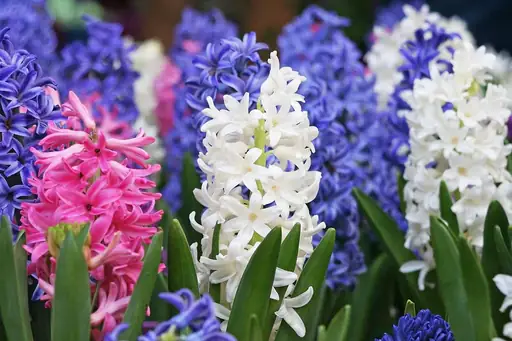
Hyacinths, Hyacinthus spp., are perennial flowering bulbs for Zones 4 to 8 that bloom in early to mid-spring with sweetly fragrant flowers.
The flower spikes or racemes may be blue, orange, peach, pink, purple, yellow, or white, depending on the cultivar.
Cultural requirements include full to partial sun, slightly acidic, loamy soil, and excellent drainage.
Despite our best efforts as gardeners, hyacinths sometimes grow leaves but don’t bud or flower, a condition called “blindness.”
Our guide to growing and caring for hyacinths has all you need to enjoy them in your early-season landscape.
This article focuses on nine reasons why your hyacinths may fail to bloom and how to avoid them.
Here’s what we’ll cover:
9 Reasons Why Hyacinths Fail to Bloom
1. Age
2. Crowded Conditions
3. Excess Nitrogen
4. Inadequate Sunlight
5. Indoor Forcing
6. Mice
7. Moisture Stress
8. Planting Depth
9. Weather
1. Age
Good quality bulbs from a reputable supplier are the most likely to grow well and flower reliably. However, even the best don’t perform quite so well as they age.
The lifespan of a hyacinth under ideal conditions is about five years; straight species plants are likely to outlive their hybrid counterparts.
Note planting dates in your garden planner. Anticipate that your bulbs will start to decline and replenish the garden in year three or four to avoid a poor spring showing as old bulbs fail to bloom.
In addition, while it may be unsightly, allowing the foliage to wither naturally after the plant has finished blooming rather than cutting it down is essential.
The leaves continue to feed the bulbs, storing energy for next year’s flowers.
While the foliage is best left in place, to maintain vigor, growers should remove the spent flower stems before the blossom color fades, to redirect energy from seed-setting to photosynthesis.
2. Crowded Conditions
The spring garden may become crowded as bulbs naturalize, creating offsets and enlarging their landscape footprint.
Competition for water and soil nutrients may result in a decline in performance, producing lots of leaves and few flowers – or none at all.
Avoid overcrowding by dividing in early fall, after the foliage has withered.
Relocate large parent bulbs and small offsets, setting them three to five inches apart and four to six inches deep.
3. Excess Nitrogen
Another possible cause of leaf growth and an absence of blooms is excess nitrogen in the soil.
While nitrogen is an essential nutrient, too much “N” in a fertilizer’s nitrogen, phosphorus, potassium (N-P-K) ratio may result in an overproduction of foliage and a lack of flowers.
If you need to fertilize, choose a product with an NPK ratio of 5-10-5 – twice as much phosphorus as nitrogen and potassium to support optimal blooming.
4. Inadequate Sunlight
Hyacinths thrive in full sun and can tolerate the dappled shade beneath leafless spring branches.
Low light causes stress, impeding photosynthesis and resulting in pale, undersized foliage.
As they struggle to survive, flowering bulbs deprived of sunlight may shut down reproductive growth and fail to bud.
Choose a full sun location at planting time, and if needed, transplant your hyacinths from shady spots into areas with more sunlight.
5. Indoor Forcing
Have you ever forced bulbs to bloom indoors in late winter? Or received a gift basket full of hyacinths?
In both cases, the disruption of the natural life cycle induces blooming at a time when it would not happen naturally.
If you plant your hyacinths outside after flowering, the bulbs may bloom again in the future.
However, it will likely take them two years of dormancy and growth to resume their normal rhythm.
If it has been two years or more, and you see leaves and no buds, it’s best to dig up and discard the bulbs as they are unlikely to recover.
6. Mice
The most likely early-season hyacinth pests are mice. These plant-eating rodents feed on the bulbs underground, undermining their ability to sprout foliage and bloom.
To deter mice, wrap bulbs loosely in wire mesh at planting time and sprinkle coarse gravel around them before covering them with soil.
7. Moisture Stress
When conditions are too wet or too dry, growth suffers.
Overwatering, poor drainage, and excess rainfall may lead to saturated ground and a fungal disease called basal rot.
If the hyacinth suffers from basal rot, the foliage may turn yellow and then brown and slimy, and this will affect flowering.
Similarly, underwatering, compacted soil, and drought may cause desiccation of the bulb, impairing foliage and flower production.
Provide well-draining loam, and if there is no rain during the week, water lightly. It’s best to err on the dry side to avoid rotting, the nemesis of all bulbs, not just hyacinths.
8. Planting Depth
As mentioned, the proper planting depth for hyacinths is four to six inches.
Setting the bulbs shallower than this may result in “heaving” from the ground during winter, risking death by freezing or desiccation caused by cold wind.
Planting deeper than six inches can cause stress and the bulb to expend more than the usual amount of energy to produce foliage, reducing the energy available for flowering.
Use a ruler to guide you in setting the base of each bulb no deeper than six inches and make sure the point is facing upwards.
Because growth comes from the tip, sowing upside down or sideways will cause further stress as sprouts must bend before rising to the surface.
9. Weather
Unusual weather phenomena, such as a warm spell in February, a snowstorm in April, excessive rainfall, drought, or temperature fluctuations, can all contribute to your hyacinths failing to bloom.
If an unexpected deep chill happens after the foliage has emerged, it can cause stunted growth, leaf tip burn, and a lack of blooms.
As discussed, moisture stress from too much or too little rainfall can damage the plants and impair their ability to enter the final phase of their life cycle, producing those fragrant flowers.
A Joyful Display
Knowing the main causes of why hyacinths may fail to bloom and ways to avoid them, you’re ready for your best spring flower display ever.
Enjoy this early-season, fragrant flower in beds, borders, containers, and window boxes, and welcome spring joyfully.
Are you growing hyacinths? Have you identified what the problem is? Let us know in the comments section below!
If you found this guide informative and want to learn more about growing spring flowers, we recommend the following:
- 25 of the Best Early Spring Blooming Flowers
- How to Naturalize Spring Flower Bulbs in the Landscape
- When and How to Plant Flower Bulbs After Forcing
- X




질문 및 토론