
Is Lily of the Valley Invasive?
It’s often so hard to make the shady parts of our gardens sing. And many of us have so much of it – shade on the north side of the house, under our trees, and next to our shrubs. It’s no wonder species like hostas and lily of the valley are so sought after. You’d have a hard time finding more.
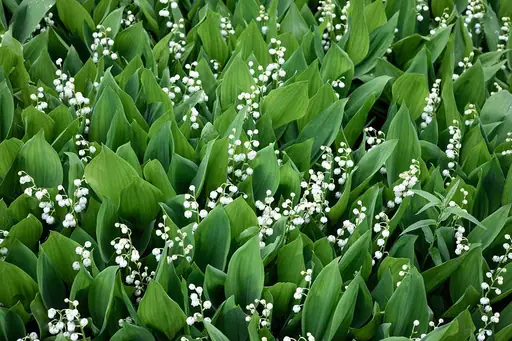
It’s often so hard to make the shady parts of our gardens sing. And many of us have so much of it – shade on the north side of the house, under our trees, and next to our shrubs.
It’s no wonder species like hostas and lily of the valley are so sought after. You’d have a hard time finding more reliable options for filling the shade with life and color.
But, as the saying goes, no one is perfect. Not even our shade-loving superstars.
Lily of the valley, for example, isn’t as sweet as she looks. In reality, she can sometimes be quite the menace.
In this guide, we’re going to talk about whether this plant is invasive and what we can do to control it. Here’s what’s in the coming attractions:
What You’ll Learn
What Is Lily of the Valley?
Is Lily of the Valley Invasive?
Native Species
Controlling Lily of the Valley
Before we discuss invasiveness and what it all means, let’s define what lily of the valley is.
What Is Lily of the Valley?
Convallaria majalis, commonly known as lily of the valley, is a plant native to Eurasia.
It was brought to North America as an ornamental for its white, bell-shaped flowers that dangle delicately from long stalks.
Not just a pretty face, these tiny blossoms exude an outsized fragrance with notes of sweetness, flora, and fresh greenery that’s marvelous enough to grace perfumes.
The only problem is that its mild-mannered appearance hides a wily nature, and it has at times escaped.
Not content to be constrained, this species has quickly found its way into forests and fields, earning itself a bad reputation and the dreaded label of “invasive” (dun dun dun…).
Is Lily of the Valley Invasive?
An invasive plant is one that isn’t indigenous to an area, and that has caused some sort of harm, whether economic or environmental, or to human or animal health.
A species can be regarded as troublesome without being deemed invasive, such as those that are considered noxious.
These terms are important because they allow local, state, and federal governments to regulate and control the plants they deem problematic.
The US federal government defines an invasive species as “an alien species whose introduction does or is likely to cause economic or environmental harm or harm to human health” in Executive Order 13112, which created the National Invasive Species Council.
C. majalis is not currently defined as invasive by the federal government.
It is, however, listed as invasive by local governments in many areas of the eastern United States, as well as Alaska.
Local governments in Wisconsin, Connecticut, New York, Massachusetts, and Pennsylvania all list it as invasive. In many regions it’s listed as a noxious weed instead.
It’s not listed as invasive or noxious in most western states.
So the answer is that, yes, C. majalis may be invasive. It all depends on where you live.
Regardless, this species may grow aggressively. An aggressive plant might be native or not, and it might cause harm or not. What it does do is spread to areas where it isn’t wanted.
Native Species
Remember, in order to be classified as invasive, a plant must be alien. There is some debate about whether or not lily of the valley is native to North America.
C. majalis var. montana, aka C. pseudomajalis, is considered by some to be native to the region.
There is no doubt that these plants vary slightly from C. majalis, but it’s not clear if this is a variety that adapted from plants that escaped cultivation, or if it’s native to the area and shares characteristics with the Eurasian species while being its own distinct species or variety.
Why does this matter? Because a plant that is native to an area, by definition, can’t be invasive.
An invasive species is one that isn’t indigenous to an area. So if we discover that certain types of lily of the valley are native, they might be more welcome in more areas than C. majalis.
Controlling Lily of the Valley
So long as the plant isn’t banned or controlled in your area, you can still plant it. But you might want to keep in mind its enthusiastic growth habit.
If you decide to cultivate it in your garden, you’ll likely want to keep it in check.
The plant spreads through stolons, rhizomes, and berries.
Your first option is to simply allow lily of the valley to grow wild. If you have a large area that needs some erosion control or a partially shady area far away from your other gardens, you can let it spread its wings and fly.
Otherwise, you want to provide it with some boundaries. Literally. Grow it in a bed with distinct borders that separate it from other areas, like a cement border, a sidewalk, or along the side of a building.
This won’t stop the seeds from escaping, so you’ll have to pull any pop-ups you find growing where you don’t want them. Birds may also spread seeds far and wide, so keep this in mind.
That leads me to the other control tactic: regular pulling. If you see a plant stick its head up where it’s not wanted, pull it. Then, thin out your patch regularly, focusing on the outer borders.
In most areas, you can’t thin too much. These plants will come right back with no problem.
You can always divide the plants and spread the love to friends and neighbors – intentionally!
Too Much of a Good Thing?
Whether it’s truly invasive or not, there’s always the possibility of finding yourself with too much of a good thing. Don’t let your lily of the valley become more of a beast than a beauty.
Do you have a favorite way to keep this pretty plant in check? Share your ideas in the comments to help others who are struggling to control it.
If this guide was useful for you and you’d like to learn more about lily of the valley, check out these guides next:
- How to Grow Lily of the Valley: Your Planting and Care Guide
- Reasons Why Lily of the Valley May Fail to Bloom
- Troubleshooting Yellow Leaves on Lily of the Valley
- X




질문 및 토론