
How to Use Marigolds for Pest Control
Marigolds have a bit of a reputation in the gardening world. They’re known for repelling all manner of pests and diseases, whether they’ve technically earned these accolades or not. It’s extremely common to see their cheery heads nodding in the summer sunshine next to tomatoes, squash, and.

Marigolds have a bit of a reputation in the gardening world. They’re known for repelling all manner of pests and diseases, whether they’ve technically earned these accolades or not.
It’s extremely common to see their cheery heads nodding in the summer sunshine next to tomatoes, squash, and broccoli.
But as with many garden practices, is there any science behind those things that we’ve been doing for years – or sometimes centuries?
When it comes to using these flowers as a form of pest repellent, there’s a good reason to be planting those golden beauties next to your edible plants, and scientific research has confirmed it.
Marigolds can help you to control certain pests that may wreak havoc on your veggies.
Here’s what we’ll talk about in this coming guide:
How to Use Marigolds to Combat Garden Pests
Whiteflies
Nematodes
Slugs and Snails
Keep in mind that it might not be as simple as grabbing a flat of French marigolds and plopping them next to your nearly-mature potatoes.
Using natural methods of pest control can take a little advance planning, so let’s jump right in.
Whiteflies
A 2019 study published in Plos One proves that glasshouse whiteflies (Trialeurodes vaporariorum) are repelled by French marigolds, Tagetes patula.
Niall Conboy at Newcastle University’s School of Biology and Dr. Thomas McDaniel at Newcastle University’s School of Natural and Environmental Science looked at whether the humble flower could chase off the nasty whitefly.
It turns out that the limonene in marigolds deters this annoying and destructive pest.
However, that doesn’t mean that if you have a whitefly infestation you can just run out and grab a four-pack of flowers. Nope.
You need to be growing marigolds next to whatever plant you want to protect from the get-go. The effect simply doesn’t work if you pop a these flowers next to an already-infested plant.
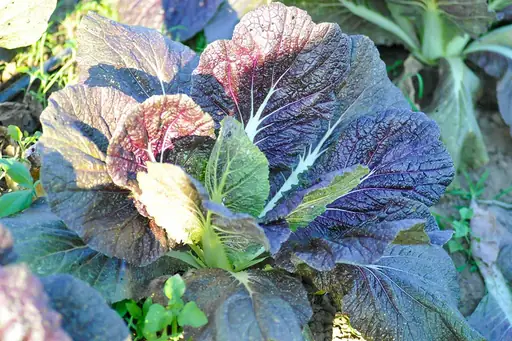
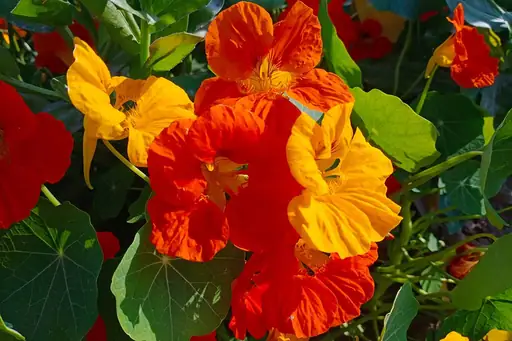
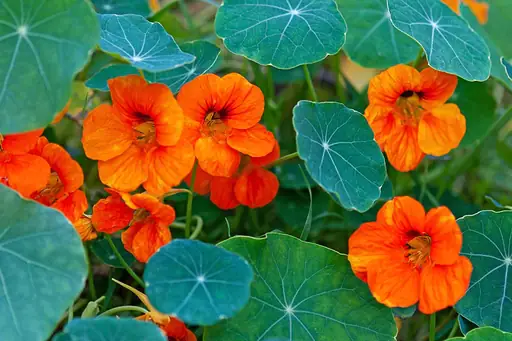
Basil, Chinese cabbage, and nasturtiums also repel whiteflies, so if you struggle with this pest in the garden, you might want to sprinkle all of these plants as well as marigolds liberally throughout your space.
Learn more about how to combat a whitefly infestation in our guide.
Nematodes
Marigolds are fantastic at repelling root-knot nematodes (Meloidogyne spp.). They secrete alpha-terthienyl from their roots, a chemical that inhibits the development of nematode eggs.
If you plant them in advance of other crops, root-knot nematodes won’t be able to build up in the soil. And given how difficult it can be to control this common pest, that’s welcome news!
Researchers at Yunnan Agriculture University showed via the Canadian Journal of Plant Science that marigolds were effective against root-knot nematodes when growing angelica.
But, of course, the effect likely works just as well when growing other plants that are susceptible to these pests.
The research indicated that regardless of whether you use rotation or intercropping, you can reduce populations of root-knot nematodes to the point where it may serve to improve crop yields.
Antoon T. Ploeg showed similar results in a study published in the journal Plant Diseases for the University of Hawaii at Manoa.
In this study, researchers looked at marigolds and their impacts on tomato yields, proving that the benefit is there for a variety of plant species.
Slugs and Snails
What? These flowers repel slugs and snails?! Unfortunately, no they don’t, but wouldn’t that be nice?
Still, these flowers can help with gastropod control in your garden by acting as decoys instead, and attracting slugs and snails.
I know that might sound weird or a little counterintuitive, but since they are so easy to grow and they self-seed so readily, they are an excellent option to use as a trap crop for dealing with these slimy garden invaders.
Sometimes pest control isn’t about what you repel, but what you can attract instead, to a targeted location.
If you decide to use marigolds as your sacrificial offering, be sure to head out each night with a flashlight and pluck as many snails and slugs off your plants as you can manage.
That way, you’re able to limit the population and enjoy your beautiful flowers at the same time.
Learn more about dealing with slugs and snails in our guide.
Put Marigolds to Work in Your Garden
I know what you’re thinking.
You probably took one look at this list and thought they might be imbued with some sort of seemingly magical pest-repelling powers (minus their ability to attract slugs and snails, of course). Unfortunately, that’s not the way evolution works.
Testing has shown that marigolds don’t repel cabbage flies (Delia radicum) or onion flies (D. antiqua), for example.
Are there any other plants that you’ve found to be pest-repelling powerhouses? Share in the comments so we can all benefit!
If you’re curious to learn more about marigolds, we have some excellent guides that you might be interested in reading next, starting with these:
- When and How to Plant Marigold Seeds
- Tips for Deadheading Marigolds
- 7 Steps to Harvesting and Saving Marigold Seeds
- Are Marigold Flowers Edible?
- Facebook298
- X
질문 및 토론