
How to Identify and Treat Pecan Stem End Blight
Botryosphaeria ribis You think you’ve got it made with your pecan trees, Carya illinoensis, and have visions of pies (at the least) or even some sales at the farmers market when all of a sudden – the husks start turning black. There are several things that can cause this, and one of the most.
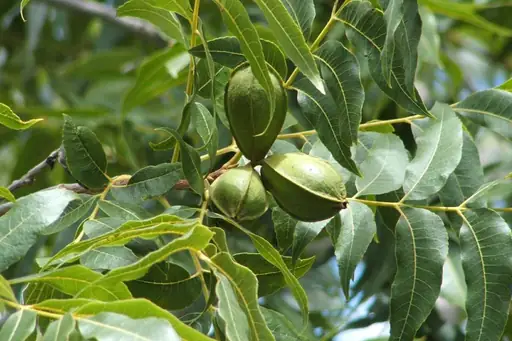
Botryosphaeria ribis
You think you’ve got it made with your pecan trees, Carya illinoensis, and have visions of pies (at the least) or even some sales at the farmers market when all of a sudden – the husks start turning black.
There are several things that can cause this, and one of the most serious is stem end blight. This fungal disease is caused by Botryosphaeria ribis (sometimes called B. dothidea) and is spread by insects feeding on your trees.
Unless you leap into action, this will not end well. And it still may not end well due to the severity of this disease.
As soon as you see the damage, you’ll need to spray your tree with a fungicide and then repeat the treatment 10 days later.
Read on to learn how to identify and treat this severe disease that affects pecan trees.
What You’ll Learn
- Symptoms of Pecan Stem Blight
- How to Treat
- Prevention
Symptoms of Pecan Stem Blight
Keep an eye out during the water stage of development – the period between pollination and the hardening of the shell. To learn more about growing pecan trees see our full guide.
At this stage, which takes around 90 days, the shell and kernel seed coat will be forming, as well as the liquid endosperm inside.
The timing of this development depends on the climate – July into August in warmer climates like those in Texas, and September or October in cooler areas.
Look closely at the developing nuts, and you may see a black or brown spot on the husk near the base of the nut, where it meets the tree. The lesions will be sunken and shiny.
These lesions will spread until the husks start to turn black. At this point, the nut is easily dislodged from its stem, and some may fall to the ground.
If you cut the nut open, the liquid endosperm inside will have turned brown.
This disease is spread by insects feeding on the trees, so it’s possible that not every nut is affected. You may have infected nuts next to clusters that appear healthy.
How to Treat
These symptoms do not bode well for your harvest. You can prevent some losses, but no one has been able to completely eradicate this fungus successfully.
You may be able to partially salvage your crop if you spray with an appropriate fungicide within the first 10 days of the water stage.
Benomyl-type fungicides are considered to be the most effective. The Pecan IPM (integrated pest management) Program recommends thiophanate methyl to treat this disease.
You will need to spray once more 10 days later.
A Note of Caution
Always use chemical products safely. Read the label and product information. Pay attention to any risk indications and follow the safety instructions on the label. If in doubt, seek professional advice.
Your odds of having a healthy harvest are best if the disease strikes later in their development, when the nuts are almost mature. The earlier it appears, the worse the prognosis.
Prevention
Since pecan trees are susceptible to a number of different diseases and pests, you would be well advised to take precautions to reduce this risk when you plant your trees.
Space the trees far enough apart so that there is adequate airflow between them.
Make sure you prune any dead branches from mature trees to improve air circulation, and remove any plant debris from the ground around the tree. This will help to prevent infection and reduce its spread.
Plant your pecan trees in the sun, and avoid salty soils.
The Harmful Combination of Insect and Fungal Damage
Stem end blight would probably not be such a problem were it not for its spread by insects, meaning that if one tree in your neighborhood contracts it, then all are at risk.
The disease can destroy whole crops, and speedy action is necessary if you identify it on your trees.
You should immediately spray with an appropriate fungicide and then repeat 10 days later.
That will help to slow down the infection, allowing you to salvage some of your crop, but this disease is very difficult to eradicate.
To read more about pests and diseases that can plague your crops, check out these guides:
- How to Manage Root Rot in Fruit, Nut, and Landscape Trees and Shrubs
- How to Identify and Control Cotton Root Rot in Fruit and Nut Trees
- How to Protect Your Produce Against Bacterial Soft Rot
- Facebook56
- X




질문 및 토론