
How to Propagate Jade Plants
Jade plants are succulent stunners, sporting thick, round, deep green jewels for leaves. Described botanically as Crassula ovata, this species is also known as the money plant. Now, money doesn’t grow on trees, but if money did grow on C. ovata, you’d be hitting the jackpot by reading this article..
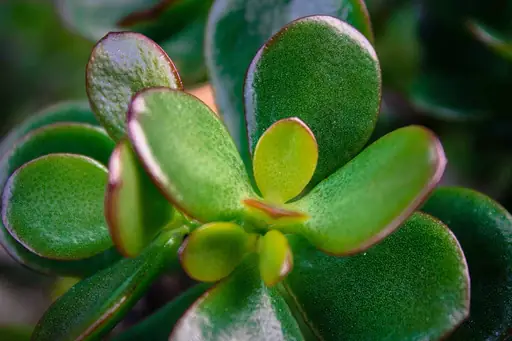
Jade plants are succulent stunners, sporting thick, round, deep green jewels for leaves.
Described botanically as Crassula ovata, this species is also known as the money plant.
Now, money doesn’t grow on trees, but if money did grow on C. ovata, you’d be hitting the jackpot by reading this article.
Not only is jade easy to propagate, each specimen has massive potential since all it takes is one leaf to start a new plant.
Enough talk, time is… more money plants! Let’s get into how to propagate these beauties. Here’s everything we’ll cover up ahead:
What You’ll Learn
- What You Need
- How to Propagate
- Leaf Cuttings
- Stem Cuttings
What You Need
Start with a healthy mother plant. Jade plants that are getting enough light and are happy will have luscious green foliage tinged with a deep rose on the edges.
Avoid specimens or leaves with spots or that show any signs of insect infestation or disease, as well as stems with flowers.
Rooting will happen the fastest during the summer, when jade is actively growing. But you can successfully propagate jade at any time of year.
All you need to turn one specimen into a dozen – if you want to! – is a small pot or two with good drainage, some well-draining rooting material such as a coarse sand or an equal mix of sand and peat moss, and a little water.
Plus, you might need a sanitized knife if you’re taking stem cuttings.
That’s it.
You don’t need a special environment, or any special tools. It’s as easy as snapping your fingers. Or rather, snapping a leaf.
How to Propagate
Jade plants are really easy to propagate via stem or leaf cuttings.
In fact, in the wild, leaves that break off and land on the ground will root themselves in a few weeks without any human intervention.
Take a hint from nature. Keep it simple and stay as hands off as possible. We’ll cover both of these methods here.
Leaf Cuttings
To take a leaf cutting, simply break off one of the succulent, deep green leaves. No need to cut it away cleanly – this may in fact prevent rooting!
Set it aside on a paper towel or newspaper in an area out of direct sunlight to dry for a few days.
This allows the broken surface where it was previously attached to the plant to heal and callus over, reducing the risk of rot.
Fill a two-inch pot with moistened rooting medium. If you’re cultivating multiple leaves at once, you could also fill a shallow tray if you wish, or start each one in its own small container.
Position the cutting at a 30 degree angle from the surface of the potting medium, covering the broken end just slightly with the sand or peat and sand mix.
Keep the container in the same environment where your mother jade plant is currently thriving, and your cuttings will do amazingly well, rooting with ease. A sunny, warm place will do!
Unlike many other plants propagated by taking cuttings, you should not cover the container with a bag or plastic dome to increase humidity. That’s just asking for issues with rotting when it comes to these succulents.
Water lightly whenever the top quarter-inch of the medium dries out. Roots should develop over the course of the next two to three weeks.
Eventually you’ll see little plantlets emerging from the base of the cutting. If multiple plantlets sprout, they can be divided carefully for transplanting, if you wish.
Stem Cuttings
Rooting leaves is an excellent propagation method with these plants. But maybe you’re thinking a little bigger.
If you want to start with a slightly bigger piece, take a three- to five-inch stem cutting from an actively growing stem. Cut it just below a leaf, using a clean knife or garden snips.
Remove the foliage from the stem end that will be inserted in the rooting medium, leaving at least three to four leaves in place at the opposite end.
If you like, any discarded leaves can also be propagated as described above.
Leave both the stem cutting as well as any individual leaves you’ve removed that you’d also like to propagate to dry for a few days, as described above.
After two to three days, the cuttings can be planted!
Fill a pot or pots with your rooting medium and dampen it slightly. It shouldn’t be sopping wet.
Plant the stem vertically with the cut end buried about one inch deep in the center of your container.
Again – you don’t need a special environment for propagation to be successful! As long as the mother plant is happy, your cuttings will thrive in the same conditions.
Like leaf cuttings, stems will take several weeks to root. Moisten the soilless medium whenever the top quarter-inch feels dry.
You’ll know stem cuttings are rooted when new, fresh growth appears. If you’re impatient like me, a gentle tug on the stem will let you know if roots are forming as well. Resistance equals roots.
And you’re off! If you want, you can have jade plants on every shelf. Or you can give them to other gardeners as gifts. Your call.
Show Me the Money (Plants)
It’s worth taking a snip or a snap of Crassula ovata here and there.
Or maybe you jostled yours when you were watering or cleaning, and a leaf or small stem broke free? Pop it in some rooting medium and it really is as easy as that to start a new jade plant!
These make perfect houseplants, and they’re beautiful at that.
You could keep all your baby jades for yourself… or you could give them away to admiring (or once-envious) friends and family once you have too many for your windowsills and shelves to bear!
Truly, what’s not to love about a plant that grows jewels for leaves?
Have you ever tried propagating these beauties? Let me know what type you tried and how it went in the comments below. You might also be interested in our general guide to propagating various succulents.
Or stick around to explore Gardener’s Path for more information about growing and caring for jade plants. Check out these guides next:
- How to Identify and Manage Jade Plant Pests
- 9 Reasons to Prune a Jade Houseplant and How to Do It
- 11 Reasons (And Fixes!) for Limp Leaves on Jade Plants
- Facebook28
- X




질문 및 토론