
When and How to Repot Pitcher Plants
Pitcher plants are so cool, there’s nothing quite like these fascinating carnivorous species with their odd traps and interesting foliage. But they aren’t exactly the easiest houseplant specimens to grow. Pitcher plants have unique cultural requirements and can be a little fussy. There are two main.
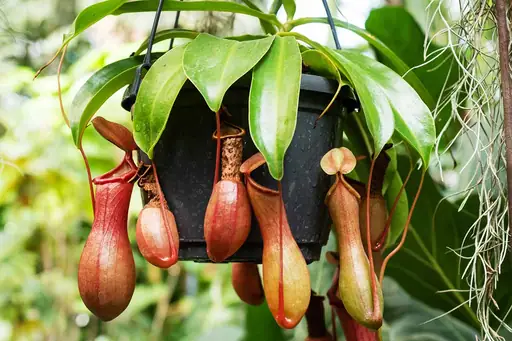
Pitcher plants are so cool, there’s nothing quite like these fascinating carnivorous species with their odd traps and interesting foliage.
But they aren’t exactly the easiest houseplant specimens to grow. Pitcher plants have unique cultural requirements and can be a little fussy.
There are two main type of pitcher plants cultivated as houseplants: species in the Sarracenia genus, that are native to North America, and tropicals in the Nepethes genus.
If you need a refresher, read our guide to growing tropical nepenthes or our article about caring for Sarracenia pitcher plants.
When they are grown in containers, inevitably there comes a time when these carnivorous specimens will need to be repotted. And it’s not quite as easy as, say, repotting a vigorous philodendron.
Pitcher plants are a bit fragile. It’s easy to break the leaves, pitchers, and roots. Plus, they don’t like to be disturbed.
Regardless of what species you are growing, they can be repotted in the same way. And that’s what we’ll go over in this guide.
Here’s what I’ll cover:
What You’ll Learn
When to Repot
Preparation
Remove the Plant
Repotting
When to Repot
This work should be done in the springtime, but if you need to do it at a different time of year, for example if you purchase a new specimen in the wrong type of container, that’s fine.
You’ll know it’s time to repot when the roots start creeping out of the drainage holes or out of the top of the potting medium.
It’s important to repot when the potting medium becomes compacted, decomposes, or if the specimen is simply too big for the current container.
Preparation
Before you can do the actual work of moving your specimen from one pot to the next, you need to prepare.
The first step is to know the best potting substrate for your particular species. Species in the Nepenthes genus need an equal mix of sphagnum moss, perlite, and orchid bark.
Sarracenia species do best in a specially formulated carnivorous plant soil or a mix made from equal parts coconut coir and perlite.
If you need a shovel to help you remove the specimen from its current container, make sure it’s nice and clean. Same with any pruners that you use to clean up the roots.
Wipe them with isopropyl alcohol or wash them in hot, soapy water. If you’re reusing a pot, sanitize that, too.
Pitcher plants can be grown in any type of container provided it has adequate drainage.
The pot should be about the same size as the aerial parts of the specimen. I prefer to grow mine in kokedama planters because they provide excellent drainage.
Kokedama Planter
When you have your supplies and you’re ready to get to work, start by snipping off any dead leaves or spent pitchers using your clean shears.
If you’re going up a pot size, place a little of the appropriate potting medium for your species in the pot so that the specimen will sit at the same level as it was in the previous pot.
You can place a screen over the drainage holes to prevent the medium from running out, but don’t put any “drainage” materials at the bottom.
Rocks or broken pottery at the bottom of a container won’t improve the drainage. It actually holds water close to the roots, defeating the purpose.
Remove the Plant
Gently remove the specimen from its existing container.
You might need to use a butter knife to gently loosen the soil or roots from the sides of the pot. It can also help to roll the pot on its side to loosen up the roots and medium.
Photo by Kristine Lofgren.Some gardeners recommend that you avoid tilting pitcher plants because some of the liquid inside the pitchers will inevitably be lost.
I’m more concerned about removing the root ball in a way that doesn’t damage the roots and foliage. The pitchers can refill themselves or you can provide them with a bit of liquid to help them out.
But if you want to retain the liquid, don’t roll the container on its side. If the specimen is difficult to remove you might want to enlist a helper who can support the leaves and pitchers as you work.
I’ll sometimes use a fork to insert into the side of the soil to pull the whole root ball out. You don’t want to grab the leaves because they’re fragile, so if the pitcher plant doesn’t come out, a fork or small shovel might be necessary.
Photo by Kristine Lofgren.If the soil or moss around the roots is fluffy and loose, you can keep it and add it to the new pot. But if it’s compacted or broken down, you’ll need to replace it completely.
Gently brush away as much of the existing soil from the root ball as you can and examine the roots, but use extreme care.
The roots are delicate and extremely sensitive. Carefully snip off any that are broken or rotten.
If you want to propagate via division, now is the perfect time. Gently tease a few stems and roots apart from the parent and repot these in their own containers.
Repotting
Gently set the specimen in the new pot and fill around the roots with the chosen medium. Add water and top off with more medium if it has settled.
Photo by Kristine Lofgren.You did it! If the pitchers lost their liquid during the move, add a bit of distilled water until they’re about a quarter full.
A Successful Transfer
You can do this! I know pitcher plants can be a challenge, but that’s part of the fun of cultivating these unique carnivorous species.
Now you have the knowledge to put your pitcher plant in a new container; you just need to grab the bull by the horns and do it.
Of course, not everything will always go according to plan and if you have any questions or run into any trouble, please feel free to hit us up in the comments section below!
And if you’d like to learn more about cultivating pitcher plants, we’ve got you covered! Have a read of these guides next:
- How to Water Tropical Nepenthes Pitcher Plants
- How to Care for Dormant Pitcher Plants in Winter
- How to Identify and Control 11 Pitcher Plant Pests
- X




질문 및 토론