
No Spiderettes: Why Your Spider Plant Isn’t Producing Offsets
Spider plants, Chlorophytum comosum, are such easy-care houseplants you can pretty much ignore them and they’ll thrive. Their grass-like foliage adds texture and color to the home without needing much attention. But those aren’t the only reasons why they’re so popular. Houseplant enthusiasts also.
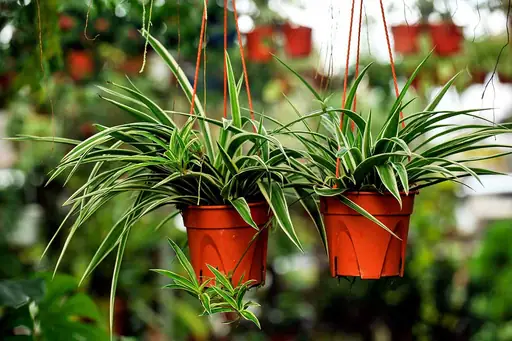
Spider plants, Chlorophytum comosum, are such easy-care houseplants you can pretty much ignore them and they’ll thrive.
Their grass-like foliage adds texture and color to the home without needing much attention. But those aren’t the only reasons why they’re so popular.
Houseplant enthusiasts also love the cute little spiderettes or offsets the plants send out, giving them a unique appearance.
The little miniature plantlets dangling from long stalks are part of the charm of growing C. comosum, and they can be plucked off and propagated to produce new spider plants.
But sometimes those plantlets fail to form. Why? Even happy, healthy specimens might not send out spiderettes unless the conditions are right.
In our guide to growing spider plants, we cover how to cultivate these easygoing houseplants.
Now let’s dive into the weeds about why spiderettes might not form and what you can do about it.
Firstly it’s worth noting that sometimes the C. comosum simply isn’t ready to form offsets.
Because we keep them in artificial lighting and temperatures in our homes, they can become confused about whether it’s the right time of year to start producing spiderettes.
So let’s talk about that situation, to begin with.
When Do Offsets Form?
In their native habitat of South Africa, C. comosum produces long arching stems topped by small flowers in the summer months.
But indoor specimens don’t have the same shift in weather and light patterns that encourage blooming, so they might flower at any time of year.
When they bloom, thin stalks emerge. These stalks can eventually grow up to two feet long and they dangle below the crown.
These will have small white to greenish flowers on them that last about a week. Once the flowers fade, the spiderettes will follow.
The spider ivy needs to reach maturity before it’ll flower, which can take five years or so.
You can expect houseplants to bloom whenever they feel like it, but this usually occurs when there is an increase in light and heat. This typically happens in summer in the northern hemisphere.
But don’t assume this means flowering will only happen during the summertime. If you have the lights on all day indoors and the heat turned up in winter, your spider ivy, as they’re sometimes known, might think it’s time to bloom.
You might not notice the flowers unless you’re really paying attention. They’re pretty small, about the size of a dime, and not particularly pretty.
But when those long stems form, offsets should follow. If they don’t, it’s a sign that something is probably wrong.
Learn more about spider plant blooming and how to encourage it in our guide.
What Causes Lack of Spiderettes?
If the conditions are too dark, or the soil is depleted and lacking in nutrients, it’s unlikely that C. comosum will form spiderettes.
While these houseplants are pretty adaptable and can survive even when conditions aren’t ideal, they typically won’t thrive. This can result in a lack of flowering and a lack of offsets.
Young plants – those under about five years old – are typically too young to bloom and produce offsets, though there are exceptions to this, as I’ve heard of younger specimens flowering when kept in optimal conditions.
Your spider ivy also has to produce flowers before it can form the offsets. If you prune off the flowers, just know that you’ll prevent the specimen from producing the spiderettes.
I know I’ve made the mistake of pruning without realizing the implication of what I was doing, so avoid trimming the stems or deadheading the flowers if you want spiderettes. I know they aren’t the prettiest thing before the offsets form, but give it time.
C. comosum grown in too much artificial light might be confused. In the wild, the shifting light signals to the plant when it’s time for growth and also time for dormancy.
But if it’s always bright in your home where your houseplant is growing, there are no signals for the reproductive cycle to begin. If you aren’t seeing the growth you want, you might need to adjust the light, which we’ll discuss next.
You should also be feeding your spider ivy appropriately and changing the soil every few years.
We have a guide that explain how and when to feed spider plants if you’d like more details.
Pests like fungus gnats, aphids, or mealybugs can stress your spider plant and this can cause a lack of growth.
Diseases can also cause prevent the specimen from blooming and putting out offsets.
How to Encourage Offsets
Yes, you can trick your houseplant into thinking it’s time to produce flowers and spiderettes.
Providing at least 12 hours of artificial light with at least 1,500 foot candles followed by full darkness at night will encourage the spider plant to flower.
If you have your specimen in an area that receives some artificial light at night, turn them off or move the pot to complete darkness. This illumination can prevent flowering.
Flower stalks should start forming after a week or two of this regime.
If you’re more patient, you can choose to provide eight hours of light, with the rest of the 24-hour period in darkness, it will start to grow stems after about a month.
The trick is bright, continual light during the day and complete darkness at night.
You also want temperatures to be consistently over 70°F during the day.
As an alternative, you could take the specimen outside during the summer as long as the weather is appropriate. The natural light fluctuation should promote blooming and offset formation.
The period from the stems forming to full plantlet development can take about four months, so hang tight.
You can reduce the amount of light once the stalks have grown about six inches long. When the spiderettes form, read our guide to learn how to use them to propagate new spider plants.
Spiderettes Are Special
I would love spider plants even if they didn’t produce those cute little plantlets. But they do! At least, if they’re grown in the right conditions.
Clearly, you’re a fan of the spiderettes, too, since you’re here reading about them. So, what will you do with your plantlets?
Do you just leave them in place to add visual interest? Will you pot them up and give them to friends? Or fill your house with spider plants? Let us know in the comments section below!
And for more information about growing spider plants in your home, check out these guides next:
- When and How to Prune Spider Plants
- When and How to Divide Spider Plants
- How to Repot Spider Plants in 5 Easy Steps
- Facebook62
- X




질문 및 토론