
How to Use Streptomyces lydicus to Control Fungal Plant Diseases
You have probably never thought about life in the soil, but it’s a jungle down there with organisms fighting each other for survival. Instead of fighting tooth and nail, they fight by parasitizing each other and producing chemicals that help to compete against other microbes. The genus Streptomyces.
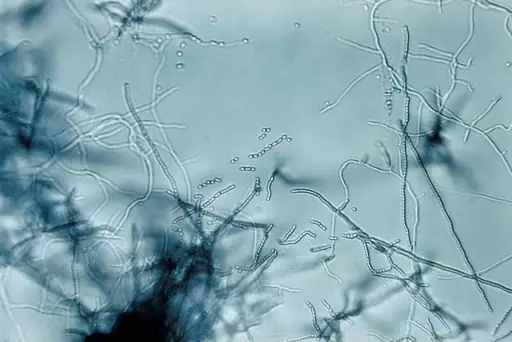
You have probably never thought about life in the soil, but it’s a jungle down there with organisms fighting each other for survival.
Instead of fighting tooth and nail, they fight by parasitizing each other and producing chemicals that help to compete against other microbes.
The genus Streptomyces is well known for its production of antibiotics, which make the species excellent competitors in the soil.
Photograph via CDC/Dr. David Berd (PHIL #2983), 1972.Modern medicine has taken full advantage of the many antibiotics produced by these organisms, and more than two-thirds of the antibiotics in use today were originally discovered from Streptomyces.
In recent years, these organisms have found use in agriculture to outcompete plant pathogens.
Streptomyces lydicus is one such species – an ever-present soil microbe that has been studied for more than 50 years.
One strain in particular, WYEC 108, has been studied extensively for its ability to control a variety of root rot-causing fungi and leaf pathogens, such as rust and gray mold.
This guide will describe how this microbial fungicide works and walk you through using it in your garden.
What You Will Learn
- From an English Field to Commercial Use
- How Streptomyces lydicus Outcompetes Fungal Pathogens
- Fungal Pathogens Controlled by Actinovate
- How to Use Streptomyces lydicus
- These Bacteria are Safe to Use
- This Common Soil Organism Prevents Many Fungal Diseases
From an English Field to Commercial Use
Streptomyces lydicus strain WYEC 108 was originally isolated from an agricultural field in England. Its use in controlling pathogens has been extensively studied.
These bacteria are highly effective at colonizing plant roots. They are prominent members of the rhizosphere – the area of soil that surrounds the roots of plants.
The plants release a number of nutrients into the soil, including sugars and vitamins. The microbes in the rhizosphere live off these nutrients and in return, help the plants to grow.
Actinovate® Lawn and Garden Fungicide (Streptomyces lydicus strain WYEC 108)
This species of Streptomyces is so effective at improving plant health that the bacteria are members of the group known as plant-growth promoting rhizobacteria (PGPR).
It is sold to control pathogens on ornamentals, greenhouse and nursery crops, and turf.
How Streptomyces lydicus Outcompetes Fungal Pathogens
Strain WYEC 108 uses several different mechanisms to control disease-causing fungi. One of the ways it does this is by parasitizing the fungi.
Most fungal cell walls are composed of a polymer called chitin. This strain of Streptomyces produces an enzyme called chitinase that breaks down the fungal cell walls, leaving the fungi vulnerable to parasitism.
Another way that it outcompetes the fungi is by depriving them of nutrients. Iron is an essential nutrient that is found in very small quantities in the soil.
WYEC 108 produces compounds called siderophores that are highly effective at binding iron. The bacteria can use this iron, but it is unavailable to the fungi, which then starve. However, the plants can use it in this form!
Fungal Pathogens Controlled by Actinovate
Actinovate acts as a fungicide and controls an array of pathogens that frequently colonize plant roots to cause root rots and damping off.
A partial list of the soil-borne pathogens that these bacteria control includes Fusarium, Pythium, Phytophthora, Rhizoctonia, Sclerotinia, Verticillium, and Geotrichum.
In addition, Actinovate can control such leaf-dwelling pathogens as powdery mildew, downy mildew, Botrytis, fire blight, rusts, bacterial spot, and black spot.
How to Use Streptomyces lydicus
This organism is sold as a powder that is soluble in water. You can apply it to turf grass or potted and greenhouse plants as a drench or mixed in with soil.
Follow the instructions on the label, but a typical amount to use is one gallon per cubic foot of soil mix.
You can also spray Actinovate on the leaves of your plants every 7-14 days depending on how severely your plants are infected.
The bacteria will only protect the leaves you spray them on, so if your plants grow, you should reapply it.
If you spray turf grass, you would typically reapply the bacteria every 6-8 weeks.
You are better off applying Actinovate several times at lower rates rather than making one application at high rates. UV light degrades the bacteria, so it’s best to apply them in the evening or morning or on cloudy days.
This formulation is typically stable for a year if stored in its original package.
These Bacteria are Safe to Use
S. lydicus is advertised as being safe for humans and is commonly found in the soil that people are exposed to it on a regular basis. The organism is considered by scientists and researchers to be non-toxic, non-pathogenic, and non-irritating.
Extensive studies on its effects on rats, fish, and honeybees for its registration as a pesticide with the Environmental Protection Agency (EPA) indicated that the bacteria do not affect non-target organisms like beneficial insects.
The EPA requires applicators to wear long-sleeved shirts, pants, waterproof gloves, and a filtering respirator if Actinovate is being applied in a greenhouse. Read more about techniques and safety in spraying here.
S. lydicus is is safe to use with other soil inoculants, such as mycorrhizae and Trichoderma.
This Common Soil Organism Prevents Many Fungal Diseases
Due to its ability to colonize plant roots and outcompete other microbes, Streptomyces lydicus is an excellent biocontrol agent.
These bacteria can be applied to your lawn and ornamental, potted, or greenhouse plants. Since they only affect microbes, Actinovate is a safe compound to add to your pathogen control arsenal.
Have you used Actinovate to control pathogens? If so, let us know how it went in the comments.
And if you are keen on discovering more of the magic of biofungicides, then check out some of these guides:
- Controlling Pathogens With Organic Biocontrol Agent Bacillus amyloliquefaciens
- Controlling Plant Pathogens With the Biofungicide Bacillus subtilis
- Trichoderma Improves Plant Growth and Kills Fungal Pathogens
- Facebook44
- X
질문 및 토론