
How to Identify and Treat Sunburn on Orchids
As I encourage them to flower, they need to be relocated to facilitate the process. Most of the time, this works just fine, but once in a while, I move them into the wrong exposure and it results in problems like sunscorch. Sun scorch or sunburn can happen on the aerial roots, flowers, and, most.
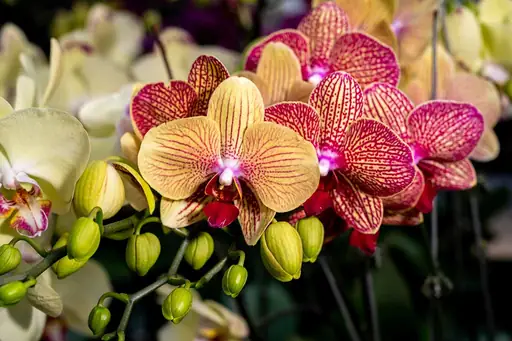
As I encourage them to flower, they need to be relocated to facilitate the process.
Most of the time, this works just fine, but once in a while, I move them into the wrong exposure and it results in problems like sunscorch.
Sun scorch or sunburn can happen on the aerial roots, flowers, and, most commonly, the leaves.
And the good news is, this condition is totally preventable. We’ll talk about that and more, coming right up. Here are the topics we’ll tackle:
What You’ll Learn
How Much Sun Do Orchids Need?
Identifying Scorch
Treating Sunburn
Before we can talk about what to do to fix sunburn, we should go over what the right sun exposure for orchids looks like.
How Much Sun Do Orchids Need?
The right amount of sun exposure varies depending on the species you are growing. Some types are perfectly fine in full sun all day long and others need complete shade.
Some Papilionanthe, Dendrobium, and Epidendrum species require full or part sun. Paphiopedilum and Phaius species prefer full shade or dappled shade.
Most common species that we grow as houseplants, like Cattleya and moth or Phalaenopsis, need bright, indirect light indoors or dappled or partial sunlight outdoors.
Direct light falling on the leaves can cause sunburn, especially if that light is the harsh afternoon sunlight.
Identifying Scorch
Sunburn on the leaves of orchids typically appears as circular, oval, or irregular splotches of discoloration. These lesions are generally tan or yellow in the center with a brown margin.
Photo by Kristine Lofgren.Less intense cases might just exhibit reddish-brown freckles.
Left in the sun, the overexposed leaves might start to curl or turn entirely yellow. They may also wilt and drop off the plant.
Photo by Kristine Lofgren.When a flower is overexposed to light, it typically fades, turns brown or yellow, and shrivels up.
Aerial roots will often exhibit brown spots in the most exposed areas.
Treating Sunburn
The first step in treating sunburn is to move your plant to an area with less light exposure.
Again, every species is different, so it’s important to determine what your particular plant needs. You can use a light meter if you’re having trouble figuring out exactly what the right exposure looks like.
Human eyes are very adaptable to different light exposure. We can go into a dark room and after a few minutes of acclimation, it will look much brighter to us. But the plants aren’t fooled, which is why using a light meter is useful.
Next, you’ll need to decide whether you want to remove the burned areas or just live with them.
A leaf, root, or flower that is heavily burned and discolored should be removed. Badly damaged tissue serves no purpose and potentially exposes the plant to pests and diseases.
But a leaf with just a small burned spot can be left in place if it doesn’t bother you.
The burned areas will never recover, so don’t leave them in place hoping that they’ll heal up – they won’t. If you decide to remove a leaf, you should remove the entire leaf, cutting back to the soil or stem. You don’t want to remove just the damaged part.
However, don’t remove more than one third of the total leaves at a time. If you need to allow some damaged ones to remain, that’s fine, just take off the ones that are the most badly affected.
Check out our guide to pruning orchids for more information about the process.
After moving the specimen to a new location and completing any pruning, it’s just a matter of supporting your orchid as it recovers.
Our guide to growing and caring for orchids can help you with that.
In a nutshell, you’ll need to water them appropriately, feed them when necessary, and keep them in the right light exposure.
Here Comes the Sun
Don’t feel bad if your plant ended up with sun scorch. A plant in a perfect spot one day might be in too much light a few weeks later as the Earth shifts and the sun exposure changes.
Or, if you’re like me, sometimes you move your plants assuming the exposure is right only to find out the hard way that you were wrong. That’s gardening for you.
Which kind of orchid are you growing? What kind of symptoms are you seeing? Let us know in the comments section below and we can help diagnose any questionable symptoms.
Orchids are such fascinating plants. If you’d like to learn more about orchids, we have several guides that might pique your interest:
- How to Grow and Care for Oncidium Orchids (Odontoglossum)
- How to Choose the Right Containers for Orchids
- All About Orchid Pseudobulbs and How to Care for Them
- Facebook142
- X




질문 및 토론