
When to Plant Spring-Flowering Bulbs
Most of our favorite flowers that grow from bulbs bloom in the spring. But when is the best time to plant them? Bulb flowers such as allium, crocus, cyclamen, daffodil, fritillaria, iris, Siberian squill, and tulip should be planted in the fall, so they can undergo the winter chilling they need to.
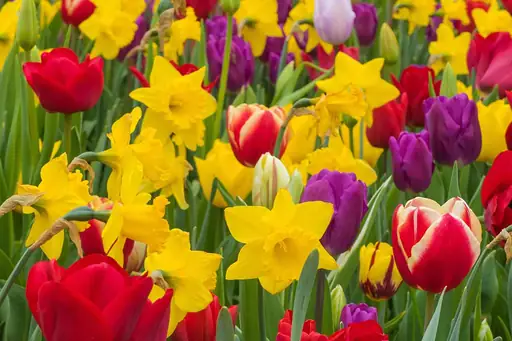
Most of our favorite flowers that grow from bulbs bloom in the spring. But when is the best time to plant them?
Bulb flowers such as allium, crocus, cyclamen, daffodil, fritillaria, iris, Siberian squill, and tulip should be planted in the fall, so they can undergo the winter chilling they need to bloom in the springtime.
In this article, we discuss guidelines for choosing the best time to plant bulbs, and what to do if you miss this optimal window of opportunity.
What You’ll Learn
What Is a Bulb?
When to Plant
What If You Leave It Too Late?
First, let’s talk about the word “bulb,” in both the strict and broad terms of its definition.
What Is a Bulb?
A bulb is a type of geophyte, or a plant that’s propagated via an underground storage vessel that contains all it needs to grow and flower.
Inside are a growing bud and leaves. On the outside are roots and a scaly brown wrapper called a tunic.
Because of the tunic, true bulbs are often described as “tunicate.”
The word “bulb” is commonly understood as an umbrella term that not only applies to true types, such as the allium, daffodil, hyacinth, and tulip, but also to other fleshy-rooted plants, including ones that grow from corms, rhizomes, tubers, and tuberous roots.
These others vary in appearance and growth habit, but are also types of underground storage units.
So, although the crocus is a corm, and the caladium is a corm/tuber (depending upon who you talk to), and the iris is a rhizome, if it blooms in the spring and grows from one of these various underground storage units, that’s what we’re talking about.
We refer to these vessels of spring as “hardy” because they winter over outdoors, and experience the chill needed to enable them to break dormancy and burst into the spring flowers we know and love.
When to Plant
It’s easy to figure out which bulbs should go into the ground in the fall, because most vendors make them available just in time for planting.
And while you may be inclined to pop them right into the ground, there are a few crucial guidelines that can help you achieve the best results.
Per “Rodale’s Ultimate Encyclopedia of Organic Gardening,” planting requires ground temperatures that are below 60°F at a depth of six inches.
Rodale’s Ultimate Encyclopedia of Organic Gardening
However, regularly taking the temperature of the soil to discover when the time is right can be a nuisance.
Alternatively, you may use nighttime temperatures as a guide. When they stay in the 50s or below for two weeks, the time is right.
And finally, these amazing self-contained storage units require four to six weeks to grow roots before the first frost.
Knowing the average first fall frost date for your region can help you to fine-tune your determination of the best planting time.
One source of this information is a guide to frost dates from the National Gardening Association.
It’s very easy to use. Simply type in your zip code, and find the earliest fall date for which the temperature may be expected to be in the 30s.
What If You Leave It Too Late?
Okay. Now that you have a formula for success, what happens when you forget all about those gorgeous ‘King Alfred’ daffodils you just had to have, and when you remember they’re waiting patiently in the shed or the cellar, it’s already winter?
The pros at Purdue Consumer Horticulture offer a definitive answer: If the ground is soft enough to dig, go ahead and plant. With soil temperatures above 40°F, they will grow roots.
They recommend adding a layer of mulch to “prevent bulbs from being heaved out of the soil” by freezing and thawing.
Provided they establish roots and experience some chilling, bulbs planted late may still bloom in their first spring.
This will probably happen later in the growing season than what you would typically see, however they should be on track for seasonal blooming the following year.
Alternatively, you may force forgotten bulbs to bloom.
Place them in a container of potting medium with their tips above the soil, and store them in the refrigerator at a temperature of 40°F for about 13 weeks.
Then set them in a 65 to 70°F location where they should bloom within two weeks.
Learn more about forcing here.
It’s All About the Chilling
To recap, spring-blooming bulbs are available for sale in early fall, when weather conditions are likely to be right for planting.
Guidelines such as soil temperature, nighttime air temperature, and the last average frost date can help you to achieve optimal results.
If you miss the fall window of opportunity for ideal chilling, you may still have success if you plant when the soil is at least 40°F, or you can force blooms indoors.
Even forgotten bulbs found up to a year after they should have been nestled in the ground may still have substantial energy reserves.
If they are firm, dry, and unblemished by mold or nibbling rodents, pot them up, chill them via artificial means in the fridge, and then place them in a temperate location as described.
Forced bulbs may be one-hit wonders, but you can try for timely flowers next year by allowing the foliage to wither after blooming, withholding water to promote drying, and transplanting to the garden in the fall.
When do you plant your spring-flowering bulbs? Let us know in the comments section below!
Ready to plant some flowering bulbs? Check out some of our favorites in these roundups next:
- When and How to Plant Flower Bulbs After Forcing
- Which Way Up Should You Plant Bulbs?
- How to Check Bulbs for Viability
- 25 of the Best Early Spring Blooming Flowers
- Facebook4
- X




질문 및 토론