
What’s the Best Water for Succulents?
When it comes to caring for plants, water is king. It’s the stuff of life and one of the biggest day-to-day influences we have on the health of our plants. Because we irrigate them so often, if we use the wrong kind of water, it can have a major impact on whether our plants thrive or fail. Some.
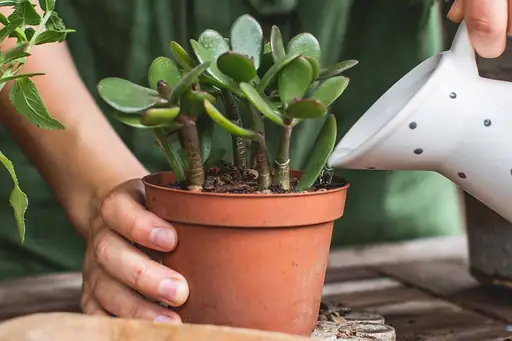
When it comes to caring for plants, water is king. It’s the stuff of life and one of the biggest day-to-day influences we have on the health of our plants.
Because we irrigate them so often, if we use the wrong kind of water, it can have a major impact on whether our plants thrive or fail.
Some plants are extremely tolerant and will make do with whatever type of moisture you give them. Others are super picky and need just the right kind of water to thrive.
Succulents fall somewhere in the middle. The wrong kind can lead to stunted growth or discoloration, but it probably won’t kill your plant.
Still, we want robust growth and pretty colors, right?
So, to help you figure out the right kind of water for your succulents, here’s what we’re going to discuss:
What You’ll Learn
- Succulents in Nature
- When to Water
- Best Type of Water
- Signs of Bad Water
Get out that watering can, and let’s begin by figuring out what succulents prefer in their natural habitat.
Succulents in Nature
In nature, all succulents have evolved to have thick, fleshy leaves that serve the purpose of storing moisture.
This allows them to survive unpredictable rainfall patterns. The more established a plant is, the longer it can survive without moisture.
But these plants have not adapted to survive when there is an overabundance of moisture.
These plants access moisture in several ways. The first is, of course, rain falling on the leaves.
They can also absorb dew that forms on the foliage. Then, the roots take up moisture that exists underground or enters the soil after rainfall.
When to Water
Succulent lovers joke that if you’re wondering if it’s time to irrigate, it isn’t.
But I learned a handy tip from the book “Success With Succulents: Choosing, Growing, and Caring for Cactuses and Other Succulents” by John Bagnasco and Bob Reid.
They suggest placing a small, flat river rock on top of the substrate in your container. Lift it up now and then and look at the soil.
If the soil underneath the rock is still moist, don’t irrigate. Once the soil underneath the rock has dried, go ahead and add more moisture.
As a chronic overwaterer, this tip has likely saved the lives of many of my succulents.
Best Type of Water
People with wells, rejoice! Your water is probably just right for succulents.
Assuming you have your well tested regularly to check for chemicals and other contaminants, it is just right for these plants.
For those of us who use treated municipal water, we either need to make some adjustments or collect rainwater if we want to give our succulents the ideal type.
Municipal water tends to contain mineral salts that eventually build up in the soil. These salts can burn the roots of the plant and can certainly reduce its health.
In the absence of a well, distilled or purified water is best. These don’t contain common chemicals like fluoride or chlorine that are commonly added to municipal water.
You can also use purifiers, whether chemical or physical to remove the chemicals from your tap water.
Of course, you can always collect rainwater if it’s legal in your state. Set buckets outside or install a collection barrel.
Signs of Bad Water
You can tell that moisture is causing problems for your plant in a few different ways. First, the soil will develop a white, gray, cream, or brown crust, hinting to an obvious build-up of minerals.
But the soil might change color, as well. If the soil itself, not just the surface, becomes pale, it can be a sign that chemicals are leaching or killing the humus in the substrate.
If the leaves of your specimens start to look stressed and develop brown or yellow spots, particularly at the tips, it’s a sign that you might want to examine the roots.
To do this, remove the plant from its container or the ground and brush away the soil. Look closely at the roots. Do you see root burn? It will look like brown or black areas on the roots and is usually most obvious at the ends of the roots.
The leaves might also change color, turning bronze or brown without necessarily wilting or degrading.
If the liquid lands on the leaves, you might see white spots form. These can be wiped off, but it’s an indication that there are chemicals or minerals in the liquid.
Finally, if your plants are stunted or just seem sad, and you’ve ruled out other culprits, try changing up the liquid you’re providing.
If you’ve been watering a potted plant with the wrong kind and it shows signs of stress, repot it in a fresh potting medium and use filtered, distilled, or rainwater instead.
The Stuff of Life
We forget sometimes that just because we can thrive on municipal tap water, not everything else does. At least, I know I forget now and then.
But many plants do much better if you give them the type of water they’d have if they were growing wild.
What species are you growing? Is it in a container or in the ground? What kind of water have you been using? Have you had any problems? Fill us in on the details in the comments so we can learn from each other.
Looking for some more tips for keeping your succulents happy? We have a few guides that you might enjoy. Check these out next:
- How to Grow and Care for Succulents
- How to Grow Succulents Outdoors in the Garden
- Propagating Succulents in 5 Easy Steps
- Facebook38
- X




질문 및 토론