
How to Water Watermelons
As you could probably guess, water is an extremely important part of growing a watermelon. It’s an essential ingredient for any plant’s growth and development, but this one especially. Believe it or not, water makes up a whopping 92 percent of a watermelon’s structure! Plus, the word “water” does.
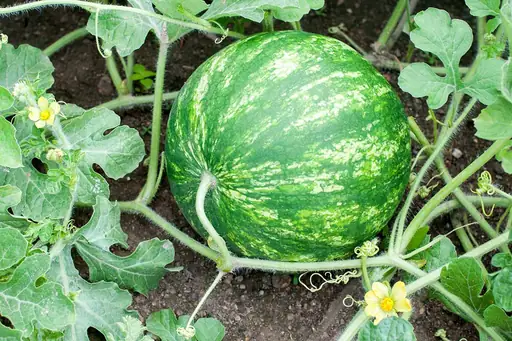
As you could probably guess, water is an extremely important part of growing a watermelon.
It’s an essential ingredient for any plant’s growth and development, but this one especially. Believe it or not, water makes up a whopping 92 percent of a watermelon’s structure!
Plus, the word “water” does make up half of “watermelon,” so it’s kind of a trademark feature of Citrullus lanatus.
But despite their name, there’s more to irrigating watermelons than giving them all the agua.
The wrong amount, at the wrong time, actually prevents the fruit from developing that sweet, picnic-worthy taste.
Instead, you’ll be left with a watermelon that tastes more like wet fiber, or perhaps soaked styrofoam.
To keep this tragedy from happening to you, dear reader, we’ve whipped up this guide. Everything you need to know about watermelon watering is right here.
Here’s what I’ll cover:
What You’ll Learn
The Importance of Proper Irrigation
When to Water
How to Water
If you need a primer on growing C. lanatus real quick, check out our guide to growing watermelons.
The Importance of Proper Irrigation
Obviously, watering plants like watermelons properly is super important. But why?
Many vital plant processes can’t happen without H2O. Such as these, for instance:
Germination
Without imbibing ample Adam’s ale, a seed will never germinate. Without water, a seed will stay dormant, dehydrated, and with its potential unrealized.
Growth and Development
Plant tissue is made up of a lot of water. Without it, their cells can’t elongate, divide, or otherwise sustain themselves.
Via photosynthesis, a plant uses carbon dioxide, water, and sunlight to yield carbohydrates in the form of glucose and oxygen, fuelling growth and development.
For watermelons in particular, too little irrigation will produce small yields, while too much will cause the fruit to split.
Transpiration
Nutrients travel via water throughout a plant like a gondolier moves through the canals of Venice. Without water, nutrients can’t be transported from the roots to the shoots.
Plus, when faced with intense sunlight and high temperatures, a plant will use up more moisture to maintain equilibrium and prevent overheating. Just like football players during those heated, two-a-day summer practices!
Without enough agua, an overheated specimen will scorch, turn crispy, and eventually die.
Turgidity
Within plant cells are structures called vacuoles: large sacs that contain H2O and other fluids.
Occupying up to 90 percent of a cell’s volume, these vacuoles help keep plants structurally stable.
When dehydration takes place and wilting occurs, it’s because those vacuoles are a bit empty. And just like a deflating bounce house, it’s not a good time.
When to Water
The question of when and how much water to provide depends on the age and maturity of your watermelon plants.
If you’re trying to germinate seeds or maintain established plants, then you’ll need to keep the soil evenly moist.
Seeds will need plenty of water, as will your more mature plantings. To pull this off, irrigate whenever the surface of the soil feels dry to the touch.
But keep it moist, not soggy. Oversaturated soil can suffocate roots, as well as foster the spread of disease-causing pathogens.
In general, watermelons require one to two inches of water per week, including rain. If you go with this metric, rather than checking the surface of the soil, a rain gauge can help determine just how much rain has fallen after a shower.
But for watermelons that are about to turn ripe, you’ll actually want to ease up on the irrigation, as this encourages the fruits to concentrate those delicious sugars and produce the flavor that they’re famous for.
Specifically, you should completely cease your supplemental irrigation one to two weeks before you expect to harvest your watermelons – the exact harvest date depends on which varieties you choose to grow.
Fail to do this, and you may end up with bland-tasting fruits like we talked about earlier.
How to Water
To keep your garden specimens healthy, it pays to avoid overhead watering. Overhead irrigation wets the surfaces of leaves and fruits, which helps promote disease.
Ideally, you should irrigate the soil directly around the roots, whether you use drip irrigation or a simple watering can.
But if you have to water from overhead, make sure to do it in the early morning. This gives the day’s heat and sunlight a chance to evaporate the excess moisture.
Another thing – watermelon roots are shallow, only occupying the top 12 inches of soil at most. So allowing a bunch of agua to percolate deeper than a foot into the soil is actually overkill.
For maximum efficiency, irrigate two to four times a week in the absence of rain, and to conserve moisture, applying an inch or two of mulch can be helpful.
The Way of Water(ing Watermelons)
Ending up with unhealthy, poorly-watered watermelons can make you more blue than Na’vi skin on Pandora. So, quite bummed out. But proper watering, like the kind you’ve learned in this guide, can easily prevent that.
A related aside: if you haven’t yet watched James Cameron’s Avatar films, they’re worth it. Consider it homework, as Pandoran flora are worth seeing in all their three-dimensional, computer-generated glory. But anyways, we were talking about a plant from Earth…
If you have questions or remarks of your own to add to the conversation, the comments section below awaits. We enjoy reading and responding to comments, believe me!
Itching to learn more about growing melons? Check out these guides next:
- 33 of the Best Melon Varieties
- How to Grow Cantaloupe in the Garden
- How to Plant and Grow Muskmelons
- X




질문 및 토론