
How to Identify and Manage Willow Galls
Willow trees, Salix spp., are deciduous trees suitable for cultivation in USDA Hardiness Zones 4 to 9. They make imposing landscape specimens with heights from 20 to 140 feet and spreads of 30 to 60 feet, depending on the variety. Cultural requirements include full sun to part shade, moderate to.
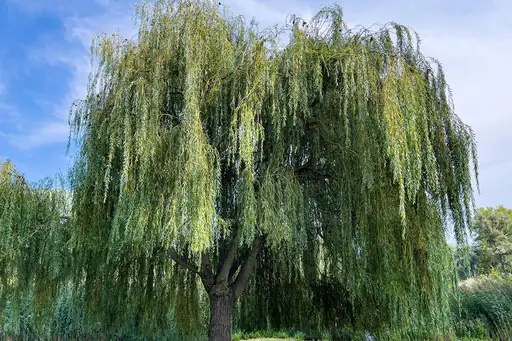
Willow trees, Salix spp., are deciduous trees suitable for cultivation in USDA Hardiness Zones 4 to 9.
They make imposing landscape specimens with heights from 20 to 140 feet and spreads of 30 to 60 feet, depending on the variety.
Cultural requirements include full sun to part shade, moderate to high moisture, and well-draining, loamy soil.
Sometimes, you may notice galls – warty bumps on the leaves or growths that look like little pine cones at the ends of the branches, or even weird lumps on the trunk.
There may be few or many, and like me, you may find them fascinating.
In our guide to growing willow trees we provide all you need to know to cultivate these ornamental shade trees in your outdoor living space.
This article discusses galls common to trees in the Salix genus and suggests proactive steps you can take to avoid them.
Here’s what we’ll cover:
What You’ll Learn
What Are Willow Galls?
Common Causes
Management and Proactive Measures
Let’s start.
What Are Willow Galls?
Willow galls are tumorous or wart-like growths that appear on the leaves, roots, and/or branches.
They can be caused by bacteria, fungi, insects, mites, nematodes, and viruses that secrete growth-regulating chemicals into emergent or young willow tissue.
Older foliage is not usually vulnerable to these parasitic organisms.
A sawfly larva, Pontania spp., parasitizes a willow. Photo credit: Whitney Cranshaw, Colorado State University, Bugwood.orgThe chemicals cause increased hormone production and abnormal cell division in the plant tissue, resulting in tumor-like abnormalities.
In some cases, the galls nourish, protect, and shelter the progeny of the pests that caused them.
Common Causes
Let’s discuss some of the causative agents that can result in unusual growths on willow trees.
Bacteria
Rhizobium radiobacter, previously known as Agrobacterium tumefaciens, is a soilborne bacteria that causes crown gall, tumorous growth on the crown, where the trunk and roots meet, and on the roots.
Photo credit: Florida Division of Plant Industry , Florida Department of Agriculture and Consumer Services, Bugwood.orgThe bacteria enter damaged plant tissue, causing hormonal changes and irregular cell division.
These changes produce galls or nodules that facilitate the housing and feeding of the parasitic bacteria at the tree’s expense.
Symptoms include knobs on willow branches, roots, and trunks. When the knobs join and girdle a trunk, an older tree may survive, but a younger one may die from impaired water and nutrient uptake.
Fungi
Melampsora caprearum , or rust fungus, causes gall formation.
Symptoms include yellow discoloration and vein anomalies on willow leaf topsides and raised, powdery, orangey bumps on the undersides.
Midges, Mites, and Sawflies
In addition to bacteria, parasitic midges, mites, and sawflies cause tumors on willow trees, generally on the stems and foliage.
Gall Midges
Midges are tiny true flies. Over 100 species in the Rabdophaga genus can produce abnormalities at or near the branch tips with their feeding, including R.rosaria, R. strobilina, and R. strobiloides.
Different species within the genus may be “inquilines” or cohabitants of an individual growth or gall.
Females pierce the foliage and lay their eggs inside it. When a tree reacts to the midge’s growth-regulating hormones, it creates exactly what the parasites need to rear their young – protective shelters full of edible plant tissue.
The eggs hatch, and the larvae feed and mature to pupae before emerging as adults.
There is one generation of midges per growing season. After wintering over in the soil, adults resurface in the spring to start the cycle again.
Here are a few species you may encounter:
An R. rosaria rosette in the early stage. Photo credit: Milan Zubrik, Forest Research Institute – Slovakia, Bugwood.orgR. rosaria midges cause tip foliage to stop growing stems and instead produce layers of leaves like those of an artichoke at the tender branch tips.
As they age, they dry out and resemble withered roses.
An R. rosaria rosette in the advanced stage. Photo credit: William M. Ciesla, Forest Health Management International, Bugwood.orgR. salicis produces smooth, spindle-shaped growths on tender stems. These galls resemble little radishes with top foliage still attached.
R. salicis growths are smooth and spindle-like. Photo credit: Milan Zubrik, Forest Research Institute – Slovakia, Bugwood.orgThe rosette-style tumors of R. strobilina are tall and cabbage-like and appear at the growing tips of the branches.
Cabbage-like growths of R. strobilina. Photo credit: Petr Kapitola, Central Institute for Supervising and Testing in Agriculture, Bugwood.orgR. strobiloides creates dwellings that resemble pine cones with many layers of leaf tissue making a thick barrier to protect the young from predators.
R. strobiloides midges produce pine cone-like tip growths. Photo credit: William M. Ciesla, Forest Health Management International, Bugwood.orgYou’ll find them at the terminal ends of the branches where the leaves are young.
Gall Mites
The willow leaf gall mite, Aculops tetanothrix, is a tiny, worm-like pest with two legs. It is an arachnid rather than an insect and is a member of the Eriophyidae family of parasitic mites.
With their chewing mouthparts, the mites feed on the foliage, producing warty bumps along the leaf veins on the upper and/or undersides of the leaves that start green and eventually shade to red.
Leaf drop may occur in the case of extensive damage.
Gall Sawflies
The willow red gall sawfly, Euura proxima, aka Pontania proxima is not a true fly but a miniature wasp-like insect.
Females lay their eggs in rows along the central leaf vein or midrib.
The growths formed are smooth and green, shading to red, and may be on the upper and/or undersides of the leaves and on the stems or petioles. As the larvae grow, so do the galls.
Pupae emerge and drop to the ground, where they overwinter in plant debris and emerge as adults the following spring. There may be several generations in one growing season.
Nematodes
Unlike beneficial nematodes, root-knot nematodes (RKN), Meloidogyne spp., are “endoparasites” that penetrate injured plant tissue and live in roots beneath the soil, creating swollen galls and inhibiting water and nutrient uptake.
M. incognita uses willows and many other landscape flora as its host.
While the galls produced by root-knot nematodes aren’t the ones you see on the foliage and stems, they would be visible if you were to dig down and examine the roots.
Visible aboveground symptoms include chlorosis, or leaf yellowing and foliar deformity. Below ground, the roots grow rough and crack.
Parasitic nematodes are not very likely to pose a threat in colder regions because temperatures below 64°F inhibit their ability to invade the roots.
You can learn more about root-knot nematodes in our guide.
Viruses
Viral causes of willow galls are not as well understood as other agents discussed here.
What is certain is that sapsucking insects like aphids are likely vectors or transmitters of infections that may result in growth anomalies on the stems, leaves, or catkins, the pendant clusters of flowers.
It is crucial to manage midge, mite, sawfly, and other pest populations to inhibit disease transmission.
Management and Proactive Measures
There are no organic or chemical treatments for crown gall – it is incurable.
Once an infection is confirmed, you have to destroy affected trees and replant the area with a resistant species, like catalpa, golden rain tree, or magnolia.
Prevention measures include purchasing trees certified to be disease-free and sanitizing all pruning equipment before and after use.
For Foliar Abnormalities
If your trees display telltale bumps, cones, and/or wart-like growths, there is nothing you can do to control it during the current season.
If they are not extensive, you can prune off the damaged twigs or leaves.
To do this, sanitize your pruning shears or a saw with rubbing alcohol or a 10 percent bleach-to-water solution (one part bleach to nine parts water) and cut off affected foliage and stems, disposing of infected plant material in the trash. Sanitize equipment again after use.
Proactive avoidance measures include:
- Keeping the soil around trees weed-free and removing plant debris that may harbor parasites during the winter months.
- Placing birdbaths and feeders near trees to attract avian species that feed on pest larvae.
- Treating the soil before the adults emerge from winter cover.
Heterorhabditis bacteriaphora nematodes are microscopic roundworms that parasitize a number of pests including gall midges.
Apply these living organisms as soon as the temperature is consistently above 42°F in the spring. The challenge is to have them in place before the midges leave their winter homes in the soil.
NemaSeek Pro Hb Beneficial Nematodes™ are easy to mix with water and spray over the ground per package instructions.
NemaSeek Pro Hb Beneficial Nematodes
Introducing host-specific parasitoid wasps may prove effective, however, the type of insect selected must be a natural predator that parasitizes the eggs of midges, mites, or sawflies that use willows as their host.
Recent research demonstrates that a parasitic wasp in the Synopeas genus, S. maximum, preys upon soybean gall midges.
Future findings may determine which species is appropriate for willow gall midges.
Finally, not all sawflies induce galls, so products targeting sawflies in general may be ineffective against those that damage willows.
A Galling Problem
It’s annoying to have leaves covered with unsightly bumps and no easy way to destroy the perpetrators.
Take heart in knowing that the damage is most often cosmetic and unlikely to undermine the health of your beloved willow trees.
Take the proactive measures discussed to rid the ground of weeds and other yard debris that may otherwise harbor offending midges, mites, and sawflies.
Try an early-season application of beneficial nematodes to inhibit pest reemergence in the spring.
Have you dealt with galls on willows? Please share your experience in the comments section below.
If you found this article helpful and would like to read more about cultivating willow trees, we recommend these guides next:
- How to Grow and Care for Weeping Willows
- When and How to Prune a Weeping Willow
- 13 of the Best Willow Trees for the Home Landscape
- Facebook2
- X




질문 및 토론