

이 페이지는 원문으로 표시됩니다. 번역본은 아직 제공되지 않았습니다.
시드선 셀렉션
Camellia crapnelliana
SKU: CAME-CRAP-01G
Two camellias do most of the work in American gardens, Camellia japonica and Camellia sasanqua, in countless named forms. The Far East holds far more, and is among the few nurseries offering the lesser-known species to gardeners here. Camellia crapnelliana, the Crapnell camellia, is one of the most.
맞춤 견적을 요청하세요
가격, 포장 크기 및 재고 여부는 개별 견적서에서 확인하실 수 있습니다. 문의를 보내는 것만으로는 유료 주문이 접수되지 않습니다.
재배 적합성, 파종 및 재배 요건에 대해 문의하십시오.
견적서에서 배송 옵션과 필요 서류를 확인하세요.
이 품종에 대하여
Two camellias do most of the work in American gardens, Camellia japonica and Camellia sasanqua, in countless named forms. The Far East holds far more, and is among the few nurseries offering the lesser-known species to gardeners here. Camellia crapnelliana, the Crapnell camellia, is one of the most distinctive: a slow, upright evergreen first described from Hong Kong Island and named for the collector Crapnell.
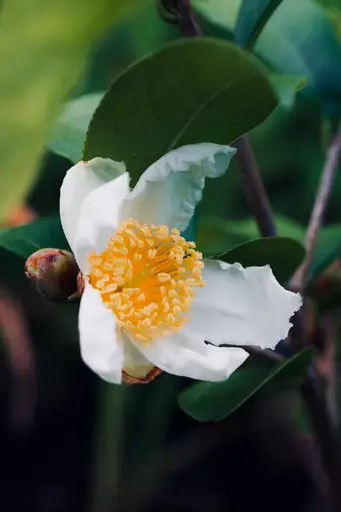
The species is grown as much for bark and fruit as for bloom. Mature trunks peel and glow a warm cinnamon-red, a feature rare among camellias, and the large, dark green, finely toothed leaves give the plant real presence the year round. In late winter come the flowers: single and white, the broad petals faintly ruffled at the edge and gathered around a boss of golden stamens. They are followed by woody, globular seed capsules the size of a small orange, among the largest fruit in the whole genus.
Like most camellias, the Crapnell camellia is happiest in semi-shade, in sandy, slightly acid soil kept mulched and watered, sheltered from hard freezes at the cold edge of zones 8 and 9. Site this plant where the cinnamon bark can be read at close range, by a path, an entry, or a courtyard wall, and underplant with ferns and other shade lovers that will not hide the trunk. A collector's evergreen, and a quiet piece of camellia history.
더 많은 것을 발견해 보세요



질문 및 토론