

이 페이지는 원문으로 표시됩니다. 번역본은 아직 제공되지 않았습니다.
시드선 셀렉션
Hesperaloe parviflora
SKU: HESP-PARV-01G
Red yucca is one of those plants that looks like architecture and behaves, in the best sense, like a weed, thriving on neglect while holding a clean sculptural shape all year. From a low rosette of slender, arching, blue-gray leaves, each edged with curling white threads, the plant throws tall,.
맞춤 견적을 요청하세요
가격, 포장 크기 및 재고 여부는 개별 견적서에서 확인하실 수 있습니다. 문의를 보내는 것만으로는 유료 주문이 접수되지 않습니다.
재배 적합성, 파종 및 재배 요건에 대해 문의하십시오.
견적서에서 배송 옵션과 필요 서류를 확인하세요.
이 품종에 대하여
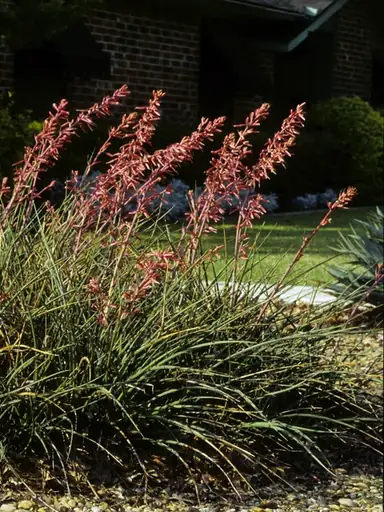
Red yucca is one of those plants that looks like architecture and behaves, in the best sense, like a weed, thriving on neglect while holding a clean sculptural shape all year. From a low rosette of slender, arching, blue-gray leaves, each edged with curling white threads, the plant throws tall, wiry flower wands to four or five feet through the warm months, hung with dangling tubular blooms in coral-pink to deep red. Hummingbirds find the flowers almost the moment they open, and the bloom carries from late spring well into fall.
The common name is a small botanical fib. Despite the yucca in the name and the yucca-like rosette, this is no true yucca: Hesperaloe belongs to the same broad family, the Asparagaceae, but sits in a genus all its own. The name points west, joining the Greek hesperos, of the evening or the western lands, with aloe, for the succulent look, while parviflora simply means small-flowered. Red yucca is native to the Chihuahuan Desert country of west and central Texas and neighboring northeastern Mexico, a hard, sun-baked land that explains the toughness.
That desert pedigree is the selling point. Red yucca asks for almost nothing: full sun, sharp drainage, and no supplemental water once established, taking heat, drought, reflected pavement glare, and cold down to around zero without complaint. Deer leave the fibrous leaves alone, and the evergreen rosette holds form through winter when softer plants have collapsed. Few plants deliver this much structure and this long a bloom for so little care.
In the garden, use red yucca as a bold evergreen accent in a xeriscape, a rock or gravel garden, a hot median or parking strip, a container, or a low-water border, where the fine rosette and tall flower wands read against stone, gravel, and other desert plants. Mass several for a rhythm of vertical bloom stalks, or set one as a specimen where the silhouette can carry. Pair with agaves, yuccas, salvias, and ornamental grasses, and site where hummingbirds can be watched working the wands through the heat of summer.
더 많은 것을 발견해 보세요



질문 및 토론