

이 페이지는 원문으로 표시됩니다. 번역본은 아직 제공되지 않았습니다.
시드선 셀렉션
Hypericum edisonianum
SKU: CONR-BREV-01G
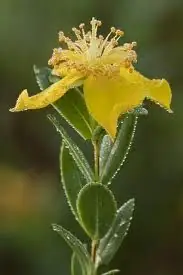
Hypericum edisonianum is a Florida endemic with an upright, colony-forming habit, sending up reddish-brown stems clothed in small, leathery, gray-green leaves and topped in the warm months with four-petaled yellow flowers, each brushed with a dense tuft of stamens. As the stems age the bark peels.
맞춤 견적을 요청하세요
가격, 포장 크기 및 재고 여부는 개별 견적서에서 확인하실 수 있습니다. 문의를 보내는 것만으로는 유료 주문이 접수되지 않습니다.
재배 적합성, 파종 및 재배 요건에 대해 문의하십시오.
견적서에서 배송 옵션과 필요 서류를 확인하세요.
이 품종에 대하여
Hypericum edisonianum is a Florida endemic with an upright, colony-forming habit, sending up reddish-brown stems clothed in small, leathery, gray-green leaves and topped in the warm months with four-petaled yellow flowers, each brushed with a dense tuft of stamens. As the stems age the bark peels away in thin strips, a subtle textural detail on a shrub that spreads by clonal growth into a low thicket.
The plant carries a modern American name in an old European genus. The botanist John Kunkel Small described the shrub in 1933 as Ascyrum edisonianum, honoring Thomas Edison, whose winter estate lay at Fort Myers within reach of the plant's range, and later work by Adams and Robson moved the species into Hypericum. The genus name itself is far older, from the Greek hyper, above, and eikon, an image, a memory of the Midsummer custom of hanging flowering St. John's Wort above doorways and icons to guard the household.
In the wild Hypericum edisonianum keeps to a narrow home: the seasonally wet prairies, flatwoods, pond margins, and shallow depressions of central peninsular Florida, much of that ground along the ancient sand of the Lake Wales Ridge. The land there floods and dries with the seasons, and the shrub is built for both, holding steady through standing water and through drought. Now uncommon and protected in Florida, where habitat loss and fire suppression have thinned the wild stands, the species survives partly through the clonal thickets that let a single plant persist and spread.
Little known in cultivation, Edison's St. John's Wort has proven hardy well north of the wild range, thriving in the gardens at Aiken, South Carolina. For an adventurous gardener the shrub offers a tidy evergreen presence and summer flowers for a moist depression, a sunny pond edge, or a rain garden, the kind of seasonally wet spot that troubles most woody plants. Set the shrub with pond cypress, swamp azalea, and native sedges, and give the colony room to fill in.
더 많은 것을 발견해 보세요



질문 및 토론