

이 페이지는 원문으로 표시됩니다. 번역본은 아직 제공되지 않았습니다.
시드선 셀렉션
Manfreda maculosa
SKU: MANF-MACU-01G
Manfreda maculosa carries the rugged beauty of the American Southwest into the garden. Known by a string of evocative names, Texas tuberose, spice lily, and rattlesnake agave, this striking plant hails from the arid country of Texas and northern Mexico, where the spotted leaves and tall, aromatic.
맞춤 견적을 요청하세요
가격, 포장 크기 및 재고 여부는 개별 견적서에서 확인하실 수 있습니다. 문의를 보내는 것만으로는 유료 주문이 접수되지 않습니다.
재배 적합성, 파종 및 재배 요건에 대해 문의하십시오.
견적서에서 배송 옵션과 필요 서류를 확인하세요.
이 품종에 대하여
Manfreda maculosa carries the rugged beauty of the American Southwest into the garden. Known by a string of evocative names, Texas tuberose, spice lily, and rattlesnake agave, this striking plant hails from the arid country of Texas and northern Mexico, where the spotted leaves and tall, aromatic flower stalks have caught the eye of gardeners and naturalists for generations.
A member of the agave family, Manfreda maculosa stands apart from the stiff, spiny agaves with a low, soft rosette of silvery-green, strap-like leaves scattered with purple-brown spots, a pattern that calls to mind the markings of a rattlesnake. Those spots are more than ornament: like the fleshy, water-storing leaves, they belong to a plant finely tuned to survive heat, sun, and drought, beauty and practicality in one. The genus honors Manfredus de Monte Imperiali, a medieval Italian writer on medicinal plants, and the epithet maculosa simply means spotted.
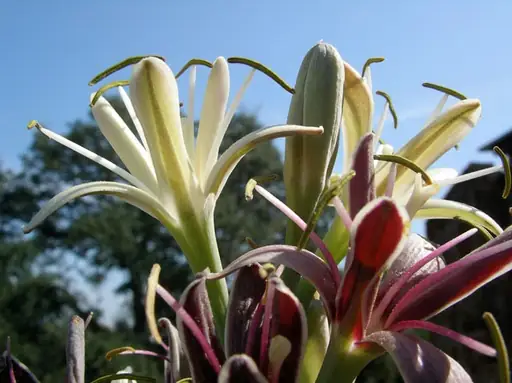
When late spring arrives the plant sends up a slender flower spike three to four feet tall, crowned with tubular, creamy-white to greenish blooms brushed with maroon and aging to pink. Each one breathes a spicy, cinnamon-like fragrance that carries on the evening air and draws hummingbirds, night-flying moths, and bees in a steady procession, the reason the plant has long been treasured by gardeners after something a little out of the ordinary.
Long a staple of xeriscaping and dry gardens, Manfreda maculosa asks for very little and gives a great deal: a sculptural, spotted rosette year-round, a dramatic flowering spike, and that unexpected perfume, all on minimal water. Tuck the plant into a rock garden, a gravel bed, a trough, or the front of a hot, sunny border where the spotted leaves can be admired up close, and enjoy one of the toughest, most characterful natives of the Southwest. Photos courtesy of Ray Matthews and Damon Waitt.
더 많은 것을 발견해 보세요



질문 및 토론