

이 페이지는 원문으로 표시됩니다. 번역본은 아직 제공되지 않았습니다.
시드선 셀렉션
Nagami Kumquat
SKU: NAGA-KUMQ-01G
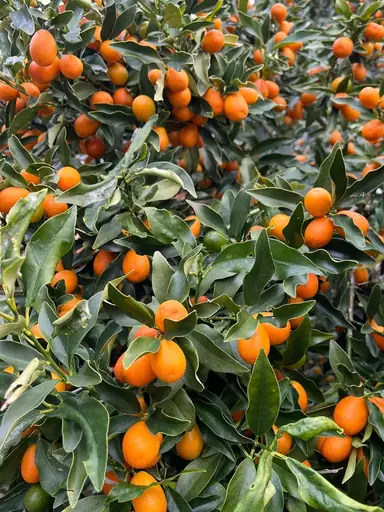
The Nagami kumquat is the easiest citrus most gardeners will ever grow, and the only one meant to be eaten peel and all. Clusters of small, oval, sunset-orange fruit hang against dense, glossy evergreen foliage, each one a burst of contrast: a sweet, tender rind wrapped around bright, tart pulp..
맞춤 견적을 요청하세요
가격, 포장 크기 및 재고 여부는 개별 견적서에서 확인하실 수 있습니다. 문의를 보내는 것만으로는 유료 주문이 접수되지 않습니다.
재배 적합성, 파종 및 재배 요건에 대해 문의하십시오.
견적서에서 배송 옵션과 필요 서류를 확인하세요.
이 품종에 대하여
The Nagami kumquat is the easiest citrus most gardeners will ever grow, and the only one meant to be eaten peel and all. Clusters of small, oval, sunset-orange fruit hang against dense, glossy evergreen foliage, each one a burst of contrast: a sweet, tender rind wrapped around bright, tart pulp. Pop them whole for a sweet-and-sour snap, candy the rinds, slice them into a salad, or simmer the winter harvest into jewel-toned marmalade.
Kumquats are the odd cousins of the citrus family, small enough that botanists once set them in a genus of their own, Fortunella, named for Robert Fortune, the Scottish plant hunter who carried the fruit from China to Europe in 1846. The name kumquat comes from the Cantonese for golden orange, and across China the little trees are treasured emblems of prosperity and good fortune, exchanged and displayed heavy with fruit at the Lunar New Year. 'Nagami' is the common oval kumquat, the most widely grown of them all.
For a citrus, the Nagami is remarkably obliging. The tree is naturally compact and dense, self-fertile so a single plant sets a full crop with no companion needed, and hardier than most citrus thanks to a semi-dormant winter habit that carries the plant through brief cold into the low twenties. Flowers open in summer and the fruit ripens from late fall through winter, holding on the branch well into spring, prime color in the months when the garden has least to offer.
Compact habit makes the Nagami a natural container plant for a sunny patio, a courtyard, a doorway, or a bright window, kept easily to six to eight feet in a pot and around ten to fifteen feet in the ground with light pruning. Grow in full sun and sharply drained soil, in the ground through zones 8 to 10 or in a pot that can move under cover farther north, and keep a plant near the kitchen for fruit off the branch. Pair with rosemary, bay, and other potted Mediterranean plants. Photos courtesy of McClendon Citrus.
더 많은 것을 발견해 보세요



질문 및 토론