

이 페이지는 원문으로 표시됩니다. 번역본은 아직 제공되지 않았습니다.
시드선 셀렉션
Quercus agrifolia
SKU: QUER-AGRI-01G
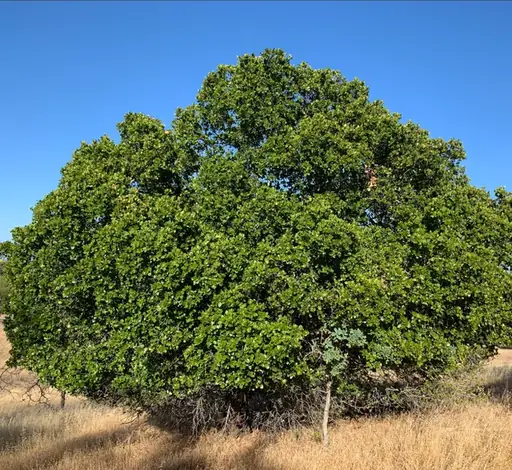
Quercus agrifolia, the coast live oak, is the evergreen oak of the California coast, the gnarled, dark-canopied tree that shades the golden hills of Steinbeck country and spreads heavy limbs over ranchland and canyon. The holly-like leaves are small, thick, and leathery, glossy dark green above.
맞춤 견적을 요청하세요
가격, 포장 크기 및 재고 여부는 개별 견적서에서 확인하실 수 있습니다. 문의를 보내는 것만으로는 유료 주문이 접수되지 않습니다.
재배 적합성, 파종 및 재배 요건에 대해 문의하십시오.
견적서에서 배송 옵션과 필요 서류를 확인하세요.
이 품종에 대하여
Quercus agrifolia, the coast live oak, is the evergreen oak of the California coast, the gnarled, dark-canopied tree that shades the golden hills of Steinbeck country and spreads heavy limbs over ranchland and canyon. The holly-like leaves are small, thick, and leathery, glossy dark green above with a spiny-toothed edge, and the tree holds them year round, casting the deep, cool shade that is the plant's signature. Left room, coast live oak builds a broad, low, romantically crooked crown.
Few trees have fed more people. For thousands of years the acorns of the coast live oak were a staple food for the Indigenous peoples of California, gathered in autumn, dried, ground, and leached of their bitter tannins to make meal and porridge, and the tree remains a keystone of the local ecosystem, the acorns and evergreen shelter sustaining woodpeckers, jays, deer, and a long list of insects. The name agrifolia, meaning sharp-leaved or field-leaved, points to that holly-like foliage.
This is a western tree in an eastern nursery, and that is part of the story. Coast live oak is seldom grown east of El Paso, but raised these plants from seed of trees planted in El Paso, Texas, and they have grown well in South Carolina on sunny, sharply drained sites, the kind of conditions many California and southwestern plants insist on. A few of the plants belong to the southern California variety oxydenia, though they do not look clearly distinct. Photos courtesy of Oaktopia.
In the garden, give coast live oak the open, hot, well-drained position it wants: a specimen lawn, a dry native or Mediterranean-style planting, or a courtyard tree for a warm-climate garden, with room for the wide, spreading canopy to develop. Give full sun, sharp drainage, and little or no summer water once established, since soggy summer soil invites root disease. Pair with manzanita, ceanothus, sages, and other drought-tolerant companions, and keep thirsty, shallow-rooted plantings out from under the canopy, where the roots resent the competition and the water.
더 많은 것을 발견해 보세요



질문 및 토론